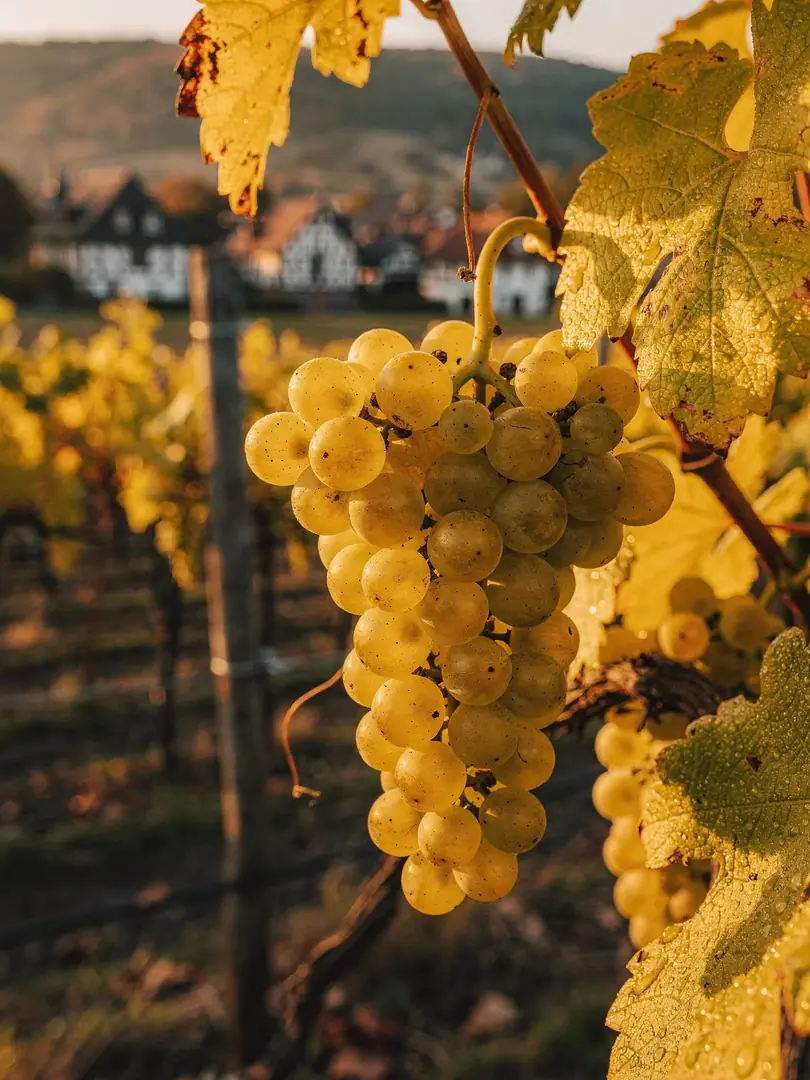
Pinot, Auxerrois, Riesling
Grape Varieties
Which grapes go into Crémant d'Alsace? The list is short: Pinot blanc, Pinot gris, Riesling, Auxerrois, and Chardonnay for the white Crémant, plus Pinot noir. For the rosé, Pinot noir is the only permitted variety, and if desired, it can also be vinified white and bottled as a Blanc de Noirs.
Pinot blanc forms the backbone of many blends. It brings apple and a touch of pear, low acidity, and plenty of roundness. Closely related is Auxerrois, which in Alsace is often planted alongside Pinot blanc in the vineyard and processed together with it in the cellar. It tastes a shade softer and riper still.
Riesling contributes acidity and lemony freshness. As part of a blend it's prized for giving tension to the milder Pinot varieties, and some houses even bottle a pure Riesling Crémant. Pinot gris, on the other hand, delivers body and a slightly spicy, smoky note.
Chardonnay is something of an oddity in Alsace, as it's permitted here only for Crémant and not for still wine. It brings citrus and a creamy texture, but usually plays a supporting role alongside the Pinot varieties.
Pinot noir turns the sparkling wine into a rosé with cherry, strawberry, and delicate spice. The color comes from the skins, which stay in contact with the juice only briefly—otherwise the sparkling wine becomes too heavy. It's the same variety known in Germany as Spätburgunder.
Aromatic varieties like Gewürztraminer or Muscat are deliberately left off the list. They would overpower the sparkling wine. All the permitted varieties retain their acidity even when picked early, leaving room for the yeast to add its own character.