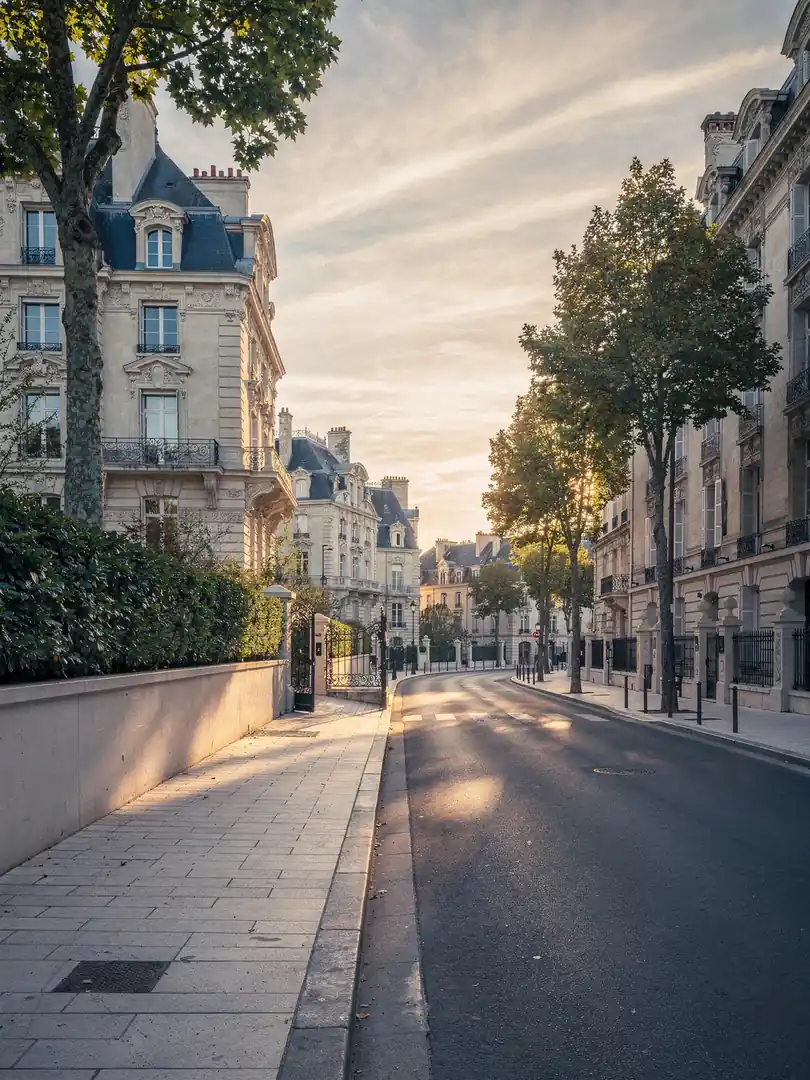
Avenue of the Great Houses
Region & History
Where are Moët & Chandon, Perrier-Jouët and Pol Roger located? In Épernay, and almost side by side: all three houses sit on the Avenue de Champagne, a broad street lined with grand townhouses. Behind the facades, staircases lead down into the chalk. The street once lay along an old trade route between France and Germany, which is why wine merchants settled here as early as the 18th century.
Moët & Chandon cites 1743 as its founding year, established then by Claude Moët. Napoleon is said to have visited Jean-Rémy Moët at his house on this very street in 1807. Perrier-Jouët followed in 1811, founded by Pierre-Nicolas Perrier, who supplied corks and owned his own vineyards, together with Adèle Jouët. Pol Roger was established in 1849 and remains family-owned to this day. Moët & Chandon, by contrast, is part of the LVMH group.
Dom Pérignon sounds like it comes from monastic history, but as a brand it's actually quite young. The first vintage is 1921, though it wasn't released for sale until 1936. The name had been passed to Moët by the house of Mercier in 1927, on the occasion of a wedding between the two families.
The legend that the monk Pierre Pérignon invented Champagne isn't quite true. As early as 1662, the Englishman Christopher Merret described to the Royal Society how merchants added sugar to wine to make it "brisk and sparkling." Pérignon served as cellar master of the Abbey of Hautvillers from 1668 to 1715 and was a pioneer of quality winemaking. His story is told in the wine journey through Champagne.
The name Champagne has been tied to a defined geographic area since the law of May 6, 1919, with the appellation following in 1936. In 2015, UNESCO added the Avenue de Champagne, along with its cellars, to its World Heritage list as part of the "Hillsides, Houses and Cellars of Champagne." Alongside the big houses, which buy in grapes and blend their wines, the region is also home to growers who produce exclusively from their own vines.