Three Slopes
Grape Varieties
What grape varieties make up a Champagne from Épernay? Practically just three: Chardonnay, Pinot Noir, and Meunier. Eight main varieties are permitted, including Arbane, Petit Meslier, Pinot Blanc, and Pinot Gris, but the flavor is usually shaped by the three well-known ones.
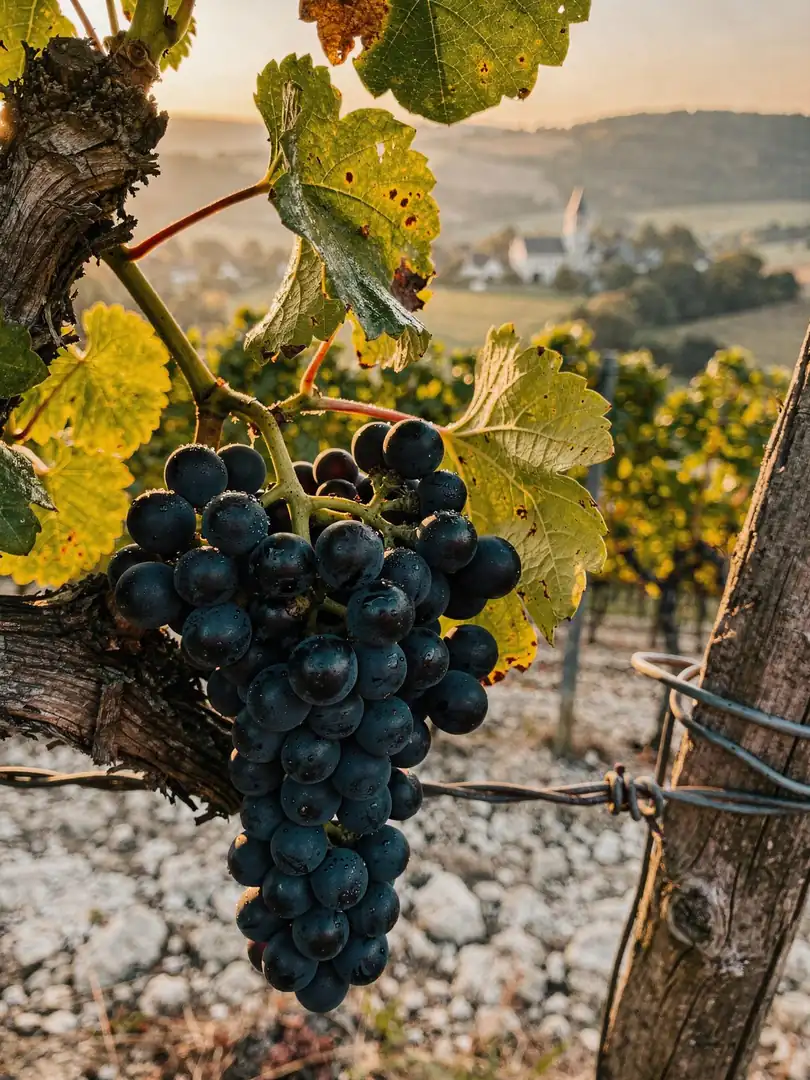
Each variety has its own territory. Chardonnay grows mainly in the Côte des Blancs south of the town, on chalk, and brings citrus, white blossom, and taut acidity. Pinot Noir thrives on the slopes around Aÿ and on the Montagne de Reims. Its grapes are dark-skinned, but the juice is pale, and the wine delivers body and red fruit.
Meunier is the grape of the Vallée de la Marne. It buds late and therefore suffers less from spring frost, while also ripening early. Its wine is round and fruity, making the blend approachable from an early stage. Anyone familiar with Meunier knows Schwarzriesling from Germany: it's the same grape under a different name.
Every house weighs these varieties differently. Perrier-Jouët is known as a house with a high proportion of Chardonnay in its blend. Pol Roger blends its Brut Réserve, according to the house, from roughly equal thirds of the three varieties, though the proportions shift from year to year.
There's a reason so few varieties are used. Chardonnay brings acidity and finesse, Pinot Noir brings structure, Meunier brings fruitiness. Together they add up to more than the sum of their parts, and the cellar master has three dials to keep a house's style consistent year after year.