Cassoulet and Carnival
Food & Occasion
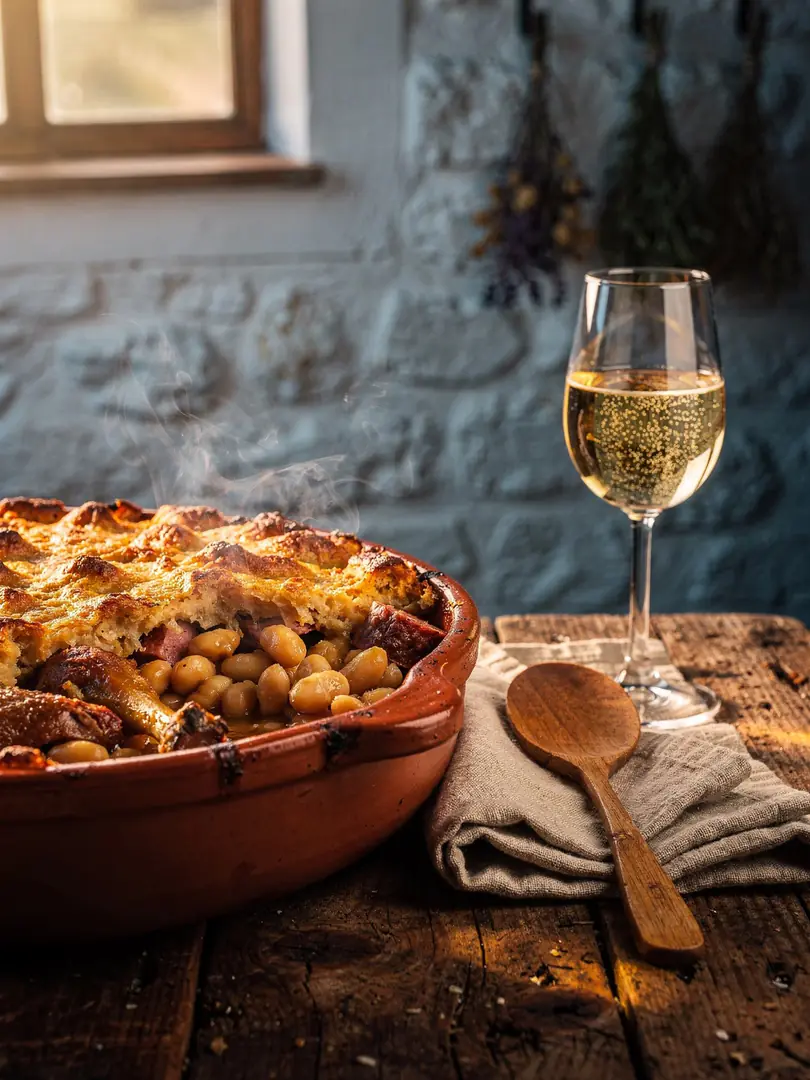
What do people eat with Blanquette de Limoux? In the area, cassoulet from Castelnaudary in the northwest is often on the table: a stew of white beans, sausage, pork, and duck confit, slow-cooked in the oven in an earthenware pot called a cassole. Castelnaudary considers itself the capital of this dish. A dry Crémant, with its acidity and fine perlage, can lighten the richness. This is a flavor suggestion, not a rule.
As an aperitif, before the meal, Blanquette ancestrale works well with its light sweetness and low alcohol. With simple desserts featuring apples or pears, such as a fruit tart, it pairs nicely with Mauzac's apple note without overpowering the dessert's sweetness.
According to the organizers, the Carnival of Limoux runs over several weeks from January into March, every weekend plus Shrove Tuesday. The Fécos and the Goudils, masked figures in traditional costumes, parade beneath the medieval arcades of the Place de la République from café to café, singing, dancing, and throwing confetti.
The custom is said to date back to 1604. According to tradition, it commemorates millers who threw flour and sweets after paying their dues to the monastery. The town itself calls its carnival one of the longest in the world.
In this region, Blanquette accompanies festive meals and the carnival too, which even has an evening named after it, the Nuit de la Blanquette. At the festival as at the family table, the same rule applies: the sparkling wine is there for toasting and for sharing a meal together.