Altitude and Limestone
Soil & Climate
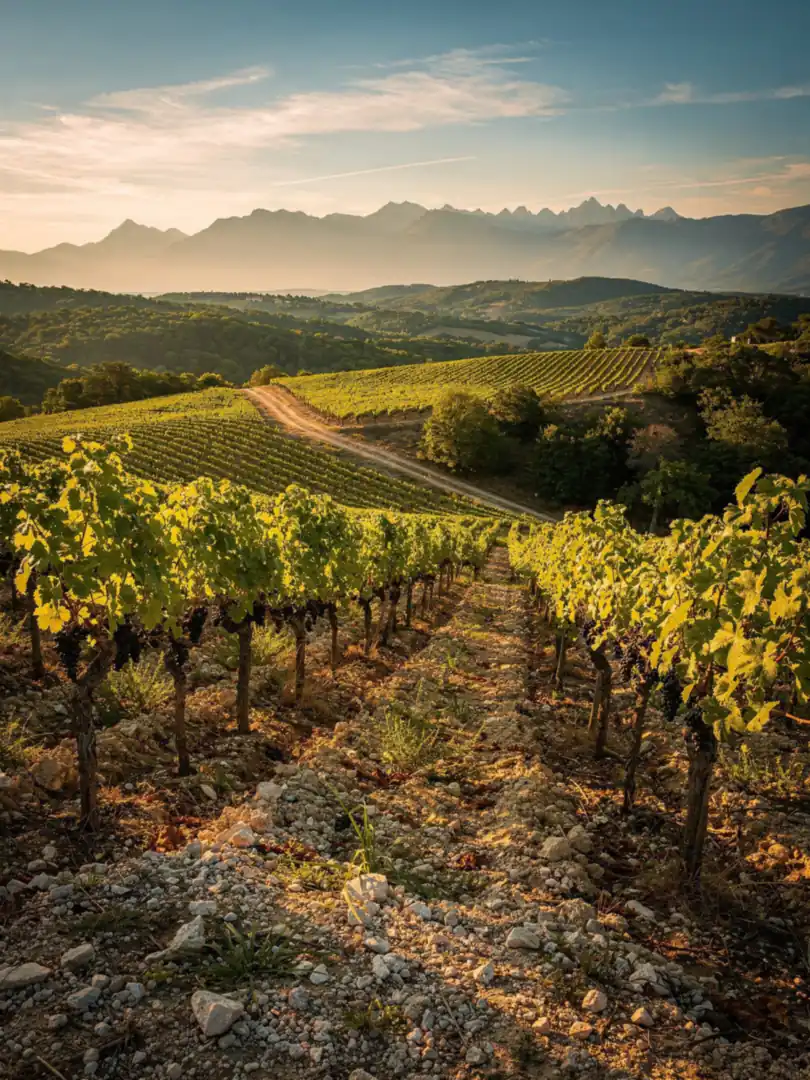
Why does a sparkling wine from southern France taste fresh rather than heavy? In Limoux, it comes down to altitude. The vineyards in the upper Aude Valley rise to about 450 meters, nights cool down, and the grapes retain the acidity a sparkling wine depends on. That acidity later keeps the bubbles taut and stops the wine from feeling flabby.
The area lies at the foot of the Pyrenees, where two climates meet. Rain clouds roll in from the Atlantic, while warmth and wind arrive from the Mediterranean. Winemakers therefore distinguish four zones. In the Terroir d'Autan, named after the warm southeast wind, conditions are dry, with around 570 millimeters of rainfall a year. In the Terroir Océanique further west, about 780 millimeters fall. In between lie the Terroir Méditerranéen and, highest and coolest, the Haute Vallée.
The soils are limestone-rich and relatively light. Limestone stores moisture and releases it slowly during dry spells, so the vines rarely suffer heat stress. As a rule of thumb: the higher and cooler the site, the tighter the acidity in the base wine, and the lower and warmer it is, the rounder the fruit.
For sparkling wine, this climate offers an advantage that's easy to overlook. The second fermentation in the bottle adds a good extra percentage point of alcohol to the wine. A base wine that stays naturally light therefore ends up at a pleasant level, and after time on the lees, the acidity feels lively rather than sharp.
Add to this the diversity packed into a small area. Blending wines from several zones lets the winemaker balance acidity against fruitiness. For Crémant de Limoux, a blend of several varieties, this means more room to maneuver for the cellar master, without needing to source grapes from far afield.