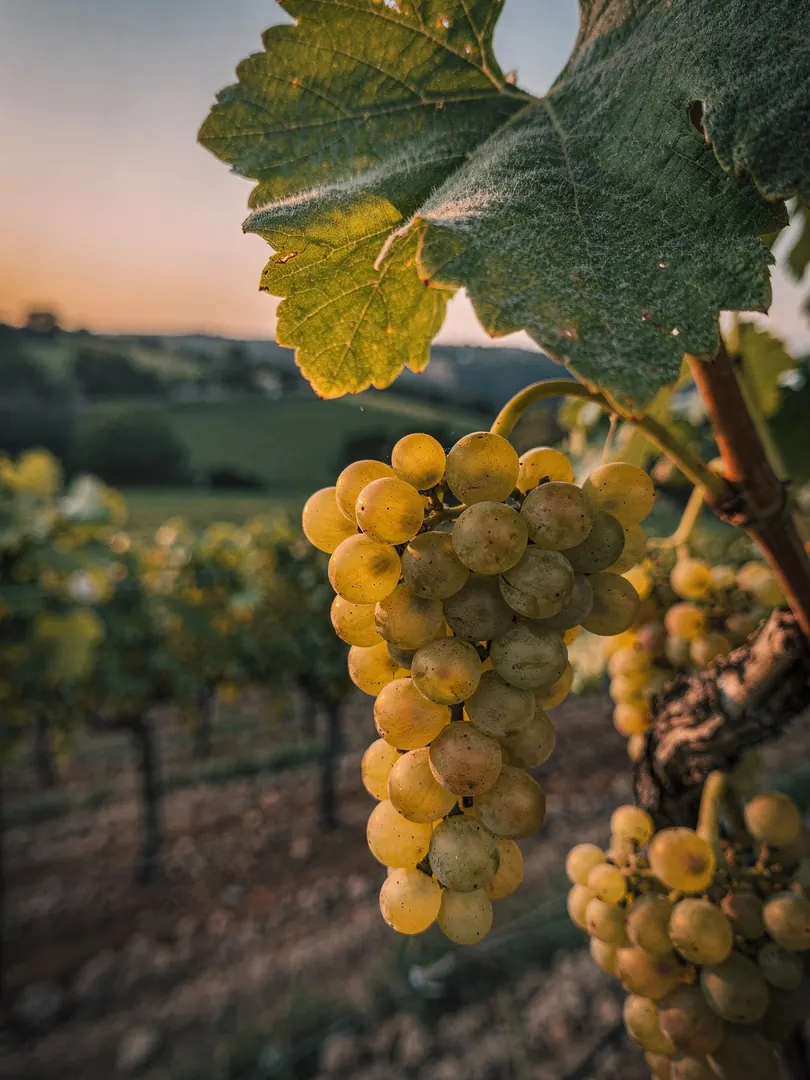
Mauzac Takes Center Stage
Grape Varieties
Which grape variety is behind Blanquette de Limoux? Mauzac, a white variety barely known outside southwest France. In Limoux it's even called Blanquette itself, and the wine takes its name from it. Blanquette méthode ancestrale is 100 percent Mauzac, with no other variety sharing the stage.
Mauzac ripens late and delivers plenty of acidity. In the glass it recalls apple, sometimes fresh and crisp, sometimes riper and slightly baked. A sparkling wine that tastes of apples is rare elsewhere; in Limoux it's the norm. This clear fruit note makes the wine easy to recognize, even for newcomers.
For Crémant de Limoux, further varieties join in. Chardonnay and Chenin blanc make up the bulk of the blend. Chardonnay lends body and citrus fruit, Chenin blanc brings acidity and a faintly honeyed note that grows with age. Mauzac and Pinot noir round out the blend: Mauzac contributes the apple, Pinot noir adds fullness and a touch of red fruit.
Why these particular varieties? They retain their acidity even at good ripeness and don't come across as heavy in a sparkling wine. Chardonnay and Chenin are also known in Limoux as still white wines under the Limoux appellation, so winemakers are well versed with both grapes in the vineyard and the cellar.
With Pinot noir, white pressing is the trick. Red grapes yield pale juice when pressed immediately and gently, since the pigment sits in the skin, not the juice. This is how Pinot noir ends up in a white sparkling wine without coloring it.