Chalk Beneath Reims
Soil & Climate
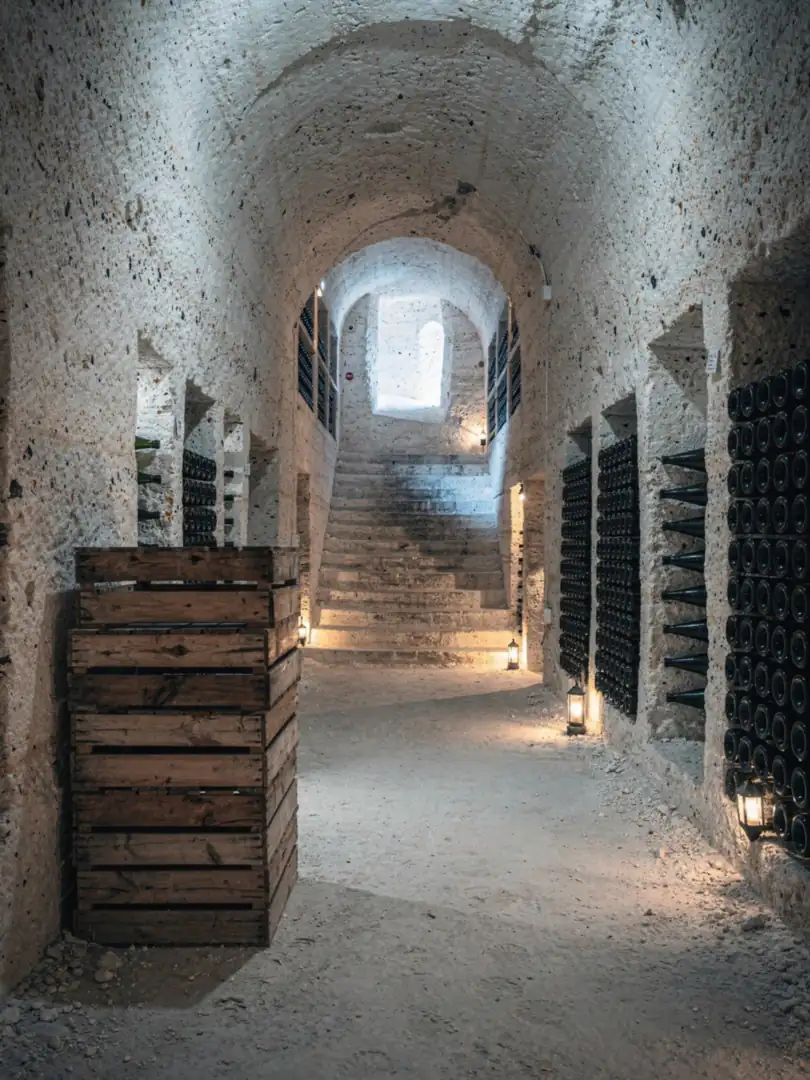
Beneath Reims lies a second city made of chalk. Crayères are the chalk pits carved out of the rock that now serve as cellars. Under the hill of Saint-Nicaise alone, according to the Champagne World Heritage site, around 57 kilometers of passages wind through the ground.
Six houses share the hill: Ruinart, Martel, Veuve Clicquot, Taittinger, Charles Heidsieck, and Pommery. Ruinart has used its chalk cellars since 1768, and they have been protected as historic monuments since 1931. According to the house, the passages extend across three levels more than 38 meters deep, totaling eight kilometers.
At Taittinger, the cellars sit on the grounds of the 13th-century Abbey of Saint-Nicaise. Crypts and tunnels have survived, and bottles now stand between the vaults. The abbey itself is gone, but the space beneath it remains. At Charles Heidsieck, 106 steps lead down, and once you've descended them, you quickly notice how the air grows cooler and quieter.
Why chalk? It can be worked with a pickax and stays at nearly the same temperature year-round, around ten degrees Celsius in the cellar. That's ideal for the yeast in the bottles: in the cool, it works slowly, giving the wine time.
In 2015, UNESCO added the hillsides, houses, and cellars of Champagne to its World Heritage list. The hill of Saint-Nicaise is explicitly included. The climate here is cool enough that the grapes ripen with plenty of acidity, and it's precisely this acidity the houses seek for their base wines.