Buying In and Selection
Grape Varieties
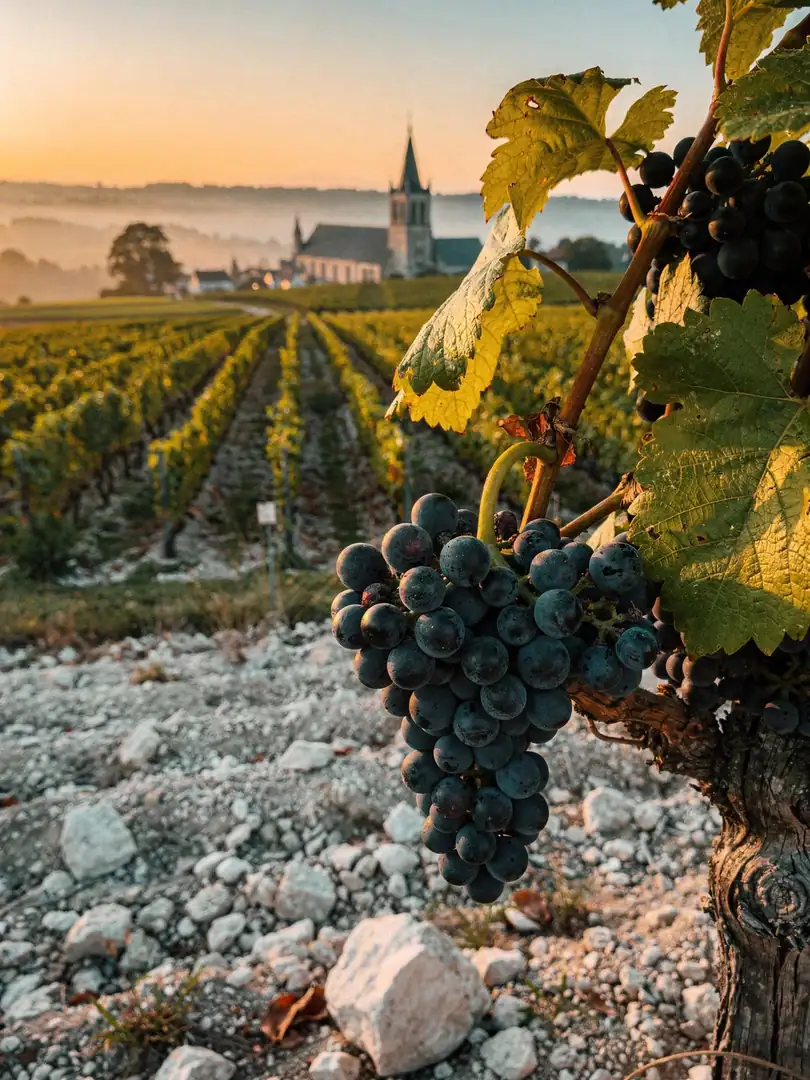
What grapes does a Reims house use to make its Champagne? Mostly Chardonnay, Pinot Noir, and Meunier. Pinot Noir and Meunier are red grapes, yet their juice is pale, and according to the specifications, Champagne may only be white or rosé, never red.
Eight main varieties are permitted: Arbane, Chardonnay, Chardonnay Rose, Meunier, Petit Meslier, Pinot Blanc, Pinot Gris, and Pinot Noir. Arbane and Petit Meslier are rarities that cellar masters like to blend in for their freshness, but the three well-known varieties fill the majority of the bottles.
Since 2022, a ninth variety has been added as an adaptation grape: Voltis. It may make up no more than five percent of a estate's vineyard area and no more than ten percent of a blend; a pure Voltis Champagne is not permitted. Two further new varieties, Serelis and Orellis, were approved by the relevant committee in June 2026.
The role of the three main varieties can be summed up briefly. Chardonnay brings freshness and citrus, Pinot Noir body and red fruit, Meunier a round, fruity core. How much of each variety goes into the blend is decided differently by every house and defines its style. A grower in Verzenay and one in Cramant supply the same house with very different grapes, and the cellar master knows how to bring them together.
Important for Reims: growers farm 90 percent of the vineyard area, meaning the houses themselves own only a small portion. Anyone running a house like Veuve Clicquot or Lanson therefore buys grapes from many growers across many villages and blends this diversity into a consistent house style.