In the bottle
The second fermentation
How do the bubbles get into Champagne? Through a second fermentation, which takes place in the very bottle in which the wine is later sold. In Champagne, this is mandatory, and only in glass bottles.
First, the base wine is combined with the tirage mixture, a solution of sugar and yeast. The standard guideline is about 24 grams of sugar per liter. The yeast converts it into alcohol and carbon dioxide, and the gas cannot escape because the bottle is sealed. Bottling may happen no earlier than January 1st after the harvest, so the wine has already spent several weeks in tank or barrel before its second fermentation begins.
What results from this is pressure. A Champagne typically reaches about six bar at 20 degrees, significantly more than in a car tire. That's why the bottles are made of thick glass and secured with a wire cage over the cork.
Outside of Champagne, the label may not say “méthode champenoise.” That term is reserved for the region; other producers write “traditional bottle fermentation” or “méthode traditionnelle.” A special feature of Champagne: it must be sold in the same bottle as its second fermentation. Only very small formats under 37.5 centiliters and large formats of three liters or more may be transferred.
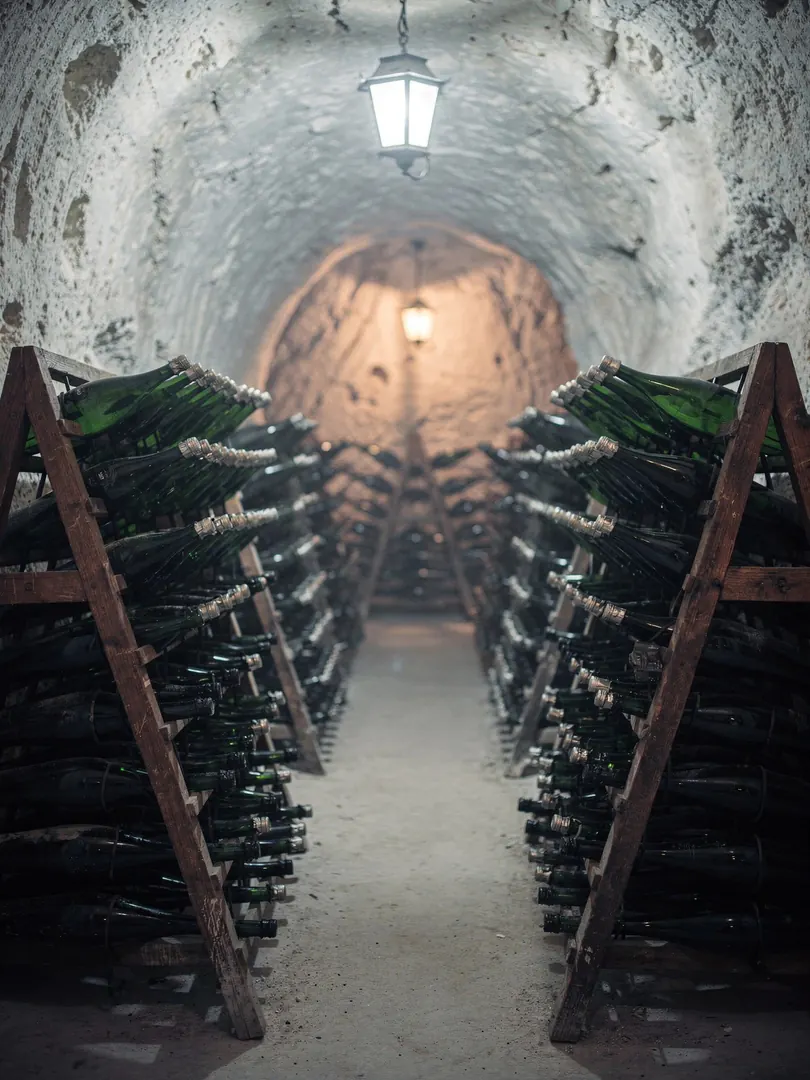
In the chalk cellars of Reims, at Taittinger as well as at Veuve Clicquot, the bottles rest on their lees after bottling for months or even years, cool and still. Exactly how long is set by the specifications, and that's the subject of the next stop.
Champagne Brut Non-VintageBottle fermentation · Chardonnay, Pinot Noir, Meunier
- Time on lees
- 15–36 Months
- Sugar
- 0–12 g/l
- Alcohol
- 12–12.5 % vol
Brioche and citrus, taut acidity, house style built from reserve wines.