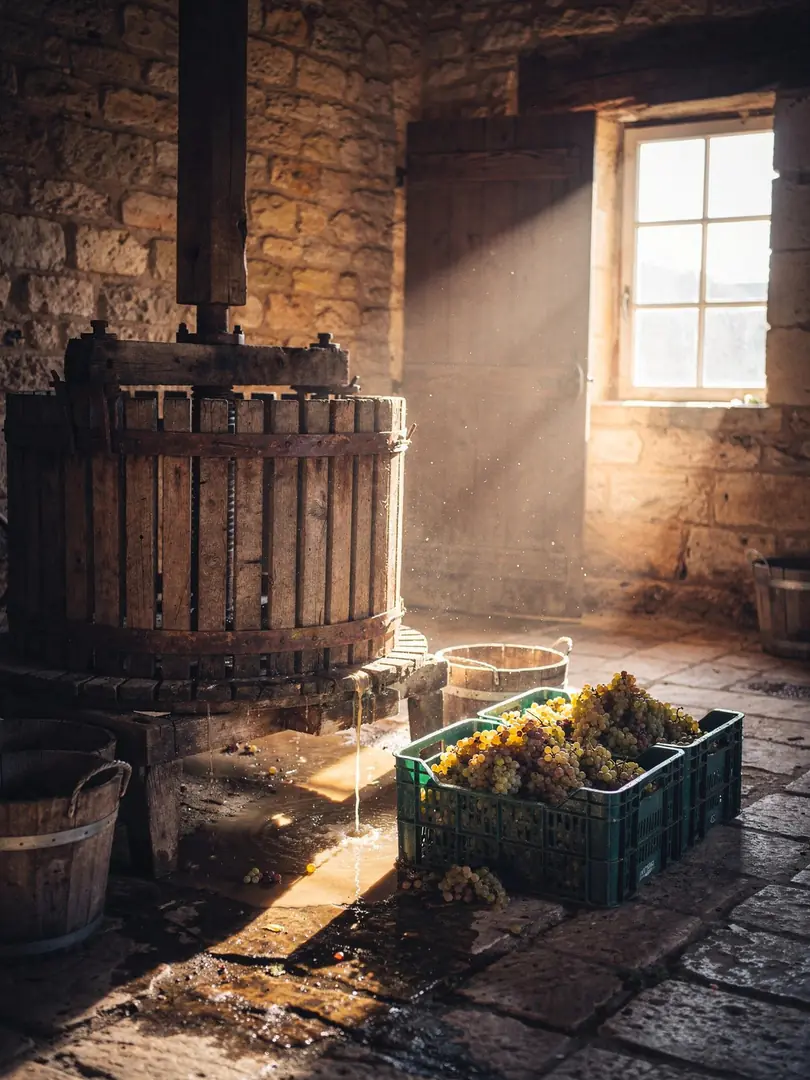
Early, Gentle Pressing
Base Wine & Blend
Different harvest dates apply to Saumur brut or Crémant de Loire than to still wine. Growers pick earlier, while sugar is still low and acidity high, because the base wine needs to stay lean—it will gain roughly another percent of alcohol later in the bottle.
Hand-harvesting is mandatory for Crémant. Grapes go into the press whole or destemmed, and from 150 kilograms of fruit no more than 100 liters of juice may be drawn off—about two-thirds. The rest stays in the skins, so very little tannin or bitterness ends up in the wine. For rosé made from Cabernet franc, the skins color the must only briefly.
Pressing happens slowly and gently, in several stages. The first juice is the finest; later fractions are stronger and coarser. Each house decides how much of these later fractions goes into the final blend, often separating strictly by vineyard site and variety.
Then comes the real craftsmanship: blending. Each variety and each vineyard parcel ferments separately at first; later the cellar master brings them together—Chenin for fruit and acidity, Chardonnay for roundness, Cabernet franc for berry aromas and color in the rosé. Many houses also hold back wines from older vintages as reserves, to keep the house style consistent year after year.
When there's no vintage on the label, the cellar masters have blended wines from several harvests so the house style stays recognizable year after year. A vintage Crémant, by contrast, reflects a single harvest, with all the whims of that year's weather. The fact that the base wine tastes sharp and austere on its own is intentional—only time on the lees will soften it.