Chalk and River
Soil & Climate
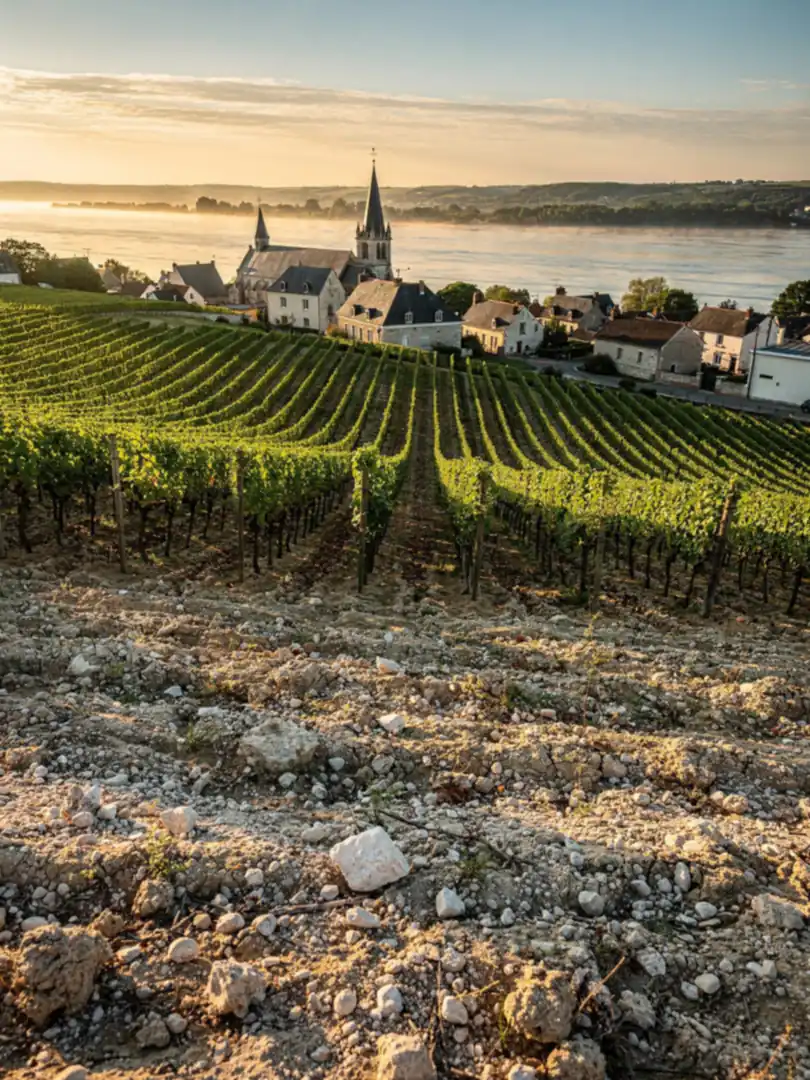
In the Marne Valley, the vineyards lie along the northern bank of the river, with slopes facing south. This captures sunlight, yet the climate stays cool enough for the grapes to ripen with plenty of acidity. That acidity is exactly what a sparkling wine needs to still taste fresh after two fermentations.
Beneath the surface lies chalk, as it does throughout Champagne. Above it, the valley is covered by a varied layer of clay, chalky clay, sand and silt. Soils rich in clay hold water longer, and that suits Meunier, which tolerates cooler, damper sites better than its relatives.
The danger lurks in spring. Cold air collects in the hollows by the river, and a late April frost can burn the fresh shoots. Meunier buds late and so escapes many a frost that strikes Pinot Noir and Chardonnay earlier.
Here the vineyard sites bear the names of the villages: Aÿ is Grand Cru, while Cumières, Dizy, Hautvillers and Mareuil-sur-Ay are Premier Cru. Unlike in Burgundy, it is not individual vineyards that are classified but the commune as a whole. In addition, there are small parcels with reputations of their own.
Bollinger tends vines in Aÿ that, by the house's own account, stand ungrafted on their own roots. Since the phylloxera crisis, most vines have been grafted onto American rootstock, making own-rooted vines a rarity. From these comes the Vieilles Vignes Françaises, a Blanc de Noirs made from Pinot Noir.
Beneath the villages the chalk runs on, and cellars are dug into it. There it stays evenly cool all year round, and the bottles rest for years in silence on their lees.