Meunier to the Fore
Grape Varieties
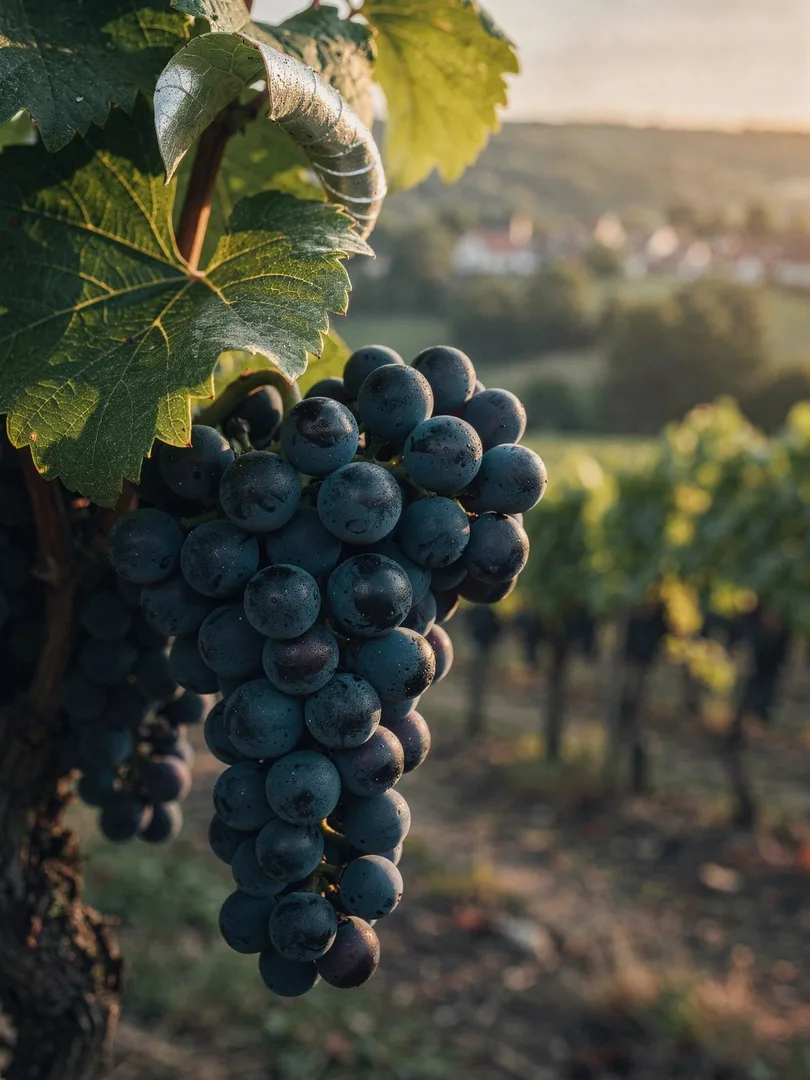
What is Meunier, and why does it feature in so many Champagnes? Pinot Meunier is a red grape variety, genetically a mutation of Pinot Noir. The name comes from the French word for miller, because the undersides of the leaves appear whitish, as if dusted with flour.
In the Marne Valley it is the dominant variety. According to figures for the growing region, the valley is planted with around 59 percent Meunier, about 23 percent Pinot Noir and 18 percent Chardonnay. The numbers show just how different the valley is from the Côte des Blancs with its Chardonnay.
Why is Meunier so well suited to sparkling wine? It buds late, ripens early and copes well with the valley's cool, damp soils. Its wine is approachable young and fruity, with aromas of red apple and ripe pear, and feels softer than Pinot Noir and Chardonnay.
Champagne permits eight principal varieties: Arbane, Chardonnay, Chardonnay rose, Meunier, Petit Meslier, Pinot Blanc, Pinot Gris and Pinot Noir. There is also the adaptation variety Voltis, approved since 2022; two further varieties, Serelis and Orellis, were approved by the Comité national in June 2026. In practice, three dominate: Chardonnay, Pinot Noir and Meunier.
Aÿ is considered Pinot Noir country. There the variety delivers a powerful, full-bodied wine that gives houses like Bollinger their backbone. Meunier adds the fruit and makes young Champagnes approachable early, while Chardonnay contributes freshness and lift.
There are also varietal Meunier Champagnes, made mainly by small growers in the valley. These are Blanc de Noirs, meaning a white sparkling wine made from red grapes. This is possible because the juice of all red varieties is pale: the color sits only in the skins.