Tank and Bottle
The Second Fermentation
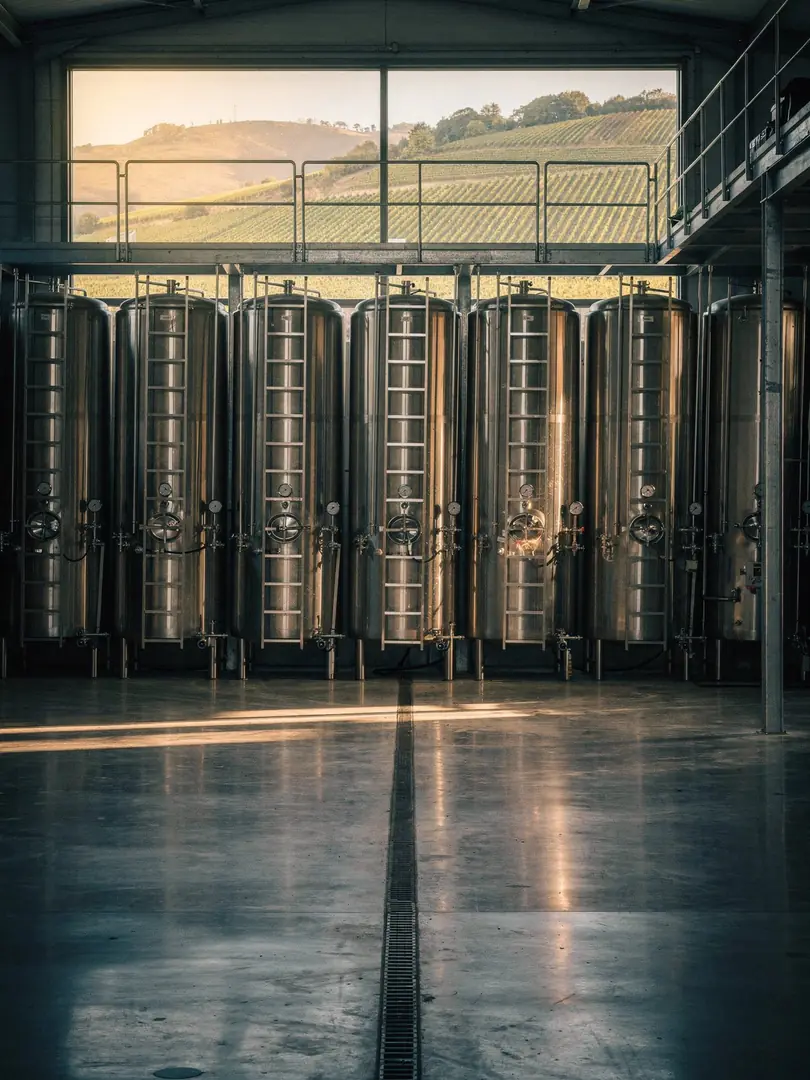
The second fermentation here mostly takes place in tank, not in the bottle. Italians call the process Metodo Martinotti; abroad it's known as the Charmat method. Prosecco from the hills around Conegliano and Valdobbiadene is usually made this way, and the reason lies in the style: fruit and freshness should take center stage, not bread and yeast.
Here's how it works: the base wine goes into a pressure-resistant stainless steel tank, an autoclave, along with sugar and fresh yeast. Because the tank is sealed, the carbon dioxide from fermentation can't escape. It dissolves into the wine, and pressure builds—for Spumante, to well over three bar, more than in a car tire.
Once the desired pressure is reached, the cellar master chills the tank, slowing the fermentation. The wine is filtered and bottled under counter-pressure so the carbonation isn't lost. The whole process, from fermentation to bottle, takes only a few weeks to months. Unlike with bottle fermentation, there's no riddling and no disgorging of the lees here.
Why not bottle fermentation, as in Champagne? It's a question of volume and taste. Over 90 million bottles a year can be filled economically in tank, and the character of Glera—bright, floral, and fruity—would lose its clarity after long lees aging.
A second style has entered the rulebook in recent years: Sui Lieviti, formerly known as Col Fondo. Here the wine undergoes a second fermentation in the bottle, and the lees remain inside without being disgorged. Fermentation and lees aging must last at least 90 days. The wine is therefore naturally cloudy and considered the traditional style of Prosecco in the hills.
Prosecco Superiore BrutTank fermentation · Glera (min. 85%), Verdiso, Bianchetta, Perera
- Time on lees
- 1–3 Months
- Sugar
- 0–12 g/l
- Alcohol
- 11–11.5 % vol
Green apple, pear, and white blossom, lively mousse, lean and fresh.