Harvest and Blend
Base Wine & Blend
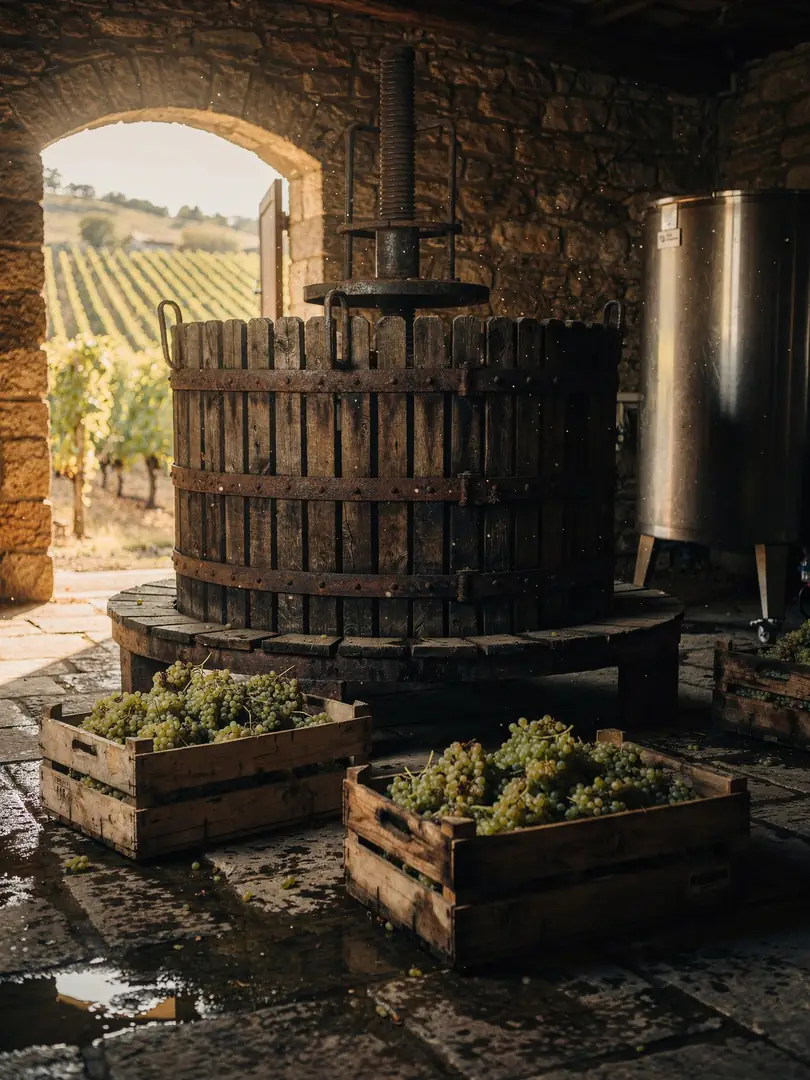
The journey to Conegliano Valdobbiadene Prosecco Superiore begins with the harvest, timed while the grapes still carry fresh acidity. For the Rive, hand harvesting is mandatory, and the vintage must appear on the label. On the steep terraces too, there's barely any way around handwork: many plots are simply too steep for machines.
Little time should pass between picking and pressing, since warm, crushed grapes quickly lose their freshness. Growers who farm only a few hectares usually deliver their fruit to a cooperative or a sparkling wine house that handles the base wine production itself.
In the cellar, the grapes are pressed gently. Modern presses use a membrane that slowly inflates, squeezing the grapes with care. The juice runs off, settles, and is clarified, then ferments in a stainless steel tank at a cool temperature into base wine. Cool fermentation preserves the delicate aromatics of Glera, above all apple and blossom.
An exception in EU law applies only to Prosecco: the base wine may start at 8.5 percent total alcohol, whereas a minimum of nine percent is otherwise required.
Next comes the blend. Producers buying in grapes from several municipalities and hillsides blend the base wines so the house style stays recognizable year after year. For a Rive, this cross-municipality blending falls away: all the grapes come from the same site, and the vintage on the label tells you what the weather was like.
Many houses keep the base wine chilled in tank and set the second fermentation in batches, allowing fresh sparkling wine to be bottled year-round. A vintage only appears on the label if the wine essentially comes from that year—for a Rive, it's mandatory.