Rich Food Calls for Sparkle
Food & Occasion
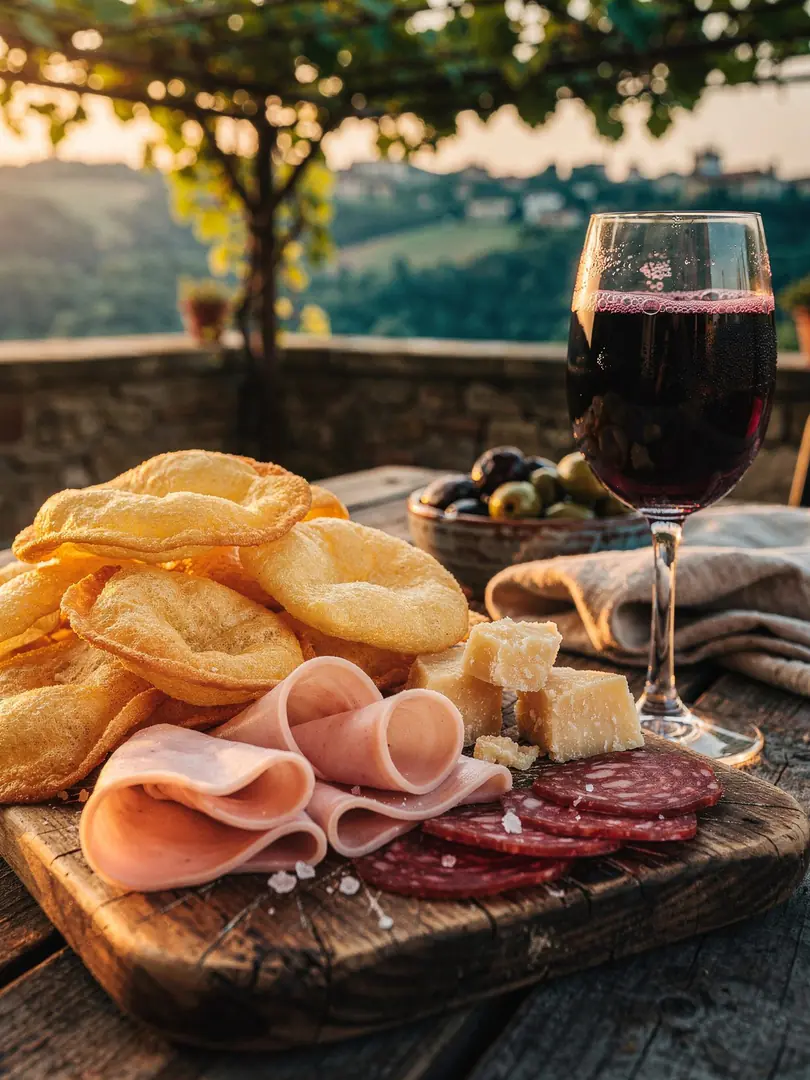
In Emilia, what goes well with Lambrusco is rich and hearty. Mortadella from nearby Bologna, salami, and ham all call for acidity and perlage that refresh the palate between bites. What's on the table determines the glass: the heavier the dish, the more sparkle and acidity the wine needs to stand up to it.
Gnocco fritto is deep-fried dough served hot and puffed up alongside sausage and soft cheese. The fried fat calls for carbon dioxide to cleanse the mouth, and acidity to cut through it. A still, heavy red wine would feel too sluggish here.
Parmigiano Reggiano comes partly from the provinces of Modena and Reggio Emilia. Its salty note and grainy texture pair well with the acid pull of a Sorbara, while a robust Grasparossa also suits long-aged cheese.
Tigelle, small round flatbreads from the Modena Apennines, are sliced open warm and filled with sausage, cheese, or a lardo-based pesto. Precisely because this food is eaten standing up and with the fingers, a wine that's fresh and not too heavy works well: a young Lambrusco di Sorbara, lightly chilled.
Zampone and Cotechino are cooked pork sausages from Modena, with the Zampone stuffed into a boned pig's trotter. Traditionally, they're served at New Year's with lentils. The gelatinous filling and spices call for a wine with body and tannin, and a Lambrusco Grasparossa delivers both.
In Emilia, Lambrusco mostly belongs at the table rather than in a toasting glass. It accompanies Sunday lunch and long holiday meals. If you're serving it at home, open it with the meal rather than letting it sit beforehand.