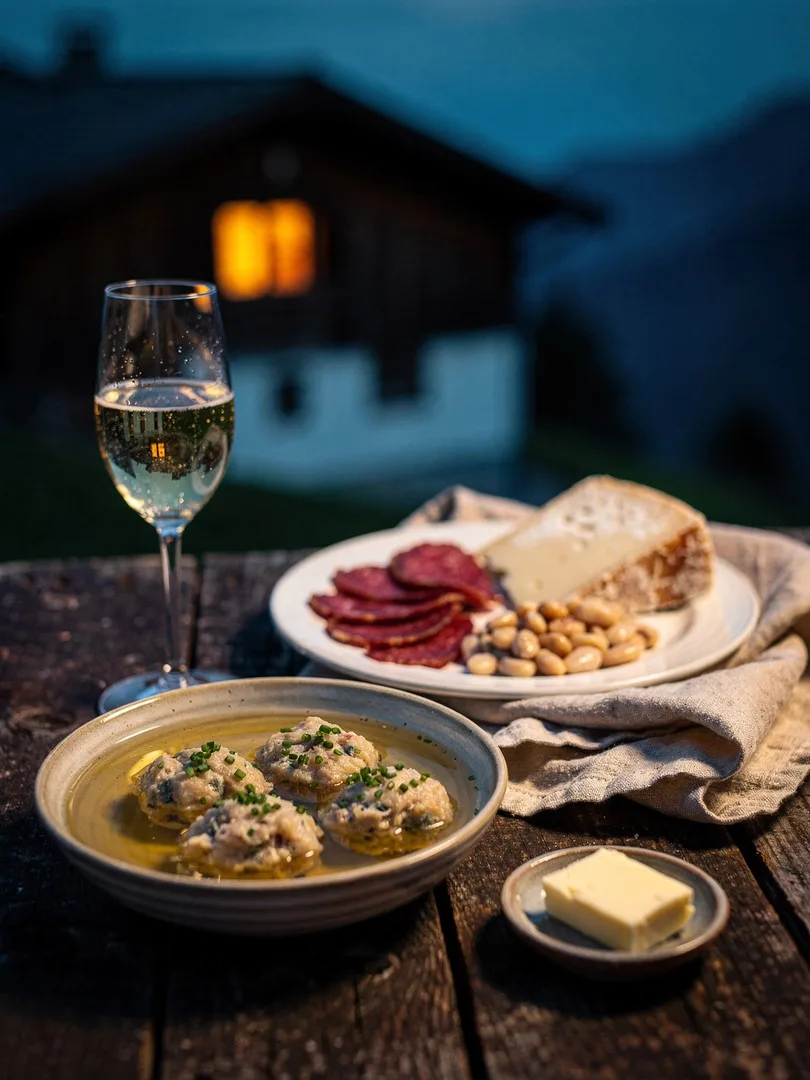
Dumplings and Trout
Food & Occasion
What do you eat with Trentodoc? Mostly what already ends up on the table in these valleys anyway. The wine's clear aromas and acidity pair well with fat and salt—the hallmarks of mountain cuisine—and the mousse lifts heaviness off the palate.
Canederli are the classic pairing: dumplings made from stale bread, milk, egg, and parsley, with bacon or sausage, served in broth or with melted butter. The acidity cuts through the fat, and the yeasty notes echo the bread crust. Related are Strangolapreti, dumplings made from bread and spinach, served with butter and sage.
Trout comes from the mountain streams and ponds of the province, either pan-fried or smoked. Its delicate flesh pairs well with a Brut with low dosage, while a Riserva with nutty notes complements smoked fish beautifully. Freshly squeezed lemon juice and the citrus notes in the glass play off one another.
Things get saltier with Carne salada, cured and thinly sliced beef eaten raw or briefly seared, often served with beans. The wine brings freshness against the salt. With cheese such as Trentingrana, a hard cheese in the style of Parmesan, the yeasty notes harmonize with the savory depth.
The meal ends sweetly with apple strudel, since the Val di Non is one of Italy's great apple-growing regions. Brut tends to taste sour alongside sweet dishes; better suited is a style with more sugar, such as Extra Dry, or a rosé.
Trentodoc is poured to celebrate weddings, Christmas, and aperitivo hour in Trento. Each autumn, the Trentodoc Festival takes place in Trento—held for the fourth time in 2025—with tastings and events filling the streets and squares. For those planning a tasting at home, a young Brut works well as an aperitif, while the Riserva is best saved for the main course, since it stands up better to food.