Fresh and Crisp
Tasting
What does Trentodoc taste like? The typical style is fresh and taut, with citrus, green apple, and white blossom, underscored by brioche and almond, carried by crisp, mountain-driven acidity. The mousse is fine, the sweetness generally restrained. Compared to Prosecco, it tends to be drier and more yeast-driven.
Three names illustrate the region's style, without being a recommendation. Ferrari represents a clean, Chardonnay-driven style. Altemasi, the line from the Cavit cooperative, is showcased by its Graal Riserva, with grapes grown, according to the house, at altitudes reaching up to 800 meters. Rotari, the brand of the Mezzacorona winery, offers a broad range.
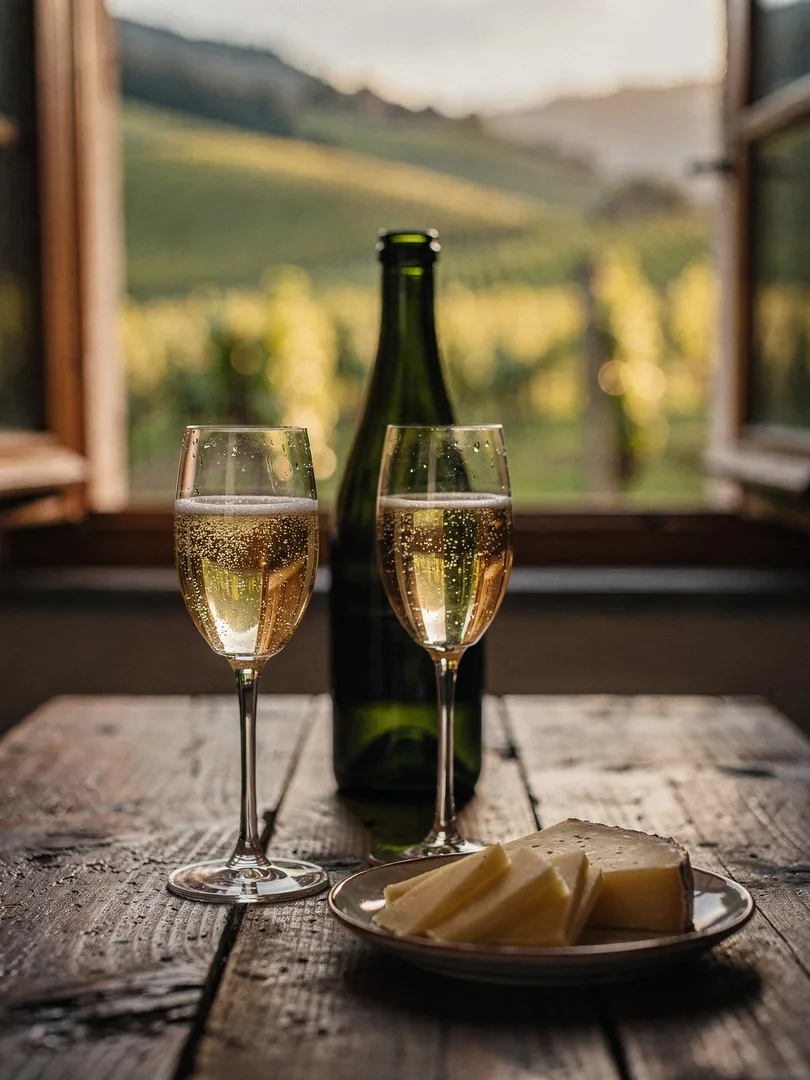
A tulip glass or a slender white wine glass suits Trentodoc better than a wide coupe. The tulip shape lets the bubbles rise for longer, concentrates the aroma at the rim, and allows you to catch the brioche and citrus notes before you drink. Coupes let carbonation and aroma escape too quickly.
When tasting, look at the color: young Brut wines are pale straw yellow with greenish highlights, while Riserva wines appear more golden. The bubbles should rise as a fine, persistent chain, and the finish generally grows longer with extended lees aging.
Serving temperature is around 6 to 8 degrees Celsius for a young Brut; a Riserva can be served one or two degrees warmer so that the bread and nut notes come through. Too cold mutes the aromas, too warm makes the carbonation feel coarse. Chill for several hours in the refrigerator, never in the freezer.
When opening the bottle: go slowly. First remove the foil, loosen the wire cage, but keep a hand firmly on the cork, hold the bottle at an angle, and turn the bottle—not the cork. A quiet hiss rather than a loud pop preserves both wine and carbonation and keeps the cork from flying off unpredictably.