Altitude and Rock
Soil & Climate
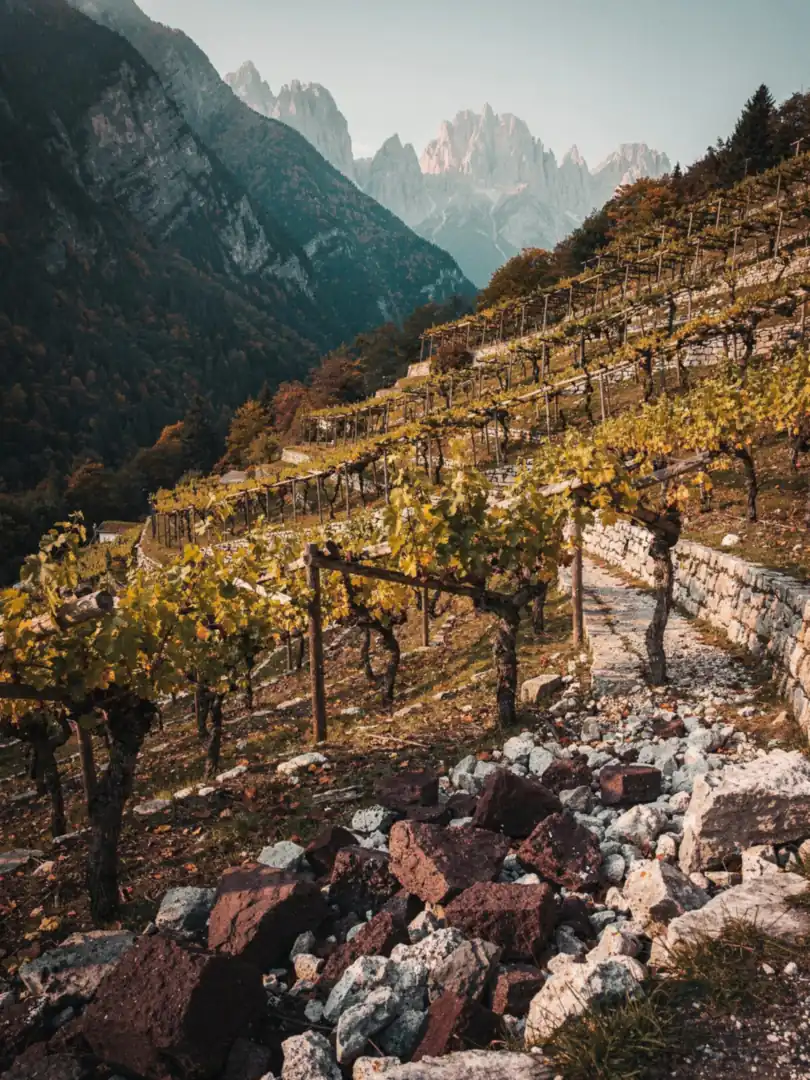
Why are high-altitude vineyards considered an asset for sparkling wine? Because acidity is the raw material of any good bottle-fermented wine, and acidity breaks down quickly in warm valleys. In Trentino, the vineyards for Trentodoc range from about 200 to 800 meters in altitude, along the southern edge of the Dolomites.
At this elevation lie slopes where the grapes get sun during the day and cool down sharply at night. This contrast between warm days and cold nights preserves freshness and delicate aromas while sugar levels rise slowly. For base wines destined for a second fermentation and further aging, this is a good starting point.
The soil is far from uniform. Depending on the valley, limestone, gravel, and glacial moraine shape the slopes; in the Cembra Valley east of Trento, porphyry—a volcanic rock—comes into play as well. Winemakers often describe wines from limestone as taut and mineral, those from porphyry as spicy. But for sparkling wine, altitude usually matters more than the subsoil, since it determines harvest timing.
Here, the term "mountain cellar" mainly refers to one thing: coolness and calm. The bottles rest on the lees for months, and steady low temperatures slow aging so that aromas develop with more finesse. Where a house ages its bottles deep in rock or inside a mountain, it gets these conditions with less technology; others achieve them with air conditioning and thick walls.
The vines must grow within a defined area of the province, harvesting is done by hand, and irrigation is permitted only as an emergency measure. Many vineyards are still trained using the Trentino pergola, a sloped overhead canopy that shades the grapes and allows air to circulate.
The price for this is a narrow harvest window. In cool years, the grapes ripen late, and waiting too long risks autumn rain, while picking too early means harsh acidity. What's sought is the point where freshness remains while the aromas are ripe enough.