Four Varieties
Grape Varieties
Which grape varieties go into Trentodoc? The rules allow four: Chardonnay, Pinot Noir, Pinot Meunier, and Pinot Bianco. Three of these are familiar from the Champagne blend; Pinot Bianco is the fourth variety in the mix.
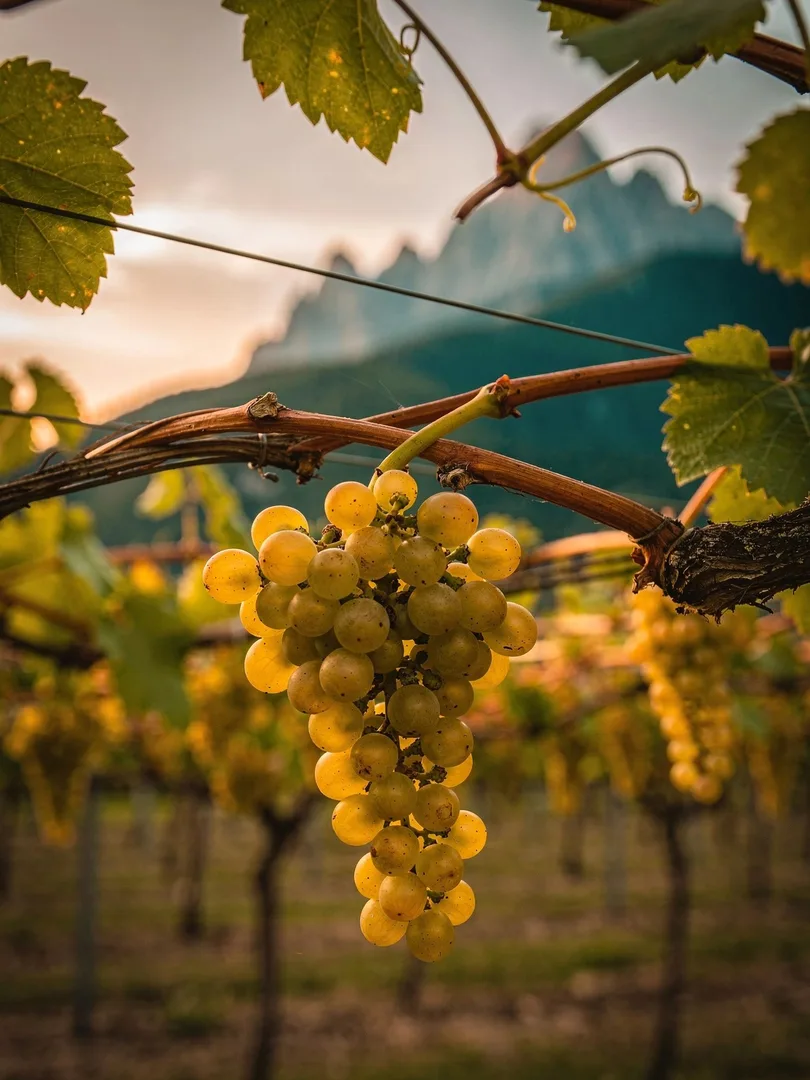
At these high altitudes around Trento, Chardonnay delivers citrus, green apple, and crisp acidity that gives the sparkling wine structure. The grape ripens early enough to reach the cellar safely even in cool mountain years, and it handles extended lees aging well. Vinified on its own, the wine is called Blanc de Blancs—a sparkling wine made entirely from white grapes.
Pinot Noir, known in Germany as Spätburgunder, provides body, red fruit, and richness. It's more demanding, since its thin skin is sensitive to moisture and rot, and it tends to need cooler, airier hillside sites. When pressed quickly and gently, the juice stays pale, turning red grapes into white sparkling wine. For rosé, the juice stays on the skins longer.
Pinot Meunier, known in Germany as Schwarzriesling, buds late and so escapes many spring frosts—a real advantage in the mountains. In the glass it contributes fruit and roundness, bridging Chardonnay and Pinot Noir.
Pinot Bianco contributes a mild, creamy fruitiness and softens the acidity. Many people know Pinot Bianco only as a still wine, but in sparkling wine it can make the blend softer and rounder. How much of each variety ends up in the bottle is decided by each house through its blend.
Why exactly these four? They retain their acidity when harvested early, and their aromas are subtle enough not to clash with the notes that develop from extended lees aging. The result is a finely structured style with citrus, apple, and brioche, especially pronounced at high altitude.