Plain and Foothills
Soil & Climate
There are no chalk cellars here as in Champagne, and the soil shapes the wine less as well. The landscape of the DOC is split in two. Across the wide expanses between Treviso, the Piave and the Adriatic, rivers have deposited gravel, sand and clay over millennia, deep and nutrient-rich. A large share of the vines grow there, in long rows well suited to machine farming.
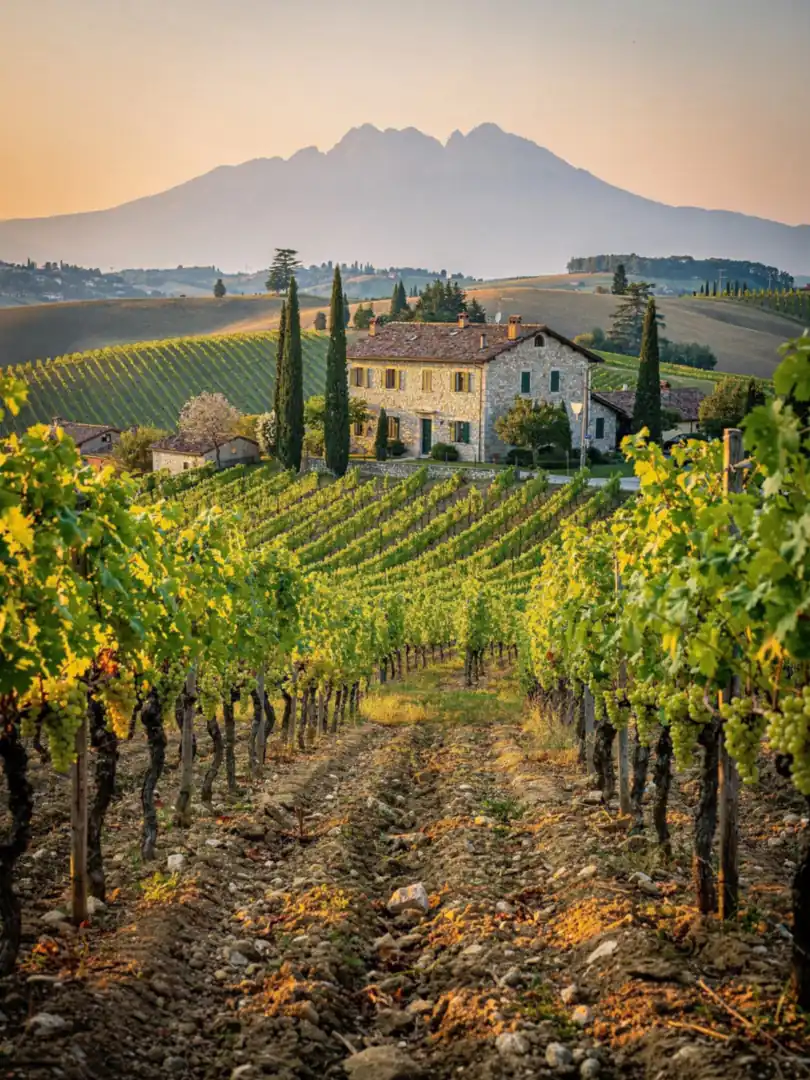
The hill zone begins further north. The Colli Asolani stretch from the foot of Monte Grappa as a chain of gentle ridges toward Montello. Here, aspect, elevation and soil change from plot to plot, and with them the timing of ripeness. That's precisely why the DOCG Asolo is more tightly defined than the large DOC, which spans nine provinces.
Two neighbors have shaped the climate. To the north, the Alps and the Grappa massif block cold winds; to the south, the nearby Adriatic has a moderating effect. Summers are warm, nights cool noticeably, and this coolness protects the acidity of the berries. For a sparkling wine meant to be drunk young and fresh, that matters more than anything else.
Unlike the lees-aged wines of the north, what counts here isn't the rock in the glass but ripeness hitting its exact point. Glera ripens late and bears generously. Picked too early, the wine tastes thin; left too long, the acidity drops. Growers therefore set the harvest date strictly around this balance.
The quantity also depends on the weather. According to press reports, the consortium wanted to limit supply for the 2026 harvest so that no more wine is produced than the market can absorb. A surface area of 28,100 hectares doesn't need to be fully exploited every year, and the consortium makes sure the harvest matches demand.