Glera and Its Companions
Grape Varieties
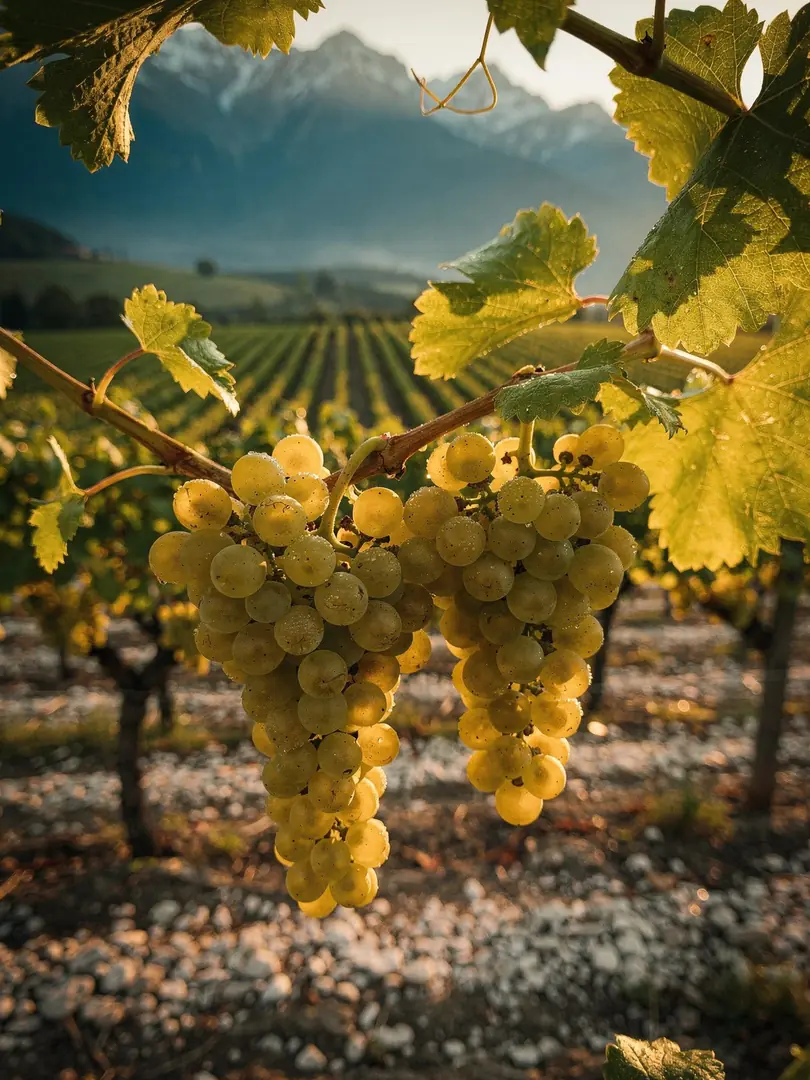
Glera is the leading grape, long at home here. On the Karst, it ranks alongside the white Vitovska and the red Terrano as one of the varieties that have grown there for a long time. Because it had to give up its old name Prosecco in 2009, many drinkers still don't know the grape by its own name.
The Prosecco DOC specification requires at least 85 percent Glera. The remaining 15 percent may come from other varieties, which according to the specification include Verdiso, Bianchetta Trevigiana, Perera, and Glera lunga, as well as Chardonnay and the Pinot varieties, vinified white in that case. Each producer decides which share to use.
Why this variety in particular? Glera ripens late, grows vigorously, and retains its acidity. The grapes yield a light, neutral base wine with aromas of apple, pear, citrus, and acacia blossom, carrying little alcohol and blending cleanly with carbon dioxide. The minimum requirement for the cuvée's total alcohol under the designation is therefore 8.5 percent ABV, half a point below the usual threshold.
This suits a sparkling wine meant to be drunk young. Glera brings no tannins and no heavy spice that would need years of aging to soften. Its strength lies in fruity aromatics and freshness, and these are best preserved in tank.
In Friuli, the Pinot varieties and Chardonnay are added, grapes already grown there as still wine. Whether a producer blends them into the Prosecco is their own choice. The variety barely appears on the label, since since 2010 only the designation of origin is shown there.