Yeast and Dosage
Lees Aging & Dosage
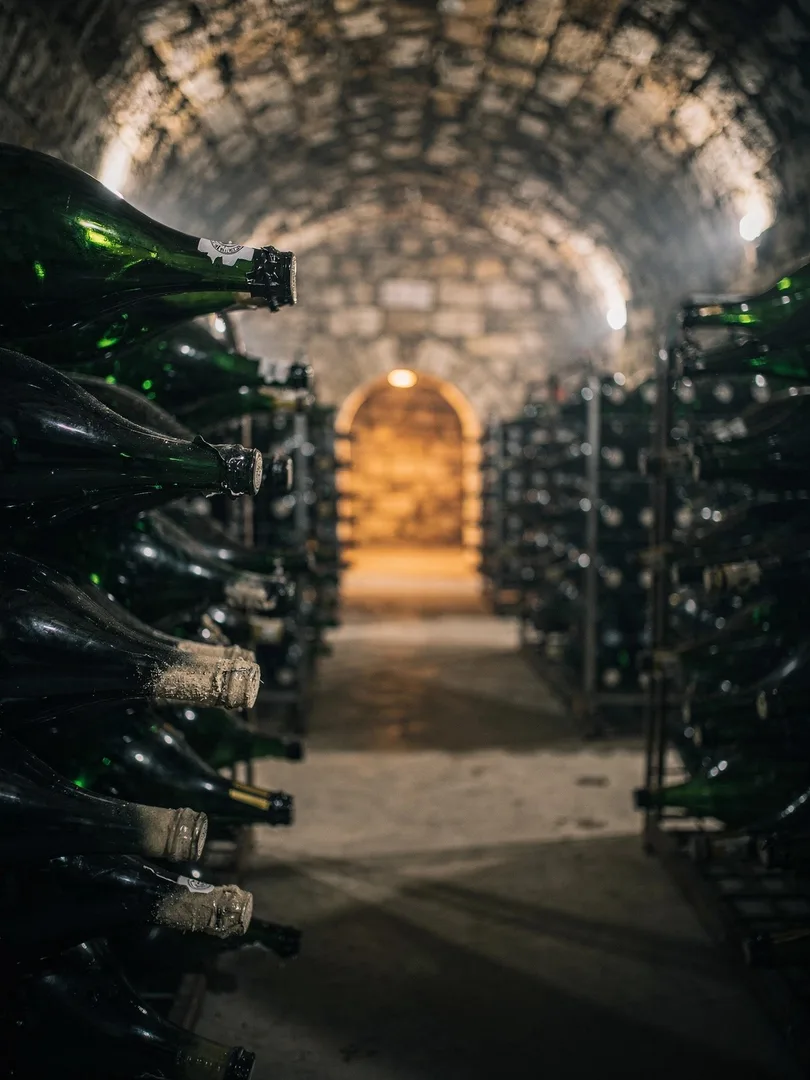
How long does Crémant de Luxembourg rest on its lees? At least nine months, continuously, within the same facility; the same minimum applies to Crémant de Wallonie. Houses aiming for more simply extend the aging time, as the law sets only the lower limit.
During this time, the yeast continues to work even though it is long dead. Its cells slowly break down, releasing compounds into the wine that taste of brioche and nuts. This process is called autolysis. The longer it lasts, the creamier the mousse becomes and the deeper the flavor. This doesn't make the wine sweeter, but rounder: the acidity remains, while the rough edges disappear.
Eventually the yeast must be removed. The bottles are gradually turned upside down and rotated until the sediment collects in the neck. During disgorgement, the cellar master briefly opens the bottle, the pressure ejects the yeast plug, and the wine remains behind, clear.
Next comes the dosage liqueur, often simply called the dosage: a mixture of wine and sugar refills the bottle neck and determines the final sweetness. For Crémant, sugar content must stay below 50 g/l, meaning only the categories brut, extra dry, dry, and off-dry are possible; mild, the sweetest level, is excluded.
Brut stays under 12 g/l, while Extra Dry falls between 12 and 17 g/l, tasting noticeably sweeter than Brut; the label tolerance is 3 g/l.
After the dosage, the bottle receives its final cork and rests a while longer so the wine and dosage can integrate. Only then does it leave the cellar, whether in Grevenmacher or Wormeldange. Crémant de Wallonie may produce no more than an average of 95 hectoliters per hectare.