Second Fermentation
The Second Fermentation
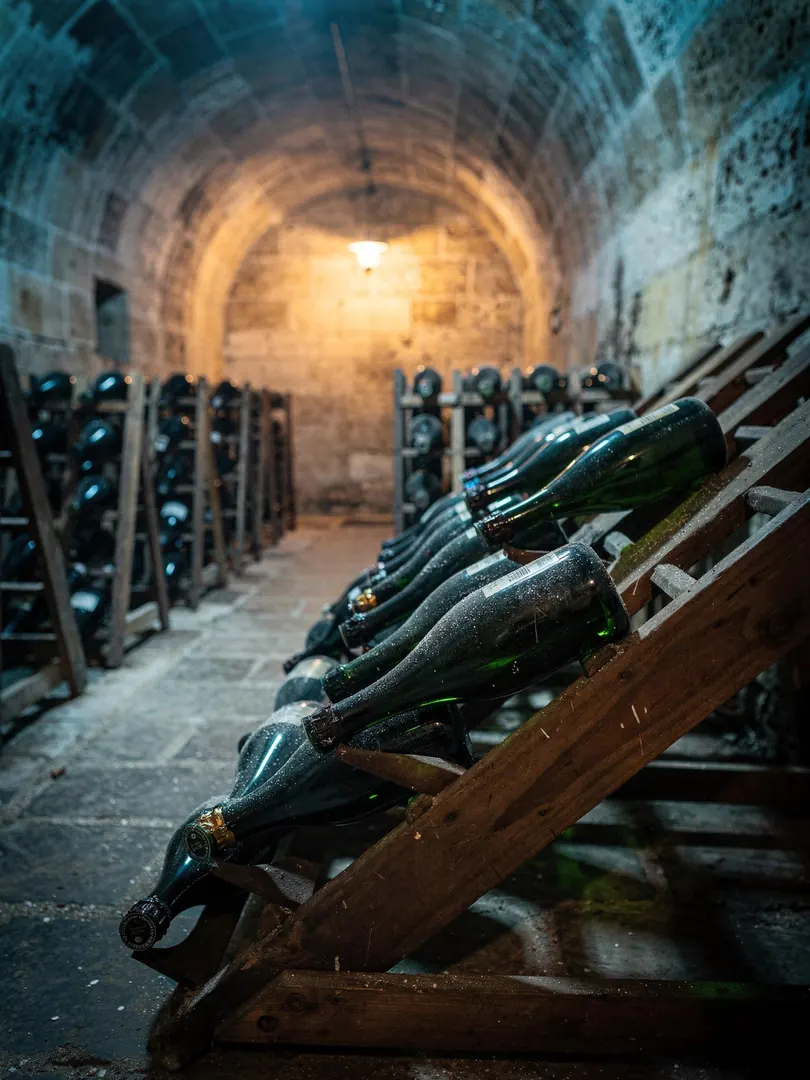
How is Crémant de Luxembourg made? It must be produced using the traditional method. The second fermentation takes place in the very bottle in which the sparkling wine will later be sold, and the yeast is finally removed through disgorgement (removing the yeast sediment) without any transfer to another vessel. Tank fermentation or transfer to a pressurized tank is not permitted for Crémant.
It begins with the dosage for fermentation, technically called the tirage: sugar and yeast are added to the finished base wine, after which the bottle is sealed with a crown cap. The sugar ferments slowly within the sealed bottle, the yeast converts it into alcohol and carbon dioxide, and since the gas has nowhere to go, it dissolves into the wine.
Pressure builds as this happens. A quality sparkling wine must reach at least 3.5 bar at 20°C—more pressure than in a car tire. That's why the bottles need thick glass. The closure must hold firm: first a crown cap, later a cork secured with a wire cage. This wire cage, called an agraffe, keeps the cork from giving way under pressure.
How much sugar the house adds determines the pressure: more sugar yields more carbon dioxide and a livelier sparkle, less sugar produces a milder, creamier mousse.
For comparison: under EU law, a quality sparkling wine with protected origin made in tank requires a minimum production period of six months, while a bottle-fermented one requires nine. Crémant falls on the stricter side and must remain continuously in the same facility on its lees throughout this time. The same applies to Crémant de Wallonie, which must age at least nine months in the bottle.
According to the house, Bernard-Massard in Grevenmacher bottles around three and a half million bottles of Sekt and Crémant each year. The rules of the traditional method apply to its Crémant, just as they do to the Poll-Fabaire line.
Crémant de Luxembourg BrutBottle fermentation · Auxerrois, Pinot Blanc, Chardonnay, Pinot Noir
- Time on lees
- 9–24 Months
- Sugar
- 6–12 g/l
- Alcohol
- 12–12.5 % vol
Apple, citrus, and brioche, with a gentle sparkle and round body.