Tank or Bottle
The Second Fermentation
What's the difference between bottle fermentation and tank fermentation in Austrian Sekt? In Burgenland, the tier determines the method. Klassik may be made either way, tank fermentation included. Reserve and Große Reserve, however, are permitted only as traditional bottle-fermented wines.
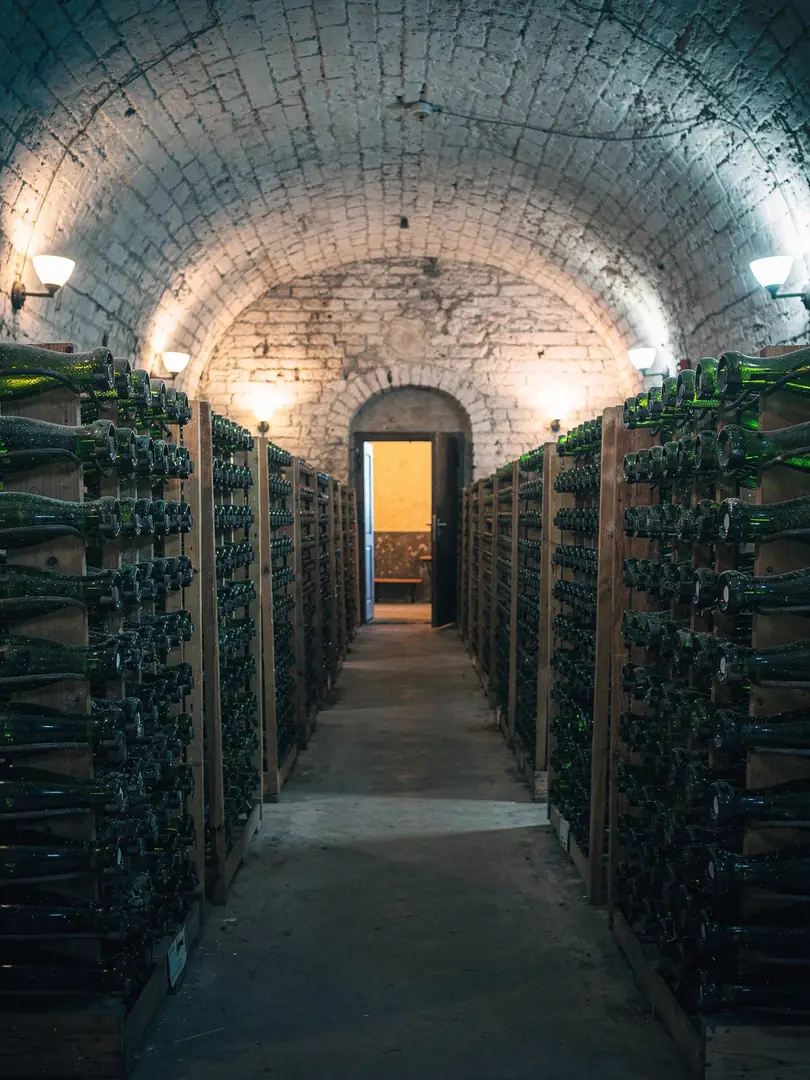
In bottle fermentation, the base wine receives a tirage dosage—a mixture of sugar and yeast—before the bottle is sealed. The yeast ferments the sugar, and since the resulting carbon dioxide can't escape, it dissolves into the wine. The tirage dosage may raise total alcohol by no more than 1.5 percent by volume, and the finished wine must reach at least 3.5 bar of pressure in the bottle.
Tank fermentation follows the same principle on a larger scale. EU law requires a minimum production time of 6 months for Qualitätsschaumwein g.U., with fermentation and lees contact lasting at least 90 days—or 30 days in tanks fitted with agitators. Austria's Klassik tier adds a further requirement: nine months of lees aging.
Szigeti in Gols calls traditional bottle fermentation its hallmark. The label may state 'traditional bottle fermentation' only if the Sekt has rested uninterrupted on its lees in the same winery for at least nine months and was clarified through disgorgement. The term 'Champagne method' remains strictly off-limits outside Champagne itself.
In the transfer method, the bottle is emptied under pressure into a tank, the wine is filtered, and then rebottled. This isn't an option for Reserve or Große Reserve, where the same bottle must remain in use from tirage through disgorgement. A label reading simply 'bottle fermentation,' without the word 'traditional,' may well indicate a transfer-method wine.
Sekt Austria Burgenland KlassikTank fermentation · Welschriesling, Weißburgunder, Chardonnay, Zweigelt
- Time on lees
- 9–12 Months
- Sugar
- 3–12 g/l
- Alcohol
- 11.5–12.5 % vol
Fresh and fruity, with green apple and citrus; made either by tank or bottle fermentation.