Two Houses, 1842
Region & History
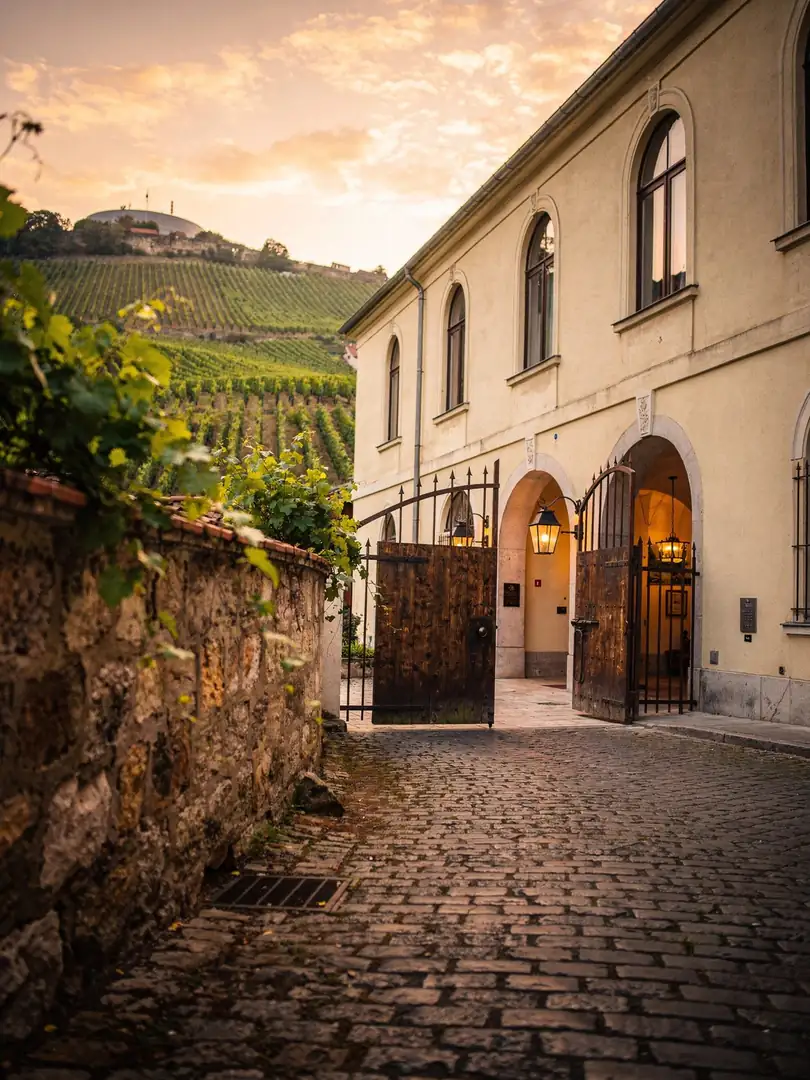
Anyone wanting to know how Austrian Sekt came to be should head to Vienna-Heiligenstadt. There, at the foot of Döbling's vineyards, lies the Schlumberger sparkling wine cellar. The house dates back to 1842 and to Robert Schlumberger, a native of Stuttgart who had previously worked at the Champagne house Ruinart in Reims.
The company was actually founded first in Goldeck in the Maital valley in Bad Vöslau, south of Vienna. Following the French model, Schlumberger wanted to make a sparkling wine from native grapes. His Sekt is considered the first Austrian sparkling wine made by the traditional method, with secondary fermentation in the bottle. Later, he acquired several adjoining cellars in Heiligenstadt, which remain the heart of the winery to this day.
A second Viennese house is Kattus. According to the company, Johann Kattus founded a specialty goods business am Hof in the city center in 1857, selling wine, coffee, tea, exotic fruits, spirits, and Champagne. The house began producing its own Sekt in 1890. Johann Nepomuk Kattus created the brand Hochriegl, named after his best vineyard site, and the house supplied the Imperial and Royal Court. Today Kattus is headquartered on Billrothstraße in Döbling.
Since 2016, the Sekt Designation Ordinance has regulated how much Austria is in the glass. The Austrian Sekt Committee developed three tiers for this, known as the Sekt g.U. pyramid: Klassik, Reserve, and Große Reserve. A red-white-red band sits on the bottle neck bearing the mark "Österreichischer Sekt geschützter Ursprung" (Austrian Sekt Protected Origin). Official inspection is carried out via the Federal Office for Viticulture in Eisenstadt and the Klosterneuburg viticultural college (HBLA).
Producers who forgo the three tiers may still label their product "Sekt," just without the g.U. designation. Such branded Sekt can be made from base wine of any origin and is common on the market. The abbreviation itself, however, tells you that the grapes come from the stated region and that the rules of the pyramid were followed. The ordinance was amended again in 2018.