Vaults and the Vienna Woods
Soil & Climate
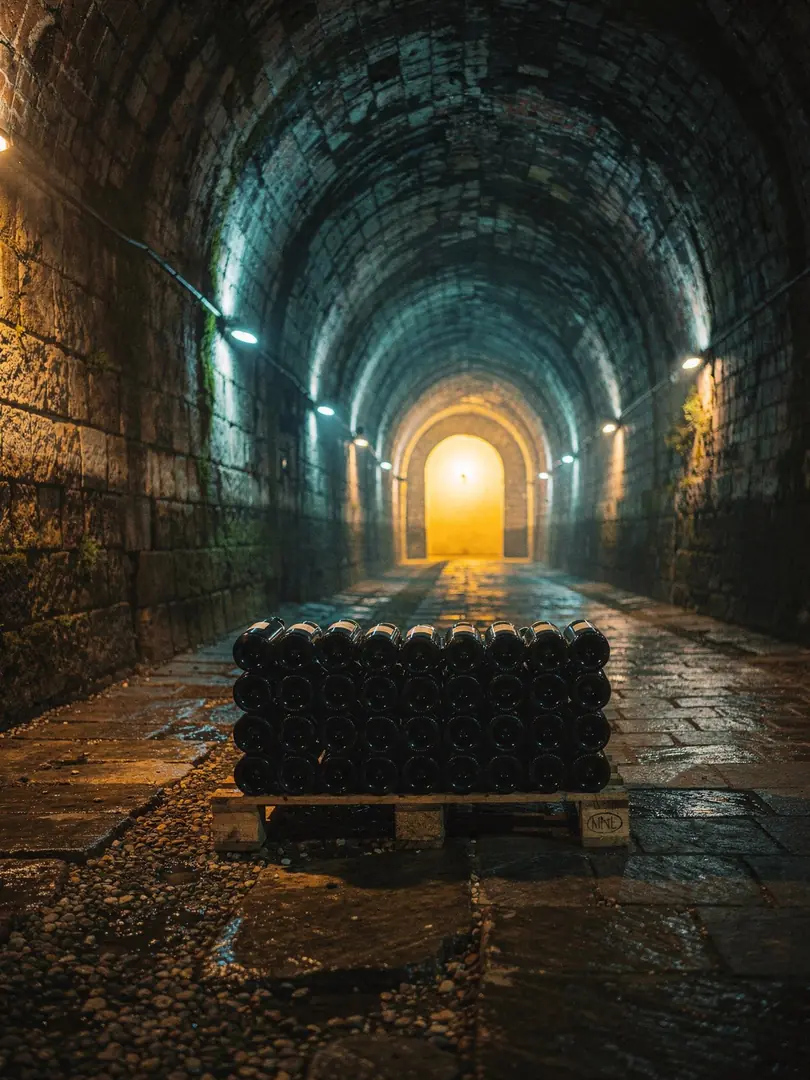
Beneath the streets of Heiligenstadt runs a network of vaulted cellars. According to Schlumberger, it stretches roughly two and a half kilometers and grew together from several cellars the house acquired over time. Here the Sekt rests to mature, and on tours visitors can walk through the passages.
Such a cellar is ideal for sparkling wine, because underground temperatures stay similarly cool all year round. At low, steady temperatures the yeast works slowly, and the Sekt retains its freshness. Unlike Champagne, there's no chalk in Vienna, but the purpose of the cellars is the same.
The grapes themselves mostly don't grow within the city. Vienna does have vineyards on its outskirts, but base wines for Sekt often come from Lower Austria (Niederösterreich). The label then reads "Niederösterreich" after the Sekt g.U. designation, since the Klassik tier only requires a single federal state as origin.
The climate around Vienna is warm and fairly dry, influenced by the Pannonian Plain to the east. The Vienna Woods to the west bring cooler nights and fresh air. For Sekt, what matters most is that the grapes are harvested early, while acidity is still high and sugar levels are still low.
Schlumberger's origins lie in Bad Vöslau, on the edge of the Vienna Woods south of the city. That's where the company was founded in 1842, long before the cellars in Heiligenstadt were added.
With each tier of the pyramid, the origin requirements become stricter. For Reserve, harvest and pressing must take place in the same federal state. Große Reserve requires a single municipality with at least 85 percent of the grapes, and a single vineyard site (Ried) or larger growing area may also be named. This turns the place name into a mark of quality, similar to vineyard designations in Burgundy.