Early and Gentle
Base Wine & Cuvée
The harvest for Sekt begins earlier than for still wine. Picking is guided by acidity rather than sugar content, so the base wine stays lean and fresh with room left for secondary fermentation. Depending on the tier of the pyramid, the process follows different levels of strictness.
For Reserve and Große Reserve, the ordinance mandates hand-harvesting. The grapes are collected in crates filled no higher than 35 centimeters, so the berries at the bottom aren't crushed. Klassik carries no such requirement, and machine harvesting is also permitted here.
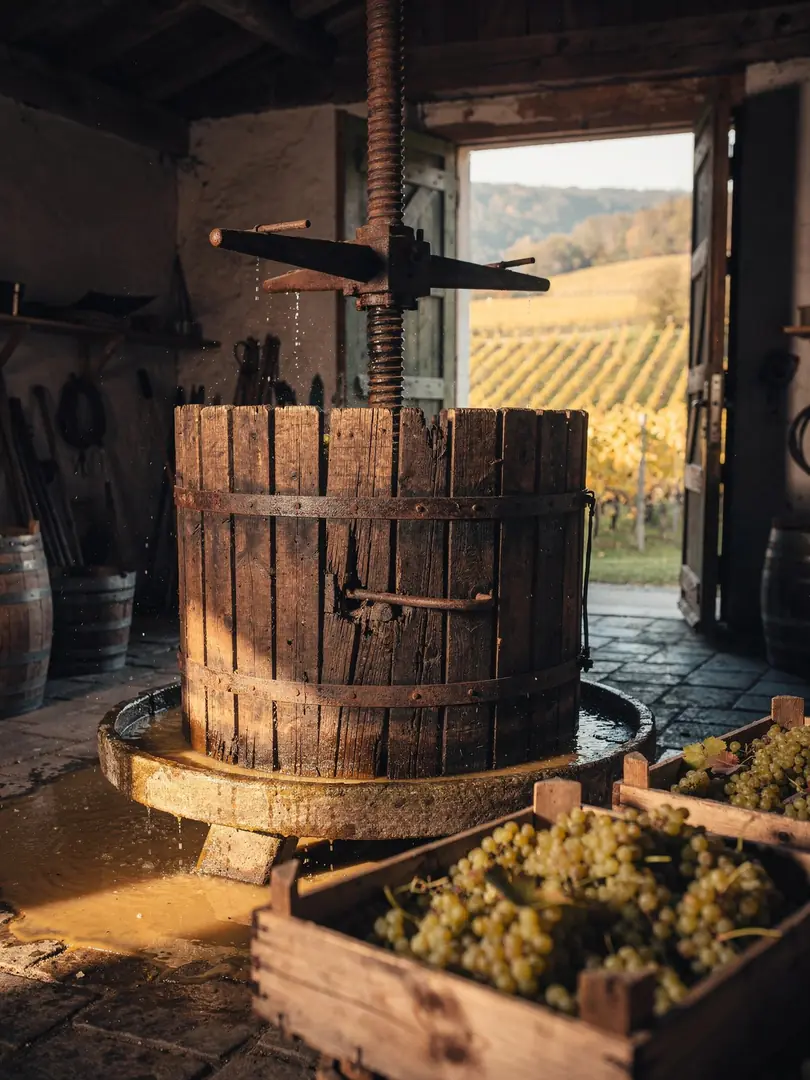
Whole-cluster pressing follows. The grapes go into the press without destemming; the stems act like a filter, and the juice runs off clear and gentle. For Reserve, the yield may not exceed 60 percent — that is, 60 liters of must from 100 kilograms of grapes. For Große Reserve, the limit is 50 percent.
The cuvée is created from the base wines. The cellar master blends wines of different varieties, vineyard sites, and sometimes vintages until the house style is achieved. A portion of older reserve wines helps maintain a consistent taste year after year. At Schlumberger and Kattus, this task takes place in the Vienna cellars.
Two technical terms from everyday tasting belong here. Blanc de Blancs means the Sekt is made entirely from white varieties. Blanc de Noirs means the Sekt was pressed from red grapes, whose juice stays pale because the color resides in the skin.