Welschriesling and Others
Grape Varieties
The ordinance does not prescribe which grape variety belongs in an Austrian Sekt. What's required are quality wine varieties, meaning grapes approved for quality wine. This leaves plenty of room, and the houses make use of it.
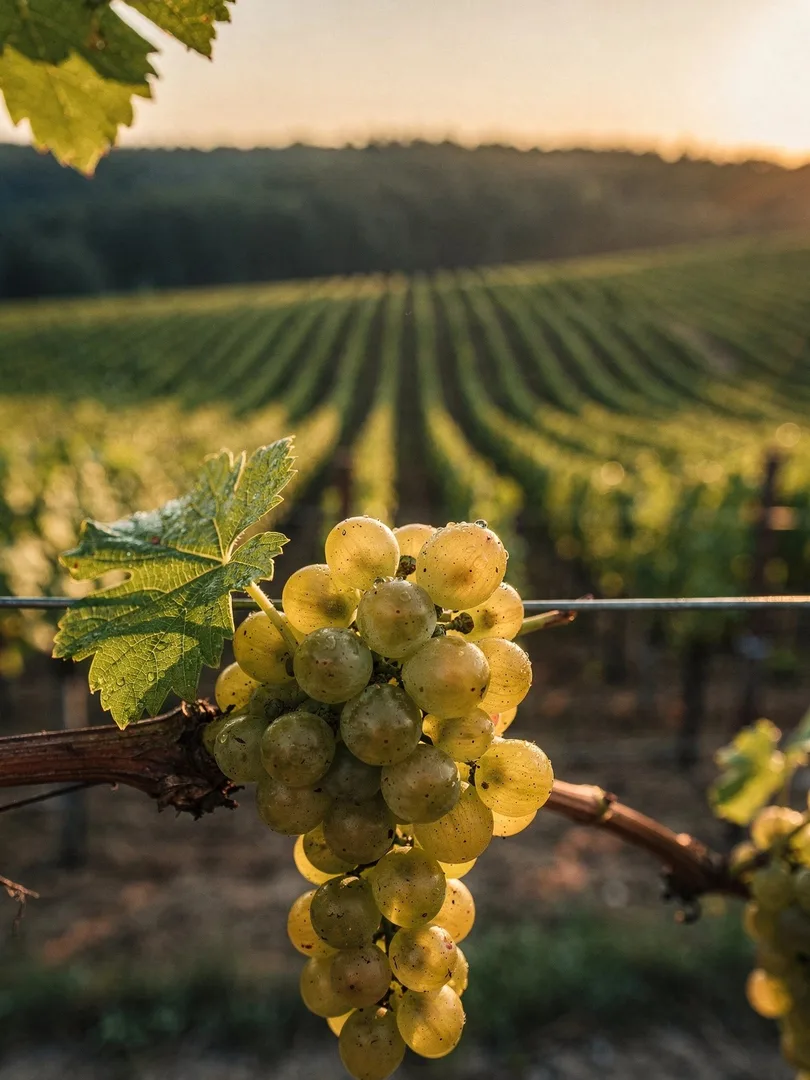
Welschriesling and Grüner Veltliner are frequently named. Welschriesling brings high acidity and little varietal character of its own — exactly what a sparkling wine needs, since the perlage should be shaped by lees aging rather than exuberant fruit. Kattus has even made a Pét-Nat from Welschriesling called Nepomuk, whose fermentation is completed in the bottle.
Grüner Veltliner contributes a spicy, slightly peppery note. It rounds out as the Sekt spends more time on the lees. Added to these are Riesling with its crisp acidity, as well as Weißburgunder (Pinot Blanc), Chardonnay, and Pinot Noir. These combine into cuvées, with each variety contributing its part.
Rosé is also available as Sekt g.U., such as a Kattus Cuvée Rosé Brut at the Klassik tier from Niederösterreich. Red vinification isn't strictly necessary for this; often brief contact between the must and the berry skins suffices.
The fact that variety choice is free doesn't mean it's arbitrary. A Sekt meant to rest on the lees for thirty months needs grapes with enough acidity and substance, or the wine will taste tired after three years. Ripe fruit with low acidity quickly fails in the Sekt cellar. Especially for long aging, acidity pays off, as it keeps the Sekt lively for years.