Clay, Limestone, Atlantic
Soil & Climate
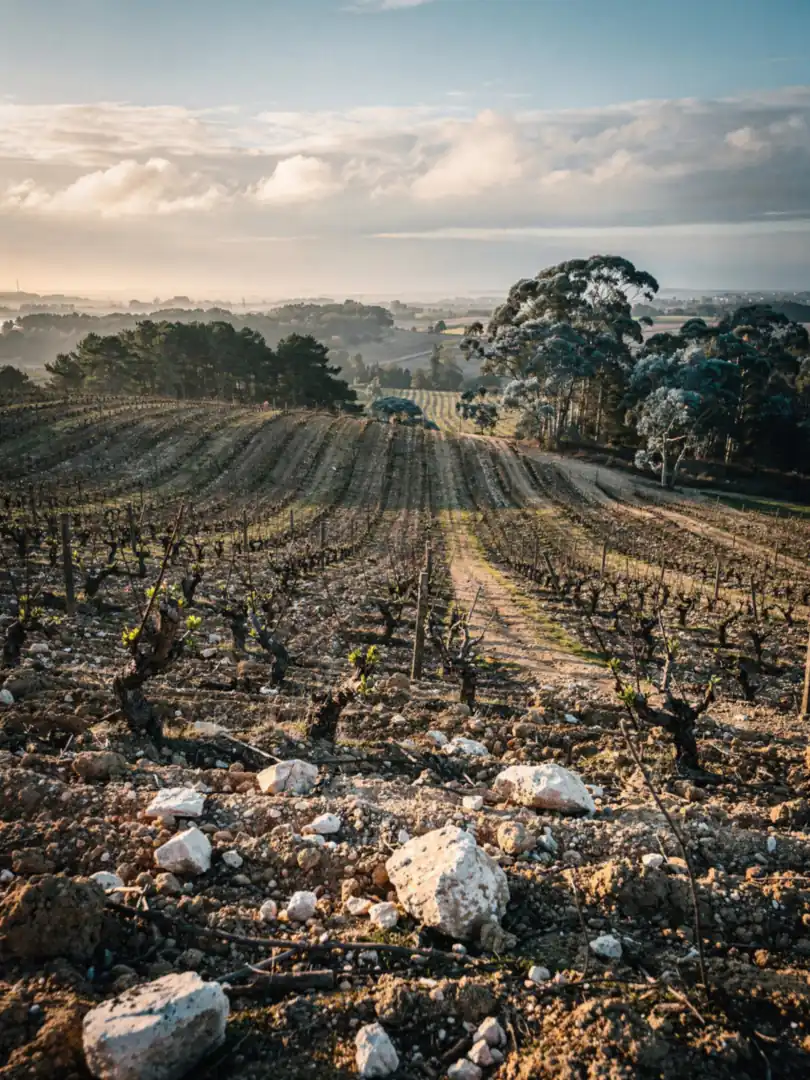
Anyone standing among the vines of Bairrada in winter will quickly find heavy clay stuck to their shoes. The soil is clayey and rich in limestone. It holds water, retains coolness, and keeps the roots from having to chase cool ground deep below the summer heat. For grapes destined to become sparkling wine, that's a good starting point.
The Atlantic lies close by and tempers the temperatures. Summers turn warm but rarely extreme, and the nights stay cool. On top of that, 900 to 1,000 millimeters of rain fall each year, more than in most of Portugal's wine regions. This cuts both ways: the grapes ripen slowly and retain their acidity, but rain in late summer risks rot.
Baga in particular ripens late and demands patience. For red wine, growers often wait well into autumn. Those making sparkling wine harvest earlier, while acidity is high and sugar is low, since bottle fermentation adds further alcohol. Harvest for Espumante therefore begins ahead of the main harvest for still wines.
The land is divided into many small plots, often just a few rows each. There are no large, named, contiguous vineyards here as known from Champagne. The appellation is considered as a whole: clay, limestone, coastal proximity, and the varieties suited to them.
Underground, the same pattern continues. In Caves do Solar de São Domingos in Ferreiros, shaded, damp passages run beneath the manor house. It stays cool and steady there all year round, exactly what a bottle resting on its lees for months needs, without ever warming up.