Limestone and Clay
Soil & Climate
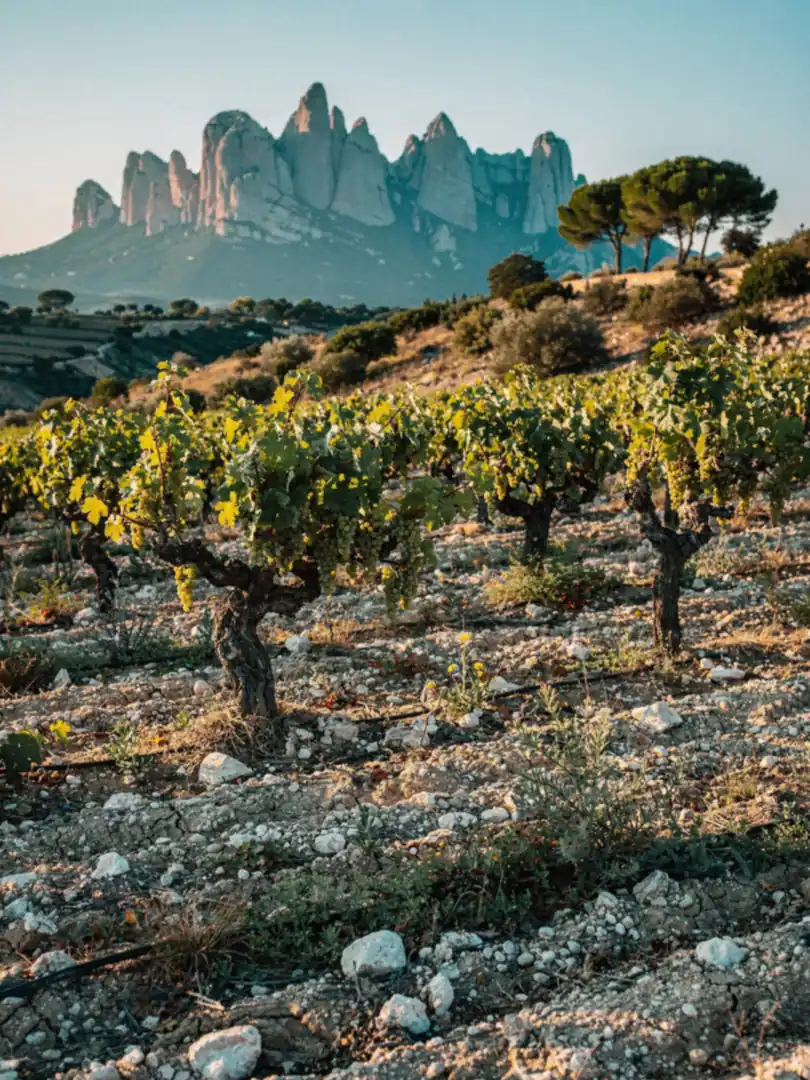
Looking south from Montserrat toward the coast, the Penedès drops in stages. Up in the Alt Penedès, the vineyards sit higher and the nights stay cooler. Further down, near the Mediterranean, the grapes ripen earlier in the warmth. Experts therefore distinguish a coastal zone, a middle zone and a higher-elevation zone. The differences in altitude make it possible to blend grapes for base wines from several sites.
The soil is mostly limestone and clay. Limestone soils are known for retaining water and often give the wine a taut, mineral character. Clay holds moisture and makes the vines more resilient during the dry summer. Both qualities are welcome for sparkling wine, which needs grapes that keep their acidity.
The climate is Mediterranean, with mild winters, hot summers and little rain. Corpinnat requires organic farming, and growers feel this in wet years, when mildew threatens and synthetic treatments aren't an option. Cover crops between the rows hold water and humus in the soil and help support the vines.
As with any sparkling wine, the timing of the harvest determines the freshness. Because the heat causes sugar levels to rise quickly, the harvest for the base wine begins early in late summer, long before other wines are picked. The sea breeze cools the slopes in the evening, and the difference between day and night temperatures helps preserve aromas and acidity.
Individual plots carry their own names. At Recaredo, a Xarel·lo parcel called Turó d'en Mota was planted in 1940 and, according to the house, yields its own bottling. Old vines produce little fruit, and that's exactly what makes the wine suited to long aging. The cellars mostly lie underground, where the temperature barely fluctuates over the year.