Three Leading Varieties
Grape Varieties
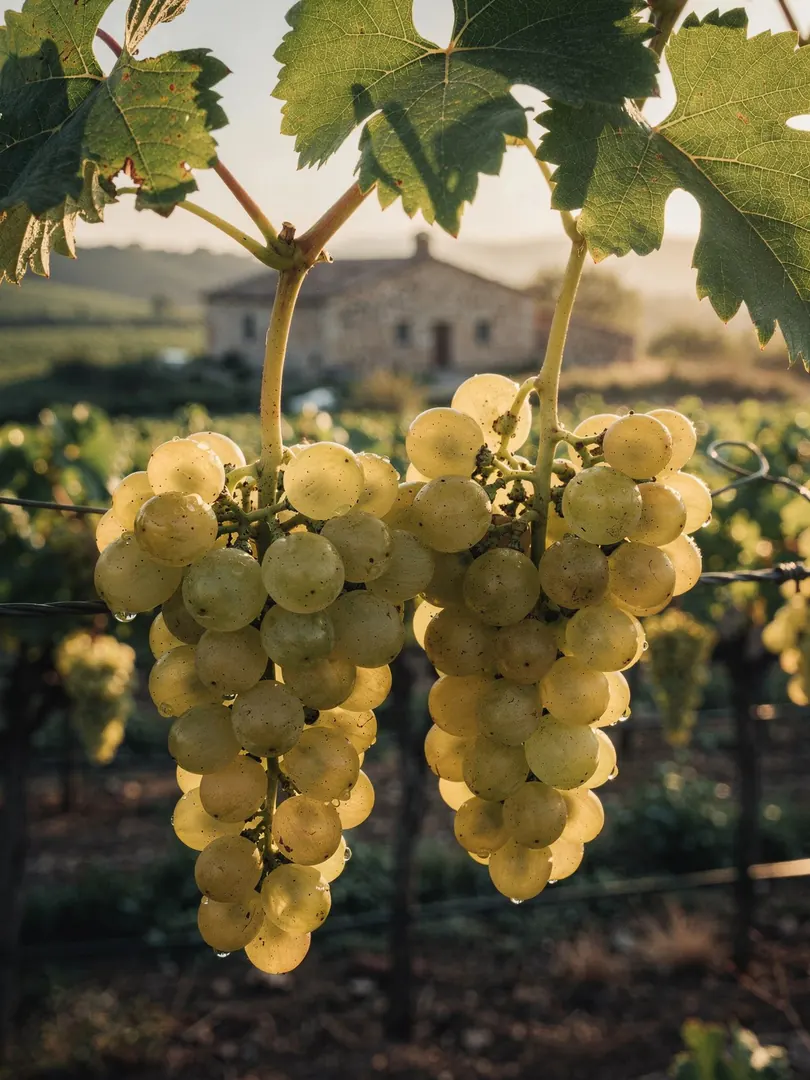
Which grapes go into Cava? Three white varieties cover more than four-fifths of the vineyard area: Macabeo at 36.5 percent, Xarel·lo at 26, and Parellada at 19.2 percent. Unlike in Champagne, it's not Chardonnay and Pinot Noir that form the backbone here, but native white grape varieties.
Macabeo is called Viura in Rioja. It's the most widely planted variety in the region and yields fresh, floral wines with mild acidity. In the blend, it usually provides the light, open base tone on which the other varieties build.
Chardonnay brings roundness and creaminess to the blend and is especially prized for Reserva Cavas and Blanc de Blancs. Trepat is a red variety native to Catalonia and is responsible for pale, juicy-fruity rosé Cavas.
Xarel·lo is considered the characterful Catalan variety: robust, earthy, with drive and structure, staying fresh even after years on the lees. Parellada ripens late, stays delicate and fragrant, and prefers to grow in cooler, higher sites.
Added to these are the varieties that the D.O. Cava additionally permits: Chardonnay at 6.7 percent, Garnacha Tinta at 5.2, Trepat at 3.1, Pinot Noir at 2.3, Subirat Parent at 0.7, and Monastrell at 0.2 percent. Rosé is made from red varieties such as Garnacha, Trepat, Pinot Noir, or Monastrell—in 2025 that amounted to 13.98 million bottles.
Why these varieties in particular? Their advantage for sparkling wine is the acidity that's preserved even in the region's warmth, plus a rather neutral fruit character that later leaves room for the yeast aromas.
These percentages refer to the 2025 vineyard area, totaling 37,299 hectares. How much Macabeo or Xarel·lo goes into any individual Cava is decided by each house itself.