Limestone and Tunnels
Soil & Climate
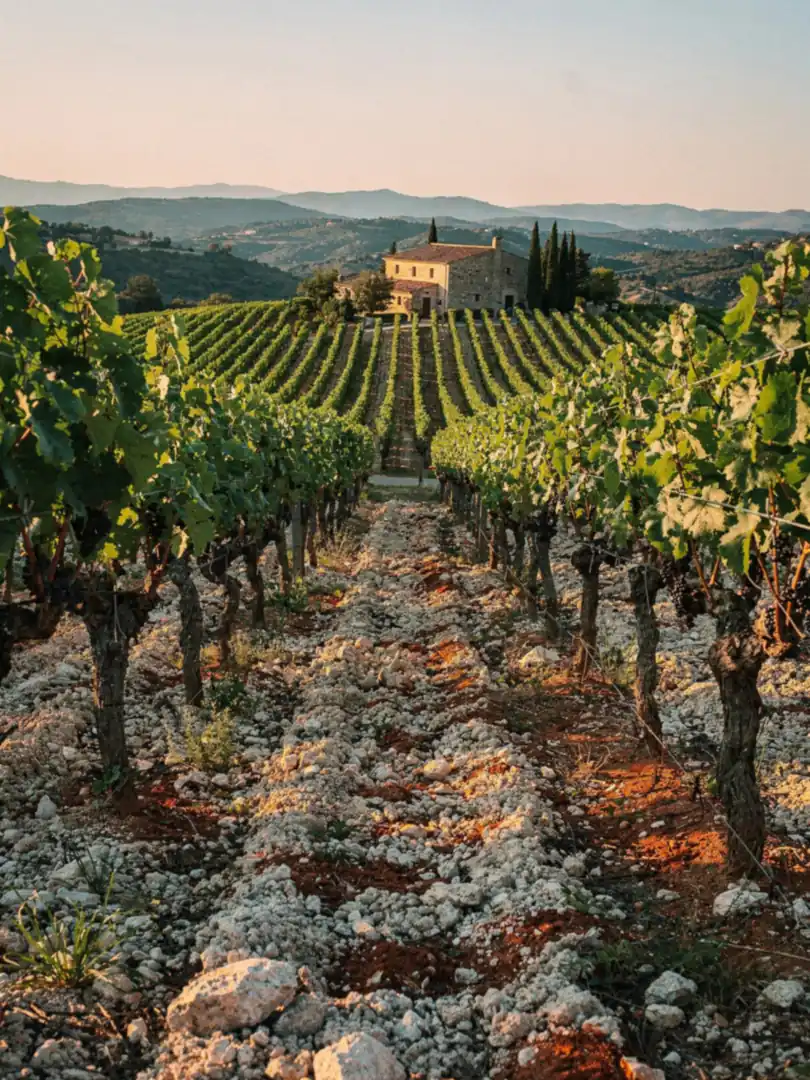
Cava grows in the Alt Penedès on gentle hills in the hinterland of Barcelona, not far from the Mediterranean. The soils around Sant Sadurní are predominantly limestone-rich with clay running through them. Such soils give wines a taut, mineral edge, and that's exactly what a base wine needs when it will later spend months resting on the lees.
The climate is Mediterranean, with mild winters and hot, dry summers. For sparkling wine, this is a balancing act, since the grapes must be picked early, while acidity is still high and sugar still low. Late-ripening varieties like Parellada therefore tend to grow in higher, cooler sites.
How delicate this balance is became clear in 2025. The D.O. Cava reported a total of 190.01 million bottles, down 12.88 percent from the previous year, citing drought and meager harvests as the cause.
Since zoning was introduced in 2020, the growing region has been divided into zones. Comtats de Barcelona, which includes Sant Sadurní, is the most important: it accounts for more than 95 percent of all bottles. All remaining zones, such as those in the Ebro Valley and Extremadura, together share less than five percent.
Beneath the town lies a second landscape. The Codorníu cellars alone comprise, according to the house, more than 30 kilometers of tunnels, where the bottles rest at a steady, cool temperature. The principle is simple: the more even the temperature, the slower and finer the wine matures on the lees.
At the very top stand the individual sites. The Cava de Paraje Calificado tier comes from clearly delineated vineyards, requires vines older than ten years, and organic viticulture. By 2025, this tier had grown to a total of 15 Cavas.