Harvest and Blend
Base Wine & Blend
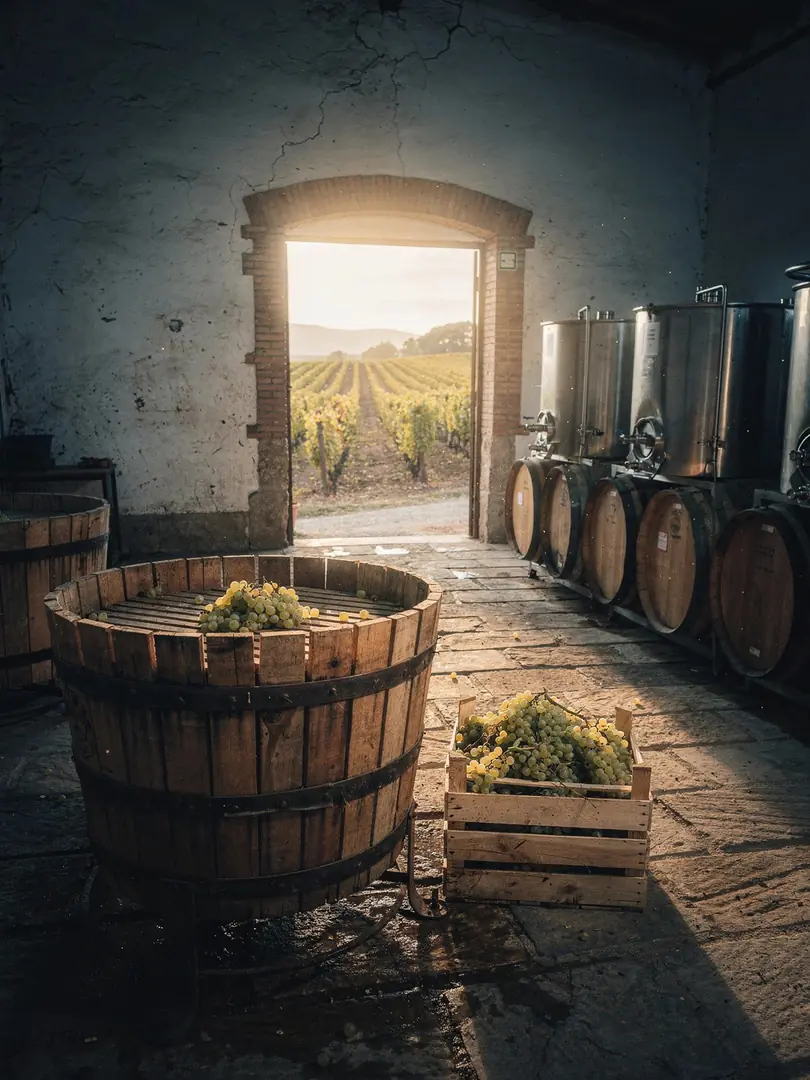
Before a Cava has bubbles, it's a still, dry white wine—the base wine. Its goal isn't fullness, but freshness. For this, the grapes ideally travel quickly and intact to the press.
The harvest begins in late summer, often as early as August, and it follows acidity rather than peak sugar levels. Parellada ripens last of the three main varieties, often not until September. Anyone harvesting for sparkling wine wants grapes with low sugar content, so that the finished Cava later lands at around 11.5 to 12 percent alcohol and doesn't turn heavy.
Pressing is done gently, so the juice stays pale and extracts almost no tannins from the skins. The first, especially clear portion of the must is considered the finest. After that, the must ferments separately by variety and vineyard, usually in stainless steel tanks.
In winter, the cellar master's work begins. He tastes each of these individual wines and blends them into the cuvée, the assemblage. Macabeo brings fruit, Xarel·lo backbone and length, Parellada aroma, and Chardonnay, where it's used, creaminess. This blending is the real craft, since a house wants its wine to taste like itself, year after year.
There are rules regarding vintage. A Cava de Guarda Superior always carries a vintage and therefore consists of wines from a single harvest year. A Cava de Guarda without a vintage, however, may blend different years, and for this many houses keep reserve wines from earlier harvests on hand, which keep the house style stable even in difficult years.
Color is also decided early on. A rosé Cava gets its color from red varieties like Garnacha or Trepat. A Blanc de Noirs, a pale Cava made from red grapes, requires very careful pressing so the juice doesn't pick up color.