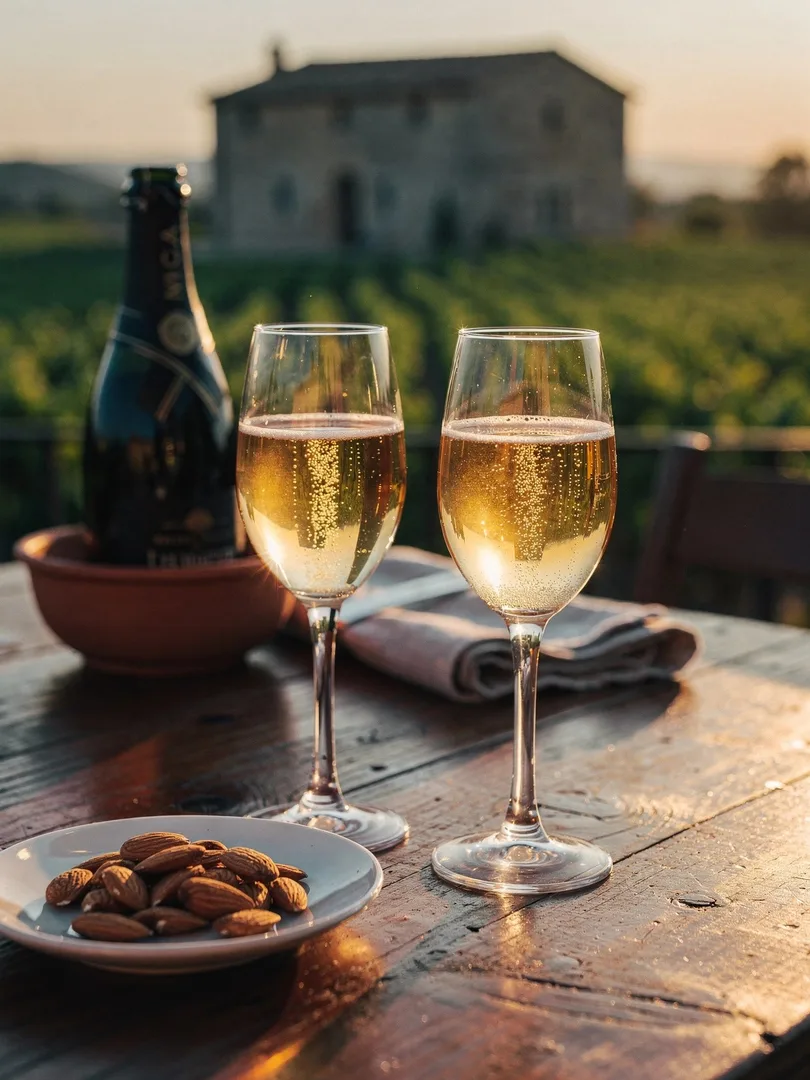
Apple, Almond, Tulip
Tasting
What does Cava taste like? Mostly green apple, citrus peel, and white blossoms, with a slightly earthy, sometimes herbal note coming from the Xarel·lo. With Reserva or Gran Reserva, brioche, almond, and toasted nuts take center stage.
Two houses from Sant Sadurní show just how wide the spectrum is. Cordon Negro from Freixenet, bottled in a matte black bottle, is a well-known, fresh Brut. Anna de Codorníu, the Chardonnay Cava from Codorníu, shows more creaminess and fruit.
Cava belongs in a tulip glass or a slender white wine glass. The wide, shallow coupe lets aromas and bubbles escape too quickly. In a tulip glass, the bubbles rise in a fine stream, and the nose can actually catch the aroma.
Chilled to six to eight degrees Celsius, Cava tastes best; a Reserva can be served a touch warmer, letting more of its maturity show. Too cold suppresses the aroma; too warm, it turns broad and flabby.
A rosé Cava smells of strawberries and redcurrants, yet can be just as dry as a white Brut. That surprises many people.
When opening, take it slow. Don't shake the bottle beforehand, remove the foil, loosen the wire cage, and hold the cork firmly with one hand. With the other hand, turn the bottle—not the cork—slowly, until you hear just a soft hiss. A loud pop wastes carbonation. While tasting, pay attention to how fine the bubbles are and how long the acidity lingers on the palate.