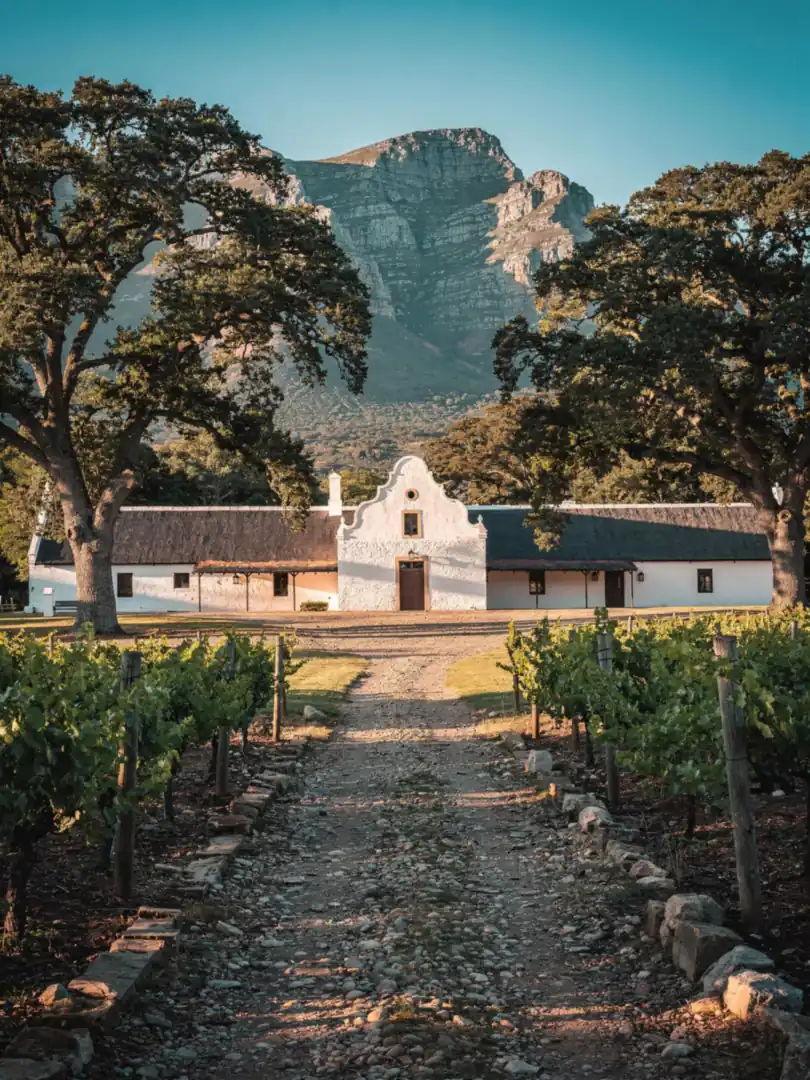
Cape Beginnings, 1971
Region & History
Cap Classique is the name for South Africa's bottle-fermented sparkling wine, and its story begins in 1971 in Stellenbosch. There, Frans Malan released the first vintage of Kaapse Vonkel at the Simonsig wine estate, which translates roughly as "Cape Sparkle."
Malan had visited Champagne and was convinced that a dry sparkling wine in the French style could also be made at the Cape. This was unusual, since most of the country's sparkling wines at the time were sweet and carbonated by adding carbon dioxide. Those who wanted to ferment in the bottle were going their own way.
That solo effort grew into a movement. In 1992, producers joined forces to form the Cap Classique Producers Association, known as the CCPA, and with it came the name Méthode Cap Classique, abbreviated MCC. It's not an origin designation like Champagne, but a term for a method: the second fermentation takes place in the bottle, and the association sets the rules for it.
One of those rules has changed. Since the 2019 vintage, a Cap Classique must spend at least twelve months on the lees, up from nine previously. The association raised the bar itself, without any government mandate.
The second setting for this journey is Robertson, a wine region on the Breede River, a good two-hour drive east of Cape Town. There, in 1983, entrepreneur Graham Beck bought the Madeba estate. According to the estate, he committed to sparkling wine made by the traditional method from the very start, and celebrated forty years of Cap Classique in 2023.
Because the name describes a method rather than a place, it can appear on bottles from many different regions. Stellenbosch, founded in 1679 and today a university town, and Robertson show two sides of this story: the mountain cradle and the limestone valley along the river.