Granite and Limestone
Soil & Climate
Two soils shape this story: granite and sandstone on the slopes around Stellenbosch, limestone in the Robertson valley. Both lie at the Cape, yet they taste different in the glass.
Stellenbosch lies around fifty kilometers east of Cape Town, nestled between mountain ranges. To the north rises the Simonsberg, the mountain that gives Simonsig its name. In the afternoon, cool sea air drifts in from False Bay through the valleys, taking the sharpest edge off the heat for the grapes. This lets them hold on to their acidity even as sugar levels climb.
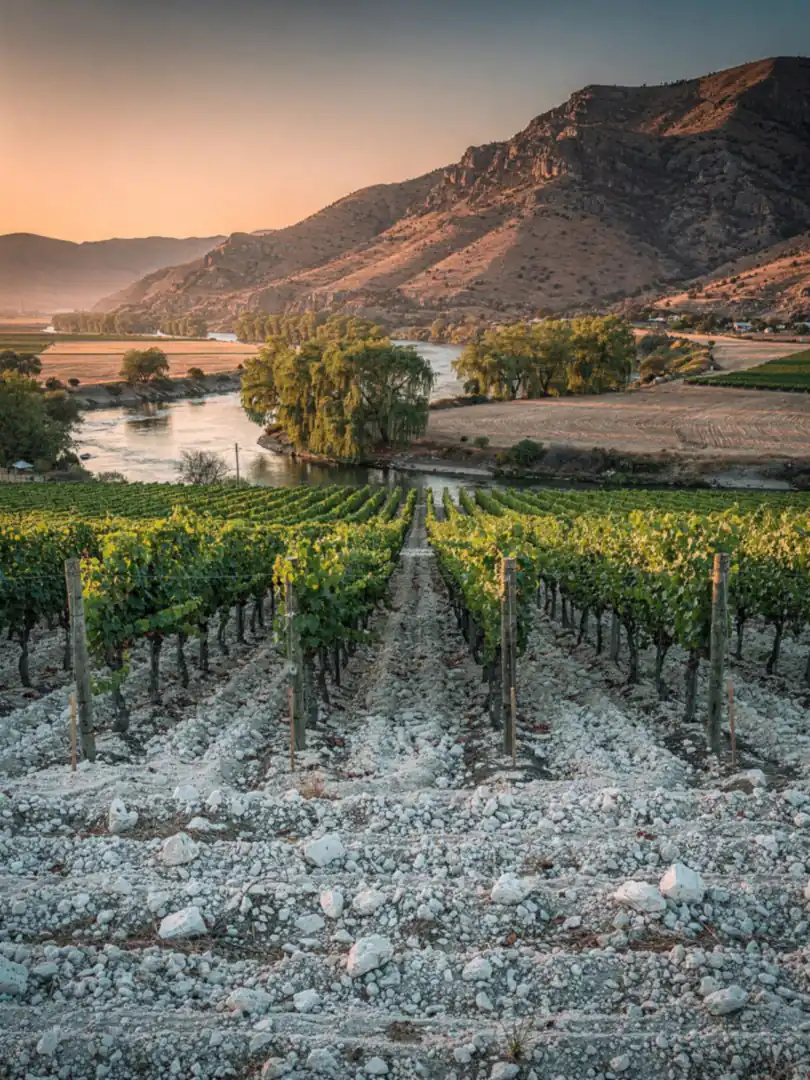
Robertson lies inland in the valley of the Breede River. It's dry here, the river supplies water for the vines, and the soil is rich in limestone. According to Graham Beck, this terroir recalls certain qualities of Champagne.
Limestone matters most for sparkling wine. According to the trade press, limestone-rich soils keep pH low and acidity high. pH measures how acidic a wine actually tastes on the tongue; the lower it is, the fresher the wine tastes and the better it ages. This is exactly the acidity a Cap Classique needs as its backbone, before yeast and dosage later round it out.
Because the calendar year at the Cape is flipped relative to Europe, harvest begins as early as January, in the height of summer. Grapes for sparkling wine are picked especially early, while the berries still carry low sugar and high acid. Every extra week of heat costs acidity, so picking date matters here more than almost anything else in the cellar.
Anyone tasting Cap Classique from both areas side by side should pay close attention to the acidity. Whether it comes from limestone or sea breeze only becomes clear in the glass.