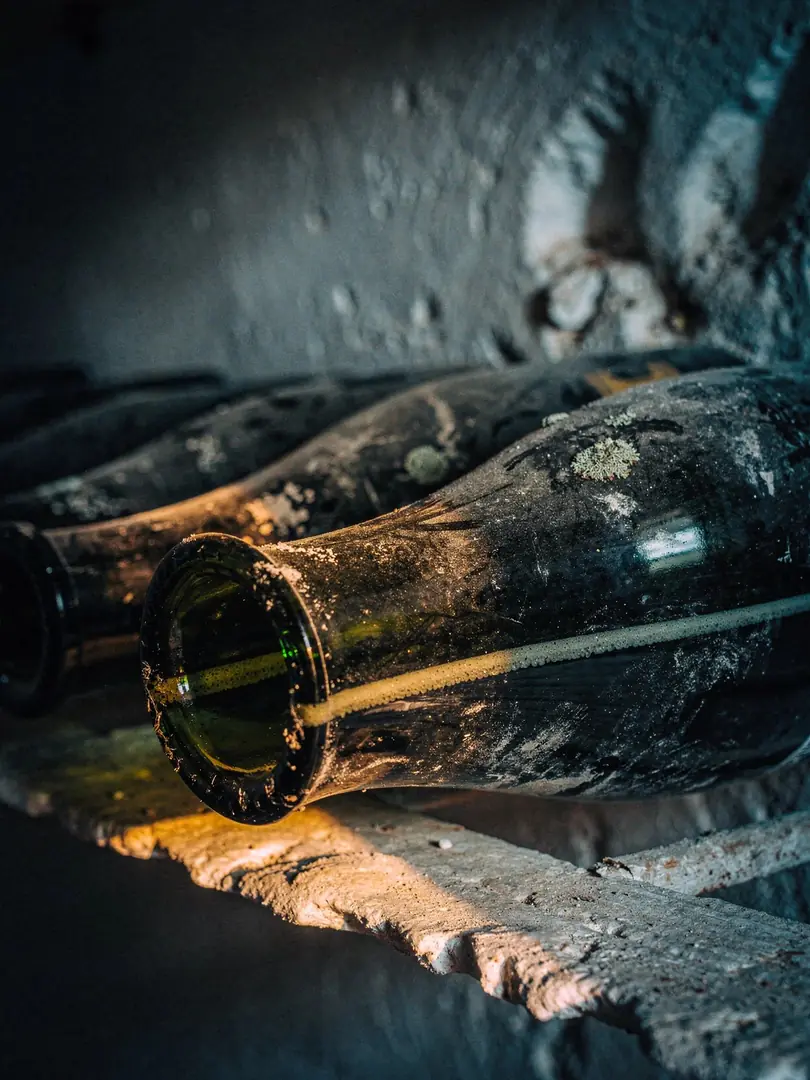
A Year in the Glass
Vintage Champagne: What Millésime Means
Vintage Champagne, in French Millésime, contains wine from a single harvest only and may not be sold until at least 36 months after bottling for the second fermentation. Non-vintage Champagne requires just 15 months. The year on the label reflects the character of that vintage—it is not an official quality seal.
Why does most Champagne have no vintage?
Champagne lies far to the north, a marginal climate for viticulture. Spring frost, summer hail or a rainy September can reduce a harvest or leave the grapes underripe. One year may be lean and acid-driven, the next rich and ripe. Producers wanting to sell Champagne that tastes the same every year therefore blend young wines with older ones. In that case, no year appears on the label; in the trade it's simply called Brut Non-Vintage, or NV.
This non-vintage Champagne makes up the bulk of production. It is the flagship of every house and follows a consistent style. Vintage Champagne takes the opposite approach: it aims to show what a particular year produced. A hot year yields a fuller, riper wine; a cool one, something leaner with more acidity. How houses use their reserve wines to maintain a consistent style is explained in a separate feature.
What are the legal rules for vintage Champagne?
The appellation's specifications set clear limits. All the grapes must come from the stated year; only the sugar used for the second fermentation and the later dosage may come from elsewhere. After bottling for the second fermentation (tirage), the wine must age for at least 36 months before sale. For non-vintage Champagne, it's 15 months, at least 12 of them on the lees. The vintage must also appear on the cork.
Another rule protects the reserve supply. A producer may sell at most 80 percent of its annual volume as vintage Champagne. The remainder stays available for non-vintage blends and reserves. This way, even an exceptional year can never disappear entirely into vintage bottles. Tirage is permitted no earlier than January 1st following the harvest, so the earliest a vintage can be sold is a good three years after the harvest.
Who decides whether there will be a vintage?
There is no official declaration of good years in Champagne. Each house and each grower decides individually whether a year's base wines are strong enough to merit their own Millésime. Some houses release a vintage only a few times per decade, others nearly every year. In difficult years, the wine goes entirely into the non-vintage blend or into reserve.
Some top wines exist only as vintage releases. Dom Pérignon, the prestige label of Moët & Chandon, appears exclusively with a vintage year, as does Salon's Blanc de Blancs. The first known vintage Champagne is considered to be a wine from Veuve Clicquot dating to 1810. Since then, the year on the label has been a promise to collectors: this wine represents a particular year and the cellar master's decision to single it out.
On the label it's identified by the year, often accompanied by the word Millésime or Vintage. It's important to distinguish between vintage and age when buying. A vintage Champagne from an older year may have only just been disgorged and taste fresh, while a younger vintage may have already been on the market for some time. Anyone wanting to know for sure should also check the back label for the disgorgement date.
What does a Millésime taste like, and how long does it keep?
Because vintage Champagne spends longer on the lees, it often tastes more layered than non-vintage Brut. Over the years, the spent yeast cells release flavors into the wine reminiscent of brioche, toasted nuts or honey. The bubbles become finer and creamier. A good vintage can continue to develop for many years after disgorgement; what happens during this process and how to store it is covered in the feature on aging and storage.
With other sparkling wines, vintage doesn't mean quite the same thing. Franciacorta requires at least 30 months on the lees for its Millesimato, Trentodoc 24 months. A German grower's Sekt always carries a vintage year because the law requires it, without mandating any longer aging than the 9 months required for traditional bottle fermentation. The year alone, then, says little. Only combined with origin, method and aging time does it paint a full picture.