Acidity, Salt, Sweetness
What Pairs with Sparkling Wine? The Basic Rules for Food and Fizz
Sparkling wine pairs well with salty, fatty, and fried foods, fish, seafood, poultry, and mild cheese, because its acidity and carbonation refresh the palate after every bite. Things get tricky with desserts sweeter than the wine, and with very spicy dishes.
Why Does Sparkling Wine Pair with So Many Dishes?
At the table, acidity is what matters most with sparkling wine. The base wines for sparkling wine, Champagne, or Crémant come from early-harvested grapes that taste fresh and taut. This acidity stimulates the flow of saliva. After a rich or salty bite, it acts like a reset button for the palate. Then there's the carbonation: the fine bubbles tickle the tongue and carry away the taste of food faster than a still wine ever could.
What a sparkling wine usually lacks also works in its favor. White sparkling wine has almost no tannins, those compounds from grape skins and seeds that dry out the mouth in red wine. Tannin clashes with fish and eggs and turns bitter alongside spicy seasonings. Alcohol levels in most sparkling wines also sit in the range of a light to medium white wine. A Brut therefore rarely dominates a dish and instead lets the food take center stage.
The Golden Rule: The Wine Must Be Sweeter Than the Food
Sweetness in food makes a dry wine taste thin and sour. A Brut with less than 12 grams of sugar per liter suddenly tastes sharp next to a cream cake, almost like lemon juice. The reverse works beautifully: a wine slightly sweeter than the dish tastes rounder and juicier. That's why it pays to check the sweetness level on the label. It's mandatory for sparkling wine and reveals exactly how much sugar the wine contains.
For the kitchen, that means: Brut Nature and Extra Brut pair with salty, unadorned foods like oysters, cured ham, or aged hard cheese. Brut covers the broad middle ground. Extra Dry, with 12 to 17 grams, and Sec, with 17 to 32 grams, work with dishes that have a touch of sweetness, such as glazed carrots, teriyaki, or fruit sauces. Demi-Sec and Doux belong with dessert. Those who mix up the levels are often disappointed, since Extra Dry is actually sweeter than Brut, not drier.
Salt, Fat, and Umami: Where Sparkling Wine Shines
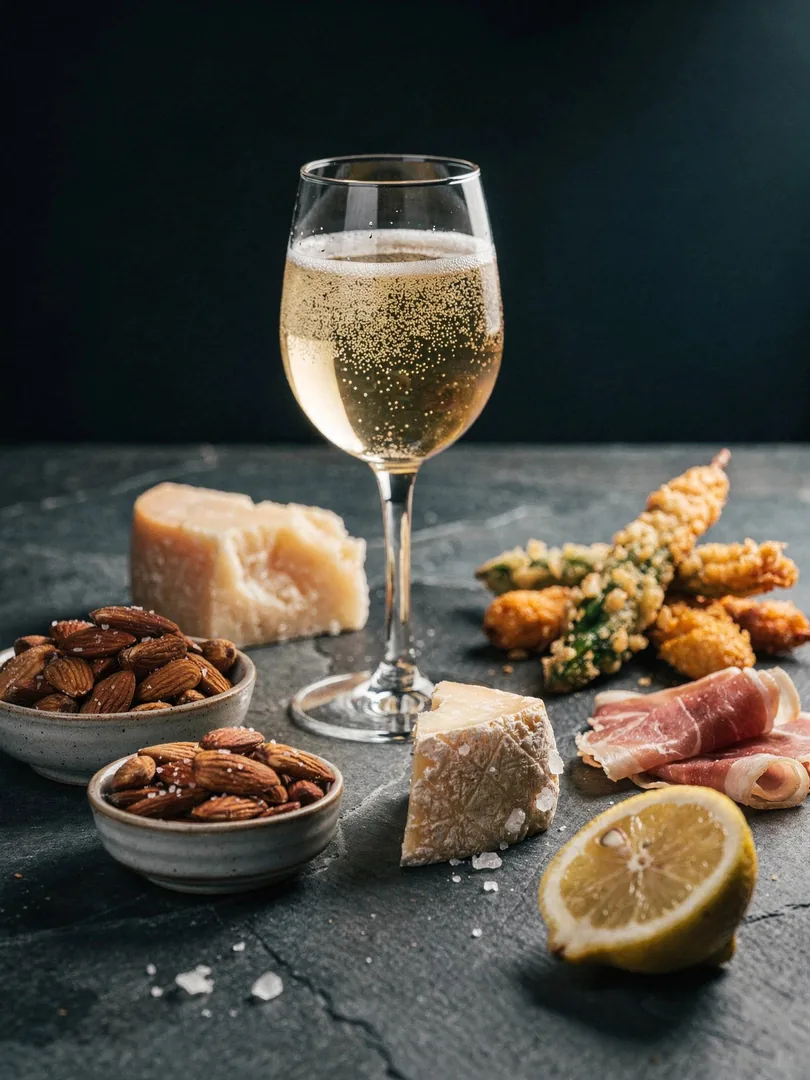
Salt softens a wine with pronounced acidity. A piece of Parmesan or a handful of salted almonds tames the sour impression, and the sparkling wine tastes fruitier than on its own. Fat, meanwhile, leaves a coating on the tongue and palate. Acidity and carbonation cut through this sensation, so the next bite tastes fresh again. This is exactly why fried foods are among the best partners for a dry sparkling wine, from tempura to French fries.
Sparkling wines aged on the lees for a long time bring another dimension to the table. During lees aging, dead yeast cells break down in a process experts call autolysis. This creates aromas of brioche, nuts, and toasted bread. Such wines pair well with umami-rich foods, meaning the savory taste of aged cheese, mushrooms, soy sauce, or roasted poultry. A young, fruity Prosecco from the tank is usually too light for this. A vintage Champagne, which must age at least 36 months from tirage, holds its own much better.
Where It Gets Tricky: Heat, Vinegar, and Bitterness
Spicy dishes are the trickiest pairing. Alcohol intensifies the burn of chili, and carbonation further irritates the mucous membranes. A Thai curry next to a robust Brut can therefore sting unpleasantly. A fruitier sparkling wine with lower alcohol and a touch of residual sugar works better. Good options include an Extra Dry, a Rosé, or a Moscato d'Asti, which has only a gentle fizz and around 5.5 percent alcohol.
A lot of vinegar, say in a strong vinaigrette, makes any wine taste flat, because the acidity in the food outmuscles the acidity in the wine. A mild balsamic or a bit of lemon juice is usually no problem. Raw artichokes and bitter leafy greens alter the taste of the following sip and can make it seem metallic or oddly sweet. With dark chocolate, bitterness and acidity collide head-on. Only a sweet sparkling wine can help there, and even that has a hard time.