Time on the Lees
Lees Ageing and Autolysis: Where Does the Brioche Aroma Come From?
The brioche aroma in Champagne comes from the lees. After the second fermentation, the dead yeast cells slowly break down inside the bottle, a process known as autolysis. In doing so, they release aromas of bread, pastry, and nuts into the wine, along with compounds that create a creamy mouthfeel.
What Happens During Autolysis?
Once the sugar has fermented out, the yeast has nothing left to do. The cells die and settle as sediment against the bottle wall. There, their own enzymes begin breaking the cells down from within. Experts call this autolysis, or self-dissolution. The process only really gets going after several months and continues for years in the cool cellar, very slowly and almost entirely without oxygen.
This releases fragments of the yeast into the wine: protein building blocks called amino acids, and mannoproteins, compounds of protein and sugar from the cell wall. Amino acids contribute to aroma and flavor intensity. Mannoproteins are considered stabilizers of the mousse and round out the mouthfeel. The Comité Champagne explicitly names autolysis as a source of aroma. Without time on the lees, Champagne would be a far simpler wine.
Where Do Brioche, Bread, and Nutty Notes in Sparkling Wine Come From?
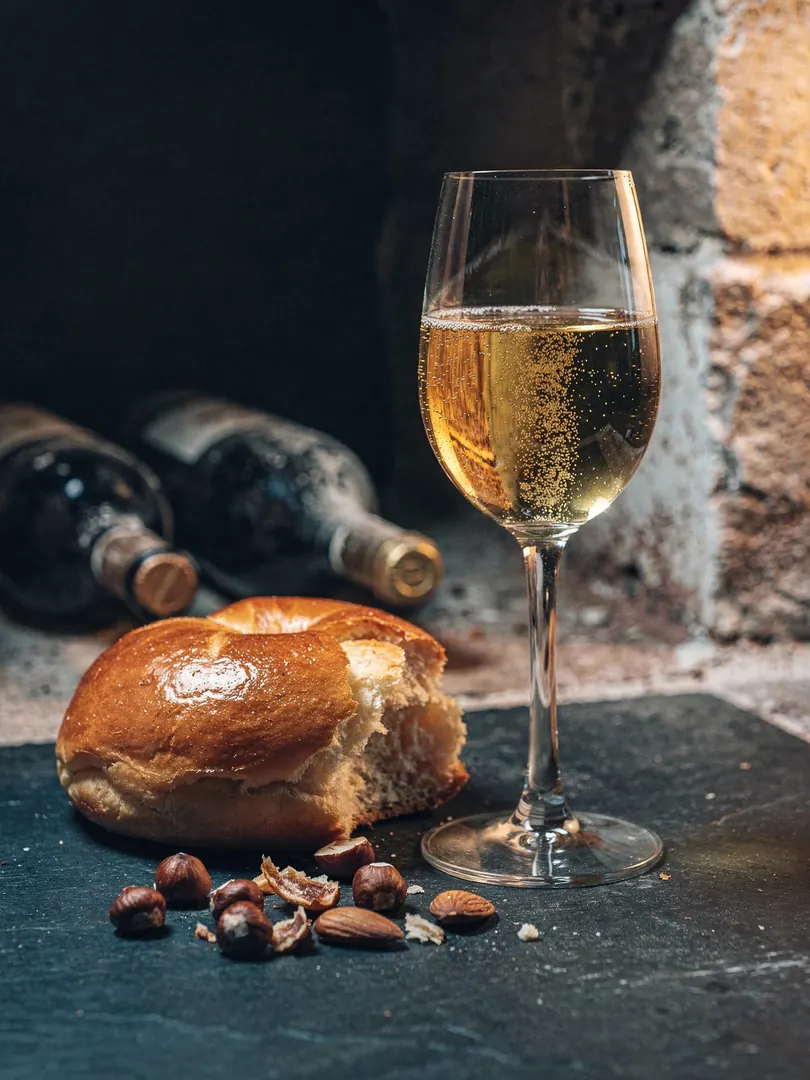
The characteristic lees-derived notes don't develop overnight. As time on the lees increases, the aroma shifts from fresh fruit toward baked goods: fresh bread, brioche bun, brioche, and later roasted nuts, almonds, and toast. These notes emerge from the interplay between yeast components and the wine. Young sparkling wines with short lees ageing show them barely at all, whereas Champagne aged for three, four years or more displays them clearly.
Not every toasty note comes from the lees. Some develops only after disgorgement, when a small amount of oxygen reaches the wine through the cork and sugar from the dosage reacts with components of the wine. This brings forward notes of honey, caramel, and dried fruit. Connoisseurs therefore distinguish between ageing on the lees and ageing after disgorgement. How sparkling wine continues to mature in the bottle is covered in the journey through cellaring and ageing.
How Long Must Sparkling Wine Rest on the Lees?
The law only sets minimum periods. For any quality sparkling wine, fermentation and lees contact combined must last at least 90 days, or 30 days in a tank with stirring equipment. For traditional method bottle fermentation, which includes Crémant and Winzersekt, nine months on the lees are mandatory. Non-vintage Champagne rests on the lees for at least twelve months, while vintage Champagne may not be sold until 36 months after tirage.
Other origins set their own standards. Franciacorta requires 18 months for non-vintage wines, and 60 months for Riserva. Trentodoc demands 15, 24, or 36 months depending on the tier, while Alta Langa requires at least 30. For Cava, the scale ranges from nine months for Cava de Guarda up to 36 months for Cava de Paraje Calificado. Austrian Sekt g.U. rests on the lees for at least nine months as Klassik, 18 as Reserve, and 30 as Große Reserve. Knowing these figures lets you read a great deal about style straight from the label.
Is Longer Lees Ageing Always Better?
Longer doesn't automatically mean better. An aromatic wine made from Muscat or Glera would lose its fragrance under heavy lees notes. A soft wine from very ripe grapes can turn tired with extended ageing. The base wine needs enough acidity and substance to carry it through years on the lees. That's why it's usually a house's most powerful, acid-driven cuvées that receive the longest cellar time.
One sign of extended ageing is a particularly fine, creamy mousse, the term experts use for the sparkle on the palate. As long as the wine rests on the lees, it's also well protected from oxygen, since the lees absorb it. Some houses therefore leave certain lots on the lees for many years and disgorge them only shortly before release. These late disgorgements are explored in the journey through cellaring and ageing.