Maturity by Style
Can Champagne Age – and for How Long?
Yes, Champagne can age, often for many years. A non-vintage Brut is ready to drink at purchase and will continue to develop for a few more years, while vintage Champagne and prestige cuvées can often improve for over a decade. How long depends on acidity, lees aging, bottle size, and cool, dark storage.
What Happens as Champagne Ages in the Bottle?
Champagne matures in two stages. The first begins with the second fermentation in the bottle. The wine then rests on its lees, and the spent yeast cells slowly release compounds that add richness along with aromas of bread and pastry. At the same time, the lees absorb oxygen and help protect the wine. The second stage begins after disgorgement. From then on, the wine rests under the cork, which allows tiny amounts of oxygen in over the years.
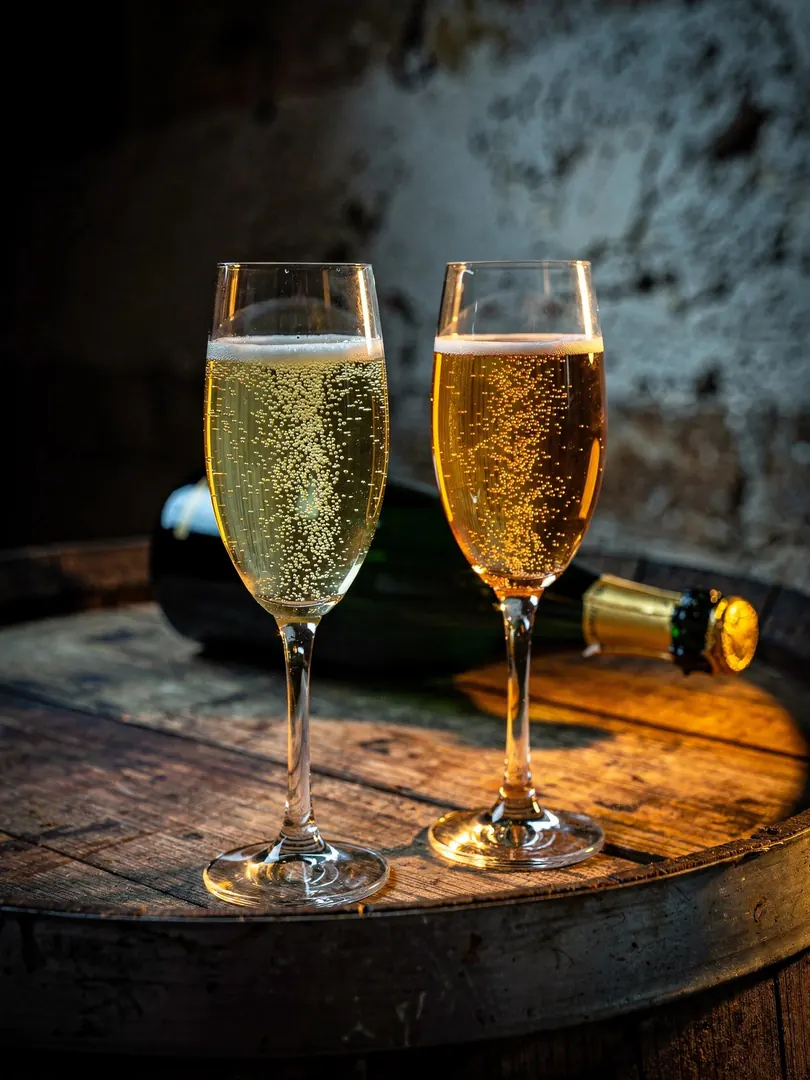
During this phase, the character changes noticeably. Lemon, green apple, and white blossom give way to notes of toasted hazelnut, honey, dried fruit, and later mushroom and forest floor. Some of this develops because the sugar in the dosage reacts with compounds in the wine. The color turns more golden, and the bubbles grow gentler. Over decades, carbon dioxide slowly escapes, which is why very old Champagnes only foam softly.
Non-Vintage Brut, Vintage, Prestige: Three Windows of Maturity
A non-vintage Champagne can only be sold at the earliest 15 months after bottling for the second fermentation, as laid out in the appellation's rules. Houses craft it so that it tastes the way they intend right at release. It typically handles a few more years in the cellar well and grows rounder in the process. If you want to experience the house style at its freshest, open it early; if you prefer more mature notes, wait.
Vintage Champagne must mature for at least 36 months before it can go to market. It comes from a single, usually excellent year and typically has more acidity and substance. Such wines often continue developing for ten years or more. Prestige cuvées, the top wines of each house, are often built for even longer aging. There are no fixed numbers here. Producers suggest drinking windows, and these vary from house to house and from vintage to vintage.
What Makes a Champagne Capable of Aging?
The most important factor is acidity. Champagne's grapes grow in a cool climate and are picked early for sparkling wine production. This freshness keeps the wine lively for years. Among cellar masters, Chardonnay is considered the variety that ages most slowly; a Blanc de Blancs made purely from Chardonnay often seems austere when young and only opens up with time. Pinot Noir brings body and structure, while Meunier is seen as a variety suited to wines meant to be drunk younger.
Bottle size matters too. The Magnum, at 1.5 liters, is considered ideal for aging, since it holds proportionally less air in the neck relative to the amount of wine. This connects to a rule set by the appellation: Champagne up to 1.5 liters must be sold in the same bottle in which it underwent its second fermentation. Smaller formats and sizes from the Jéroboam (3 liters) upward may be transferred to a different bottle. A Magnum, then, has spent its entire life in the very same bottle.
And What About Sekt, Crémant, Cava? Do They Age Too?
A sparkling wine has aging potential above all when it has spent a long time on the lees and brings enough acidity to the table. This holds true beyond Champagne as well. Cava Gran Reserva must rest on the lees for at least thirty months, Cava de Paraje Calificado for thirty-six. Franciacorta Riserva reaches at least sixty months. An Austrian Sekt g.U. Große Reserve needs at least thirty months, while German VDP.Sekt.Prestige, under the association's rules, requires thirty-six.
A Riesling Sekt with strong acidity can also age beautifully, often developing notes of honey and ripe peach. The situation is different for tank-fermented Prosecco, Asti, or fruity branded sparkling wine. Their appeal lies in youth, and aging does little for them. If you want to let a wine mature, choose bottle-fermented wines with extended lees aging, ideally ones with a vintage or disgorgement date on the label.