Cold storage
Can sparkling wine be stored in the fridge?
For a few days up to a few weeks, unopened sparkling wine can be kept in the fridge without any issue. It's less suited for long-term storage, though: it's colder than the 10 to 15°C (50 to 59°F) recommended by the Comité Champagne, the air is often dry, and there's the added issue of odors, light, and the constant opening of the door.
How long can sparkling wine stay in the fridge?
A bottle you plan to open over the weekend can safely sit in the fridge for a few days beforehand. Cold doesn't harm the wine. It slows its development, similar to a cool cellar, just more intensely. A typical household fridge usually runs between about 4 and 7°C (39 and 45°F). For Prosecco, Secco, or a fruity branded sparkling wine that will be drunk soon anyway, extended chilling simply isn't an issue.
It's a different story when a good bottle of Champagne or grower sparkling wine sits there for months. The Comité Champagne's guidelines recommend 10 to 15°C (50 to 59°F) for storage, with 60 to 80 percent humidity. A fridge typically meets neither condition. The wine won't spoil suddenly because of this, but it ages under conditions experts don't recommend for extended periods, and the risk of minor damage increases with every passing week.
What's wrong with using the fridge for long-term storage?
The first issue is air. Many modern fridges remove moisture from the air to prevent ice buildup. Over months, this can dry out the outside of the cork, which is why sommeliers advise against long-term fridge storage. The second issue is odors. Cheese, onions, and cured meats release strong smells, and the Comité explicitly recommends a storage spot free of foreign odors. The foil capsule only partially protects the cork.
Movement and light add to the problem. In the door shelf, the bottle gets jostled every time the fridge opens, and each time, light falls on it. These moments are brief, but light-colored bottles are sensitive to this, as shown in the earlier section on light taint. The compressor also creates slight vibrations. Whether these measurably harm the wine hasn't been studied much. Still, a quiet, dark spot remains the safer choice, especially for bottles meant to age.
In the fridge, out of the fridge: does going back and forth cause harm?
A bottle chilled for a celebration that ends up not being opened won't suffer if it goes back to the cellar. A single switch between cold and cool poses no problem for sparkling wine. Trouble starts only when this happens repeatedly. Each temperature swing causes the wine to expand and contract. This puts stress on the cork, and over time it can lose pressure.
A second issue is condensation. When a cold bottle meets warm air, it fogs up, and the water runs under the label. For an everyday bottle, this doesn't matter. But for a vintage Champagne you want to save or give as a gift, a warped label and a stained box are annoying. If you're chilling bottles for a party, it's best to chill only the amount you'll actually need.
Better spots for your sparkling wine stock
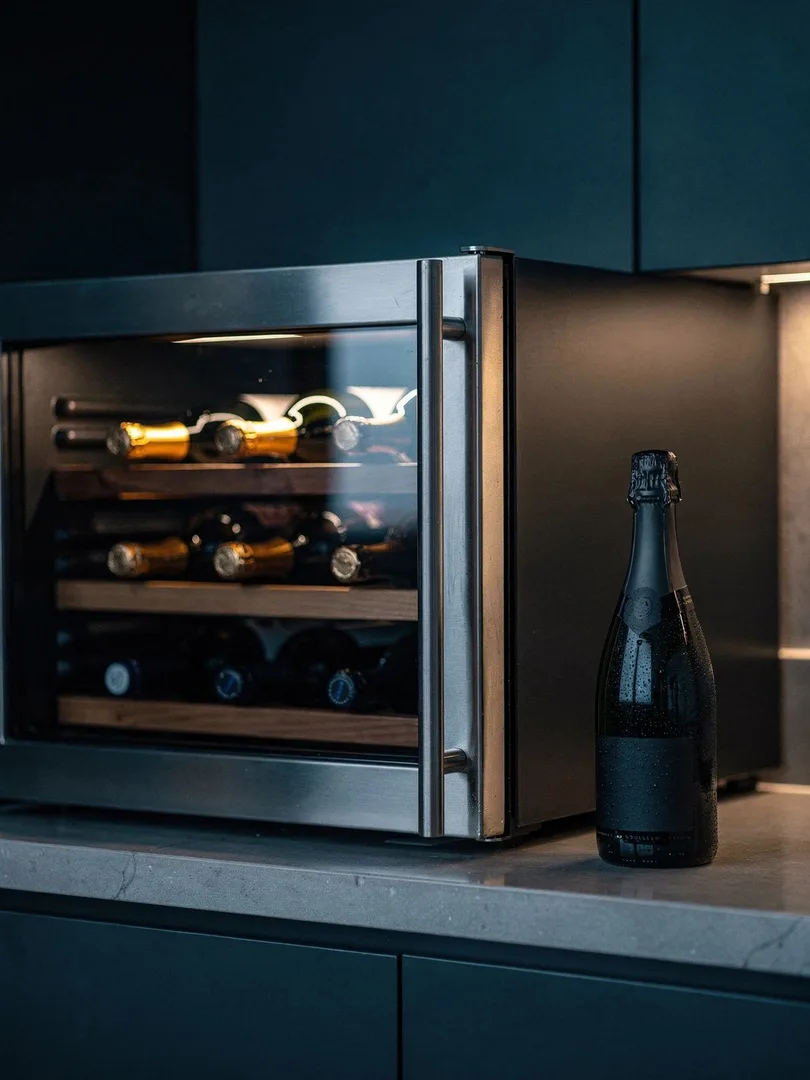
For a stock meant to last weeks or years, a wine fridge is the best solution at home. It maintains a steady temperature, can be set to 10 to 12°C (50 to 54°F), stays dark, and usually vibrates less than a kitchen fridge. A cool cellar or a dark cabinet in the coldest room, say against a north-facing wall, also works well. What matters most is keeping the temperature as stable as possible year-round.
The fridge, then, remains what it does best: the final stop before opening. How long beforehand a bottle should go in, and at what temperature sparkling wine and Champagne taste best, is covered in the chapter on serving. An opened bottle, on the other hand, belongs in the fridge immediately, resealed. Separate rules apply to it, which are also covered there.