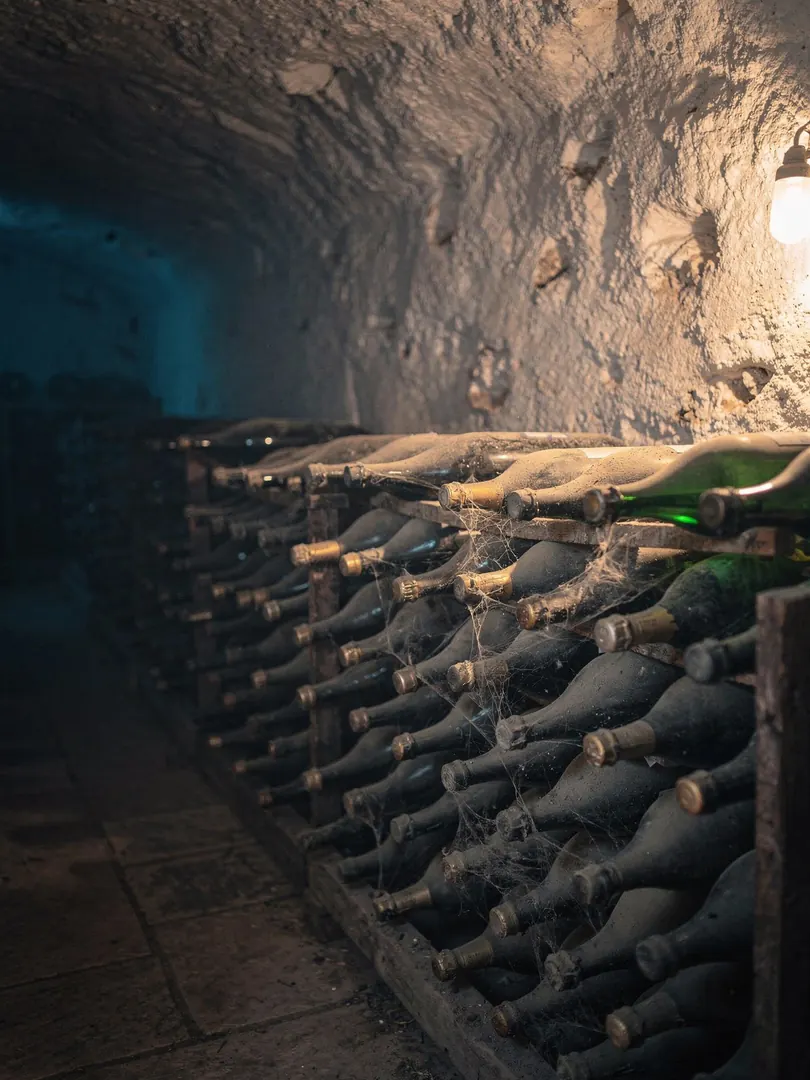
Extended lees aging
Late disgorged, R.D., Plénitude: maturity on the lees
Late-disgorged Champagnes spend many years longer on the lees than usual and are only separated from them shortly before release. This protects them during aging, allowing them to taste fresh despite their advanced age. The best-known examples are Bollinger R.D. and Dom Pérignon's Plénitudes P2 and P3.
Why does the lees keep the wine young?
As long as a sparkling wine rests on its lees, it ages differently than it does under cork. The dead yeast cells absorb oxygen, so the wine matures reductively, meaning largely without contact with air. It gains richness along with notes of bread and pastry, while retaining its freshness and pale color. After disgorgement, this changes. Now a small amount of oxygen reaches the wine through the cork, and the sugar in the dosage reacts with the wine's other components.
This creates a striking difference. Two bottles of the same vintage, both fifteen years old, will taste different if one spent nearly all its time on the lees while the other aged under cork. The first will seem tighter and fresher, the second more mature, with more honey and nutty notes. Late-disgorged wines exploit exactly this effect. They are old, yet taste younger than their vintage would suggest.
Bollinger R.D.: récemment dégorgé
The house of Bollinger in Aÿ, founded on February 6, 1829, made this idea famous. R.D. stands for récemment dégorgé, recently disgorged. Lily Bollinger, who ran the house after her husband's death in 1941, pioneered the style. According to trade press accounts, the first R.D., the 1952 vintage, reached the market in 1967. Bollinger held back part of its vintage Champagne and left it on the lees for considerably longer.
A very low dosage is typical of R.D.; trade sources cite an Extra Brut dosage even for the very first vintage. The reasoning is simple: a wine with this much maturity and richness needs little sugar to taste balanced. The disgorgement date appears on the label, so buyers know exactly how long the wine has rested without lees, and can decide for themselves whether to open it soon or let it age further.
Dom Pérignon P2 and P3: maturity in stages
Dom Pérignon, the prestige brand of Moët & Chandon, tells this story in its own way. According to the house, the wine doesn't develop evenly on the lees but rather in stages, with phases in between where it reaches particular balance. Dom Pérignon calls these windows Plénitudes, meaning fullness. During such a phase, part of a vintage is disgorged and released, while the rest remains on the lees.
The first Plénitude is the regular vintage release, which according to trade press appears after roughly eight to nine years. The second, P2, comes after around fifteen years or more. The third, P3, follows only after about a quarter century or longer. This line used to be called Oenothèque. For wine lovers, this offers a rare chance to taste the same vintage side by side at different stages of maturity.
Extended lees aging beyond Champagne
"Late disgorged" isn't a protected term. German winemakers, too, release sparkling wines that have spent five, eight, or ten years on the lees, often labeled Late Disgorged or with a note on the duration. What matters is whether tirage and disgorgement dates are stated. Without both, the term remains just a marketing phrase. Reputable producers therefore state the months spent on the lees, or both dates, on the back label.
Some regulations even mandate extended lees aging. Franciacorta Riserva must spend at least sixty months on the lees, Cava de Paraje Calificado thirty-six, and Trentodoc Riserva also thirty-six. The opposite extreme is Prosecco Sui Lieviti. It ferments in the bottle and is never disgorged at all, with the lees remaining in the wine until it's opened. It's designed for freshness, not extended aging.