The Crémant rules
When can a sparkling wine be called Crémant?
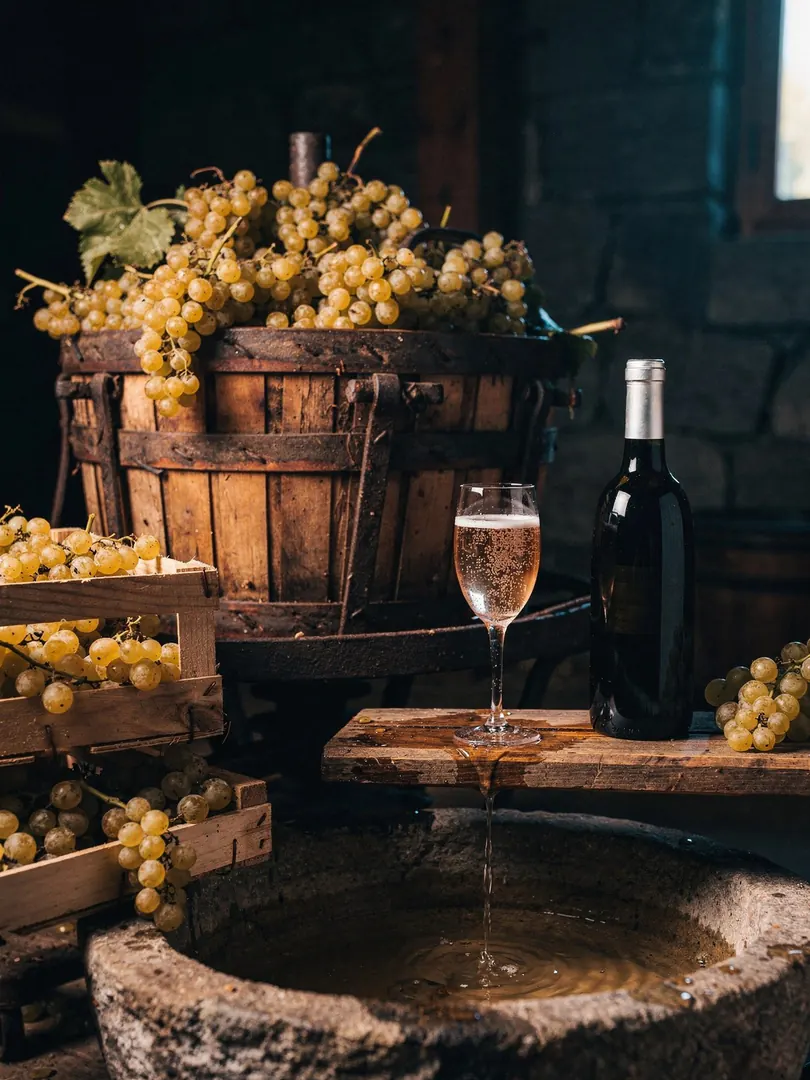
A sparkling wine can only be called Crémant if it's white or rosé, carries a protected designation of origin, was hand-harvested and gently pressed, and underwent traditional bottle fermentation for at least nine months on the lees. The name of the origin must always appear alongside it.
Crémant rules: what EU law requires
Unlike Champagne, Crémant isn't a place—it's a quality designation with a fixed set of requirements. Labeling Regulation 2019/33 governs it in Article 53. Only quality sparkling wines with a protected designation of origin qualify, and only in white or rosé. There's no such thing as a red Crémant. The grapes must be hand-picked; mechanical harvesters are excluded. Whole or destemmed grapes are pressed, and from 150 kg, at most 100 l of must may flow.
In the finished wine, sulfur dioxide content must not exceed 150 mg/l, and sugar content must stay below 50 g/l. Additionally, the conditions for traditional bottle fermentation must be met: nine months continuously on the lees at the same producer, plus disgorgement. Finally, Crémant never stands alone on the label—it always appears together with the name of the protected origin, such as Crémant d'Alsace or Crémant de Loire.
Does Crémant only come from France?
France has the most and best-known Crémants, but it holds no monopoly. Eight French appellations carry the term: Alsace, Bordeaux, Bourgogne, Die, Jura, Limoux, Loire, and Savoie. Add to that Crémant de Luxembourg, regulated since January 4, 1991, and the Belgian Crémant de Wallonie, established by a ministerial decree dated June 29, 2008.
In principle, the term is open to any quality sparkling wine with a protected designation of origin within the EU that meets the requirements. Germany has explicitly implemented this. Under Paragraph 34a of the Wine Regulation, a Sekt b.A. may be called Crémant if it meets EU rules, states the name of its origin, and is sold in the prescribed sparkling wine bottle with a wire cage. A Crémant from Baden or the Mosel is therefore not a case of mislabeling but entirely legitimate.
What does 100 liters of must from 150 kilos of grapes mean?
The pressing rule is the most unassuming yet perhaps most important part of the Crémant requirements. From 150 kg of grapes, at most 100 l of must may be extracted—a yield of roughly two-thirds of the grape weight. The first portions of juice flow out with almost no pressure applied and are especially clear, acid-driven, and low in tannins from skins and seeds. The harder the pressing, the more of these bitter, colored compounds end up in the must.
For a fine sparkling wine, this is a drawback, since tannins can make the carbonation feel coarse. Champagne works with a similar, slightly stricter limit: 102 l of must from 160 kg of grapes. Combined with hand-harvesting, which brings whole, undamaged grapes to the press, this rule ensures that Crémant ranks among the carefully pressed sparkling wines.
Why is there no sweet Crémant?
The sugar limit of under 50 g/l rules out the sweetest category. A Crémant can be Brut nature, Extra Brut, Brut, Extra Dry, dry, or off-dry, but never mild or doux, since these terms only apply above 50 g/l. In practice, most Crémants are Brut. Anyone looking for a sweet sparkling wine to pair with dessert is more likely to find it in Asti or a Demi-Sec from other origins.
One final exception concerns older brands. Anyone who had registered a brand containing the word Crémant before March 1, 1986, was allowed to keep it, even if the product doesn't meet the later rules. For everyone else: if Crémant appears on the bottle, hand-harvesting, gentle pressing, protected origin, and classic bottle fermentation are legally guaranteed. This makes the term one of the most reliable pieces of information found on a sparkling wine label.