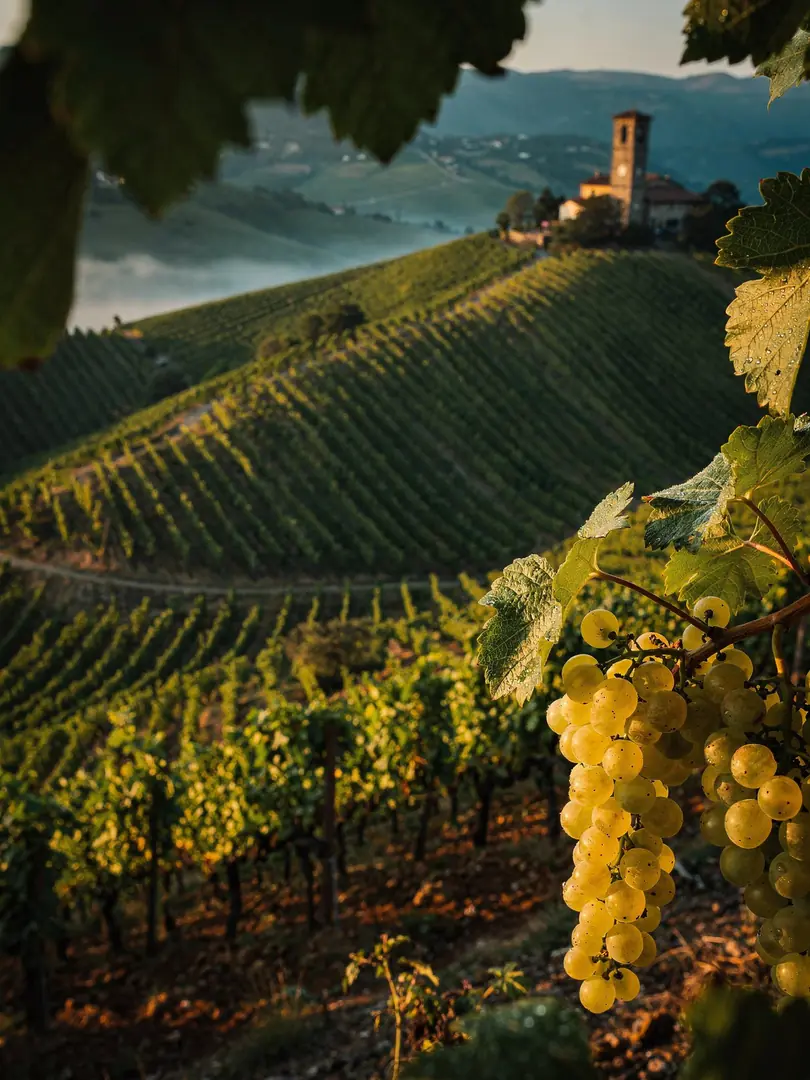
Glera and the Tank Method
Prosecco or Sekt: What's the Difference?
Prosecco is a protected designation of origin from northeastern Italy, made from at least 85 percent Glera grapes and typically tank-fermented. Sekt is a quality level with no fixed location and no mandatory grape variety. What's more: Prosecco also comes as a semi-sparkling and still wine, whereas Sekt is always a sparkling wine.
Is Prosecco a Grape Variety or an Origin?
Until 2009, the main grape variety itself was called Prosecco. This was a problem, since any winemaker worldwide can use a grape variety's name, whereas an origin can be legally protected. Italy therefore renamed the grape variety to Glera and declared Prosecco a protected designation of origin. The ministerial decree dates to 17 July 2009 and has been in force since 1 January 2010.
The Prosecco DOC (Controlled Designation of Origin) region is extensive. It spans nine provinces: Belluno, Padua, Treviso, Venice, and Vicenza in the Veneto, plus Gorizia, Pordenone, Trieste, and Udine in Friuli. The village that gives Prosecco its name lies near Trieste, far to the east of the famous hills. At least 85 percent Glera must go into the wine, with the remainder coming from other approved varieties.
Above this sit two DOCG zones, Italy's highest designation of origin: Conegliano Valdobbiadene, covering 15 municipalities in the province of Treviso, and Asolo. Their wines are labeled Prosecco Superiore. The hilly landscape between Conegliano and Valdobbiadene has been a UNESCO World Heritage Site since 2019, with Superiore di Cartizze, covering roughly 107 hectares, considered its top vineyard area.
Tank Fermentation: How Is Prosecco Made?
Glera is an aromatic variety with relatively mild acidity and notes of pear, apple, and white blossoms. This fruit character is exactly what's meant to shine through, which is why Prosecco is usually fermented in pressure tanks. The method was patented by Federico Martinotti in 1895 and improved by Eugène Charmat in 1907. In Italy it's called Metodo Martinotti; elsewhere it's known as the Charmat method. The second fermentation in a large stainless steel tank takes anywhere from a few weeks to a few months, after which the wine is filtered and bottled.
The brief contact with the lees is intentional. Extended lees aging would bring bread and brioche notes that would overpower the delicate fruit aromas. There are exceptions, though: some producers leave the wine in tank for months, a technique known in the trade as Charmat lungo. The DOCG also recognizes a variant called Sui Lieviti, which ferments in the bottle and retains its lees, making it cloudy when poured.
Prosecco Spumante, Frizzante, Rosé: What Types Exist?
Prosecco DOC comes in three forms. Spumante is sparkling wine with at least 3.5 bar and carries a Sekt-style cork secured with a wire cage. Frizzante is semi-sparkling wine at 1 to 2.5 bar, often sealed with a string closure called the spago. Tranquillo is still. Sekt, by contrast, is always quality sparkling wine—a lightly fizzy Sekt under 3 bar simply doesn't exist.
Since 2020, there's been a Prosecco DOC Rosé. It's made from Glera with 10 to 15 percent Pinot Nero, ferments in tank for at least 60 days, and always carries a vintage. The DOCG zones don't produce rosé. In 2025, 667 million bottles of Prosecco DOC were sold, 60.4 million of them Rosé, with more than 82 percent exported abroad.
Is Prosecco Sweeter than Sekt?
Many Proseccos are labeled Extra Dry. That sounds austere, but it actually means 12 to 17 grams of sugar per liter, making it sweeter than Brut, which has under 12 grams. Even sweeter is Dry, with 17 to 32 grams. Combined with Glera's mild acidity and pear-like fruit, Prosecco often comes across as softer than a Riesling Sekt, whose pronounced acidity balances out the sugar.
There's also a special rule for alcohol content. For the cuvée of a quality sparkling wine with a protected designation of origin, EU law generally requires at least 9 percent total alcohol; for Prosecco, 8.5 percent is enough. Light, fruity, and fresh is clearly the goal here. Tension, acidity, and yeasty notes are more the domain of bottle-fermented Sekts. Both are sparkling wines—they just pursue different ideas.