From Schramsberg to Chandon
Region & History
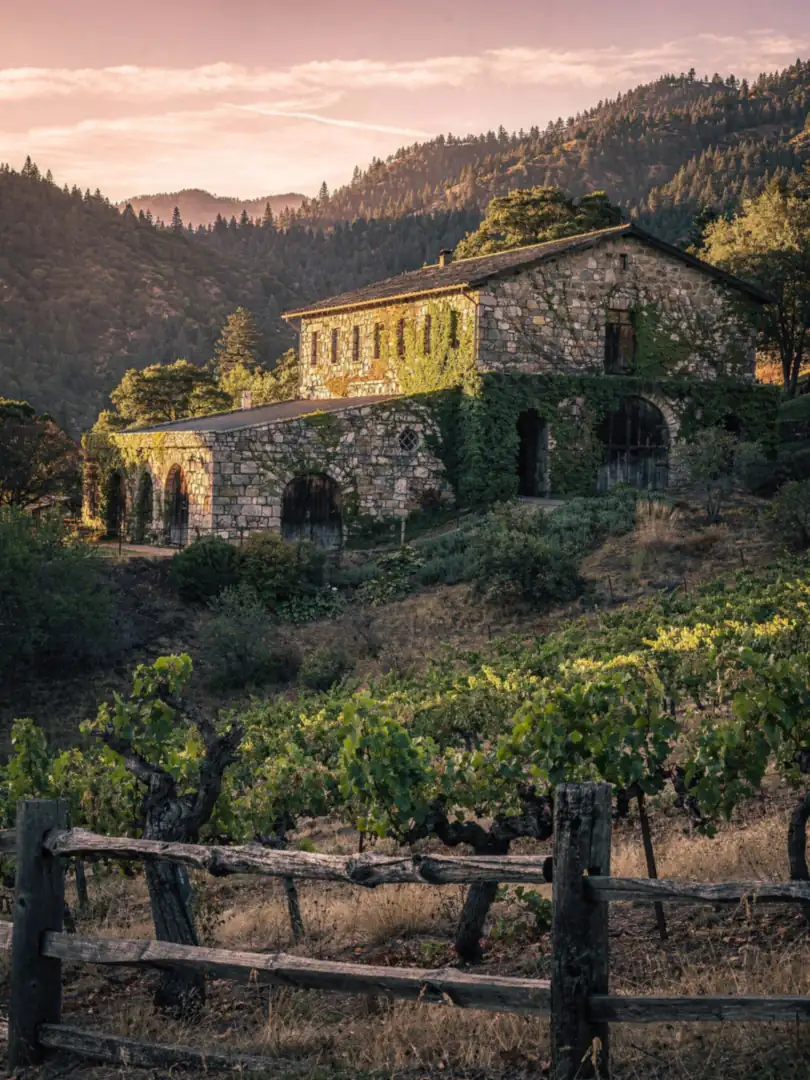
How did sparkling wine come to California? The trail leads first to Schramsberg. German immigrant Jacob Schram founded a winery there in 1862 on Diamond Mountain near Calistoga. The estate later fell into decline, until Jack and Jamie Davies bought it in 1965 to make an American sparkling wine in the Champagne style. Their first Blanc de Blancs came from the 1965 vintage.
The house became famous through a toast. According to Schramsberg, US President Richard Nixon and China's Premier Zhou Enlai raised glasses of a 1969 Blanc de Blancs in Beijing in February 1972. It's said to have been the first American wine ever served at such a state occasion, at home or abroad.
The French arrived shortly after. In 1973, Moët & Chandon founded Domaine Chandon in Yountville in Napa Valley, the first French sparkling wine operation in the valley. The Champagne house Mumm of Reims began trialing Californian grapes in 1979, and the first vintage of Mumm Napa reached the market in 1983.
That same year, 1983, Los Carneros was recognized as an American Viticultural Area, or AVA. It straddles the border between Napa County and Sonoma County. The area along San Pablo Bay attracted further houses in the 1980s: Champagne Taittinger founded Domaine Carneros in 1987, and Gloria Ferrer also built here. Further north, in Anderson Valley in Mendocino County, Roederer Estate was established in 1982.
An AVA only indicates where the grapes come from. Unlike the Champagne appellation, it says nothing about production methods or aging time. Los Carneros covers roughly 15,000 hectares, of which about 4,000 hectares are planted, and there are around 30 wineries in the region.