Fog, Wind, Clay
Soil & Climate
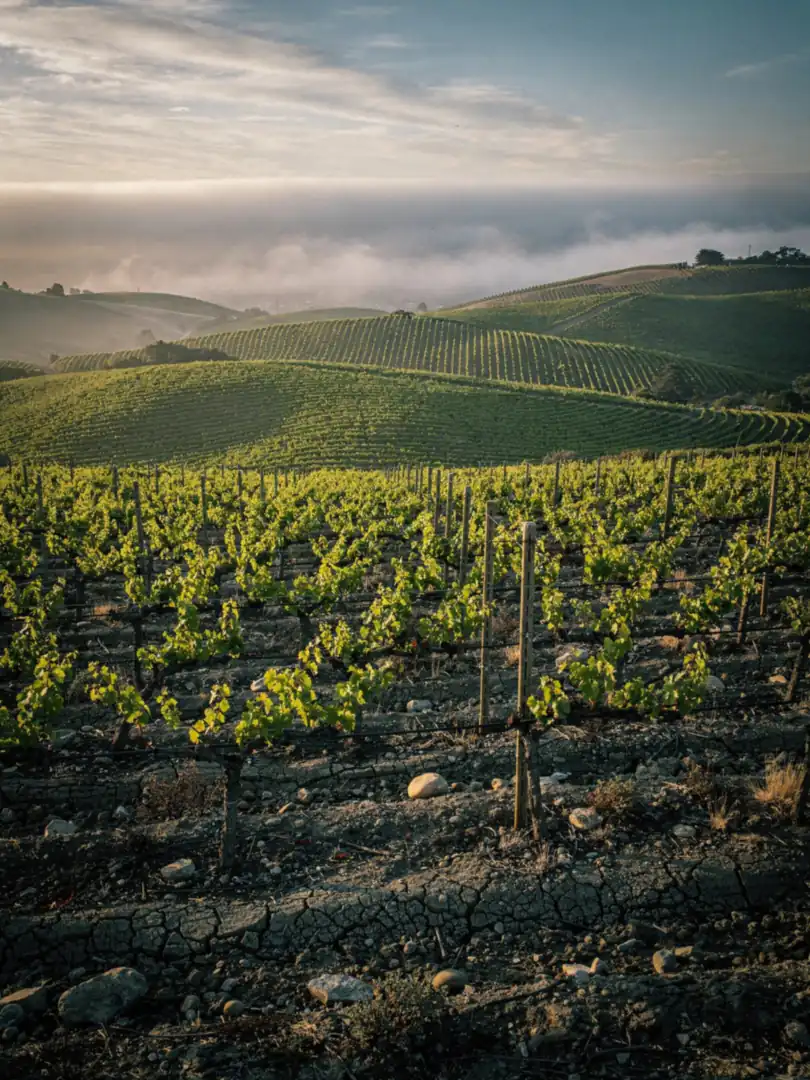
On the southern edge of Napa and Sonoma, the day begins with fog. Cool marine air drifts from San Pablo Bay into the hills of Los Carneros, and a daily wind quickly pushes the temperature back down. Los Carneros is considered the coolest and windiest AVA in both counties. That's an advantage for sparkling wine: the grapes ripen slowly and retain their acidity.
By comparison, Napa Valley grows noticeably warmer heading north, where the bold Cabernets grow that feature in the wine journey. In Carneros, Pinot Noir and Chardonnay dominate instead, the same two varieties that make up Champagne.
The soil matches this character. Soils named Haire, Coombs, and Diablo consist mostly of clay, are thin and shallow, often only about a meter deep, and drain poorly. Vines find little water and few nutrients in them, growing modestly and yielding small crops. This gives the base wine concentration without making it heavy.
Not every house sits in Carneros itself. Domaine Chandon lies in Yountville in the valley, and Schramsberg sits on Diamond Mountain near Calistoga, where the sparkling wine ages in caves carved into the mountain. Domaine Carneros, by contrast, farms six vineyards in the region according to its own account. Slope, wind, and elevation above the valley floor all determine how early the grapes are picked.
The cool climate comes at a cost. Fog and wind suppress yields, ripening drags on, and in cold years grapes can stay green. At the same time, this very weather delivers the freshness a sparkling wine needs when it will later rest on its lees for months. There's no chalk here, but there is clay, and it lends the wine a round, fruity side less familiar from Champagne.