Picked Early
Base Wine & Cuvée
Picked early—that's the first rule for base wine in the Willamette Valley. It should taste fresh, carry low alcohol, and retain plenty of acidity; harvest therefore usually happens earlier than for still Pinot.
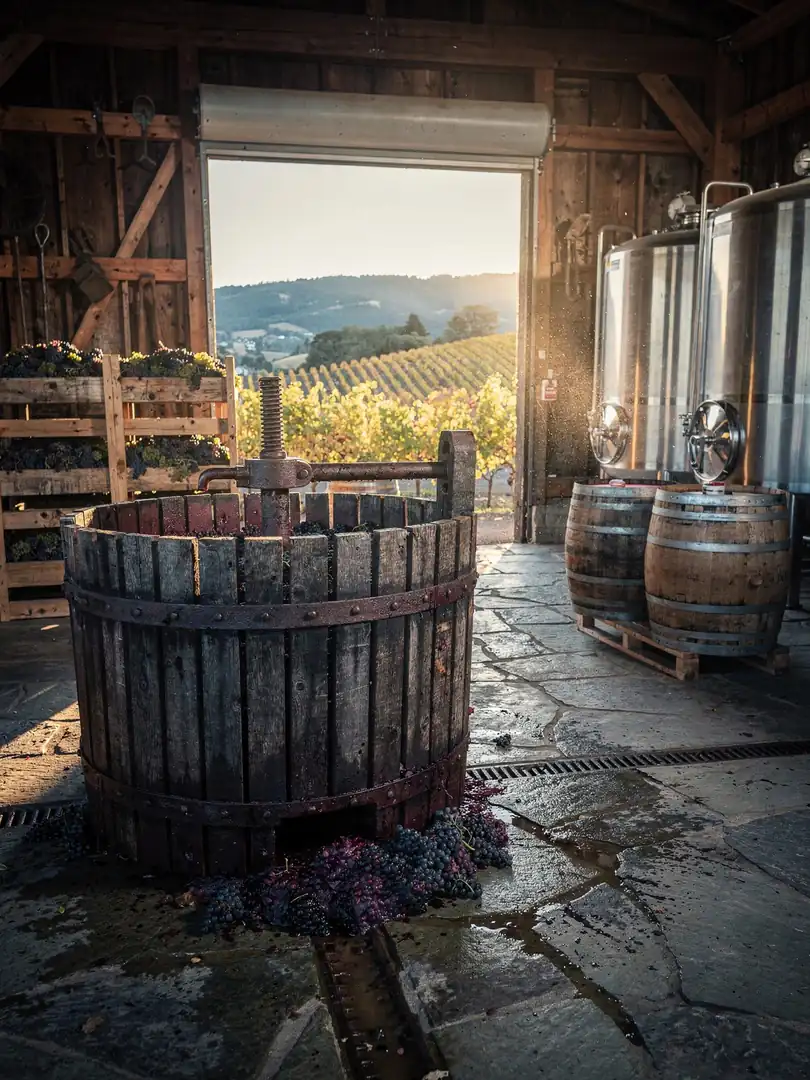
Pressing is done gently. This matters especially for Pinot Noir, where the juice must stay pale and draw little color or tannin from the red skins. The gentler the pressing, the paler and finer the must that flows into the tank or barrel.
Soter shows how differently a base wine can be made. For the 2019 vintage of the Mineral Springs Brut Rosé, the must fermented 22 percent in barrel and 78 percent in stainless steel tank, according to the winery. The oak gives the wine some breadth, while the steel keeps it clear and crisp.
The cuvée is blended from several base wines. A vintage sparkling wine uses only wine from a single year and reflects that year's weather; a non-vintage sparkling wine blends in older wines to match the same house style every year. Argyle offers a Vintage Brut, for example from 2009, 2011, 2014, and 2020, and Soter states the vintage on its rosé.
Years in the valley vary. A cool summer brings crisp acidity and delicate fruit, a warm one more richness; the art of the cuvée lies in blending both so the bottle still has tension even after years on the lees.
Anyone working only with Chardonnay gets a Blanc de Blancs, white from white. Anyone pressing red grapes gently gets a Blanc de Noirs. Most wines of the valley fall between these two poles, blending both varieties.