Bottle, Yeast, Pressure
The Second Fermentation
How is sparkling wine made in the Willamette Valley? Mostly by the traditional method: the finished base wine receives a little sugar and fresh yeast, the tirage, and is sealed in the bottle with a crown cap. Soter, Argyle, and Gruet all work this way.
The yeast consumes the sugar, producing alcohol and carbon dioxide. The gas stays trapped under the cap and dissolves into the wine. Pressure rises to several bars—about six for Champagne—which is why the bottles have thick walls.
As a rule of thumb, roughly four grams of sugar per liter yields one bar of pressure; six bars therefore require about 24 grams. The cellar master dials in the sugar accordingly.
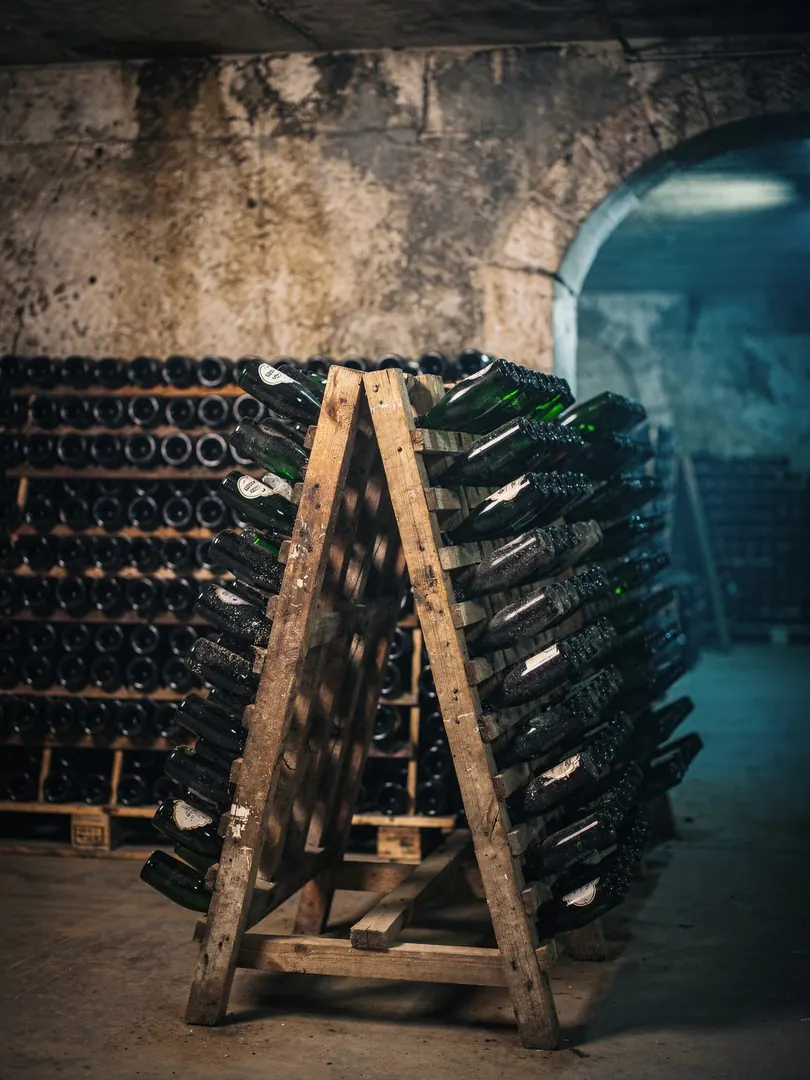
According to the winery, Argyle sourced heavily flocculating yeasts from the Champagne committee and from Bollinger. Such yeast cells clump together and settle in the bottle as a firm sediment instead of clouding the wine. This later makes riddling easier: the bottles stand at an angle in racks and are turned regularly until the yeast collects in the neck.
Sparkling wine can also be fermented in a pressure tank, which is faster and cheaper. The houses in this chapter, however, rely on the bottle and on time: the yeast stays in contact with the wine for months, often years.
At Gruet, the method came straight from Champagne. Laurent Gruet became head winemaker in 1987, and in 1993 the family opened its own winery in Albuquerque, producing sparkling wine from Pinot Noir and Chardonnay using the traditional method.
Soter Mineral Springs Brut RoséBottle fermentation · Pinot Noir, Chardonnay
- Time on lees
- 42 Months
- Sugar
- 4 g/l
- Alcohol
- 12–12.5 % vol
A Pinot rosé with red fruit and fine brioche notes, 42 months on the lees, very low dosage.