Two Varieties
Grape Varieties
Two varieties carry the sparkling wine of the Willamette Valley: Pinot Noir and Chardonnay. These are two of the key grapes of Champagne, and both thrive in the cool valley. There's no appellation here dictating varieties or proportions; each house decides for itself.
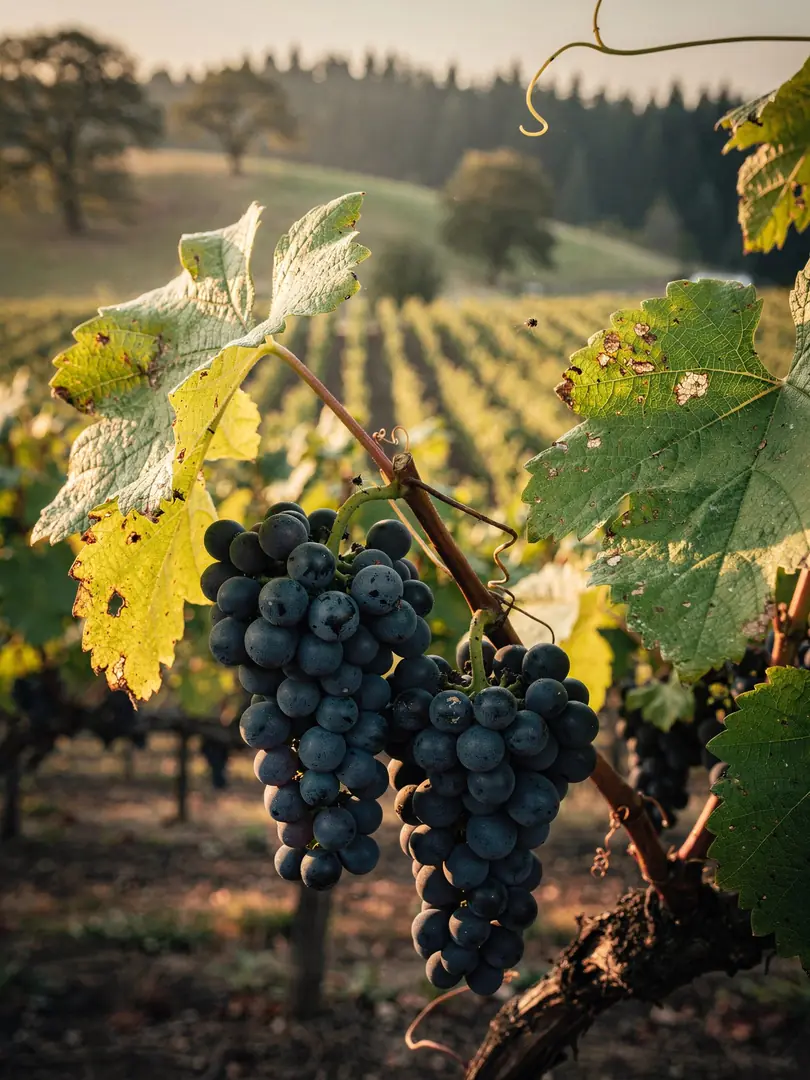
Pinot Noir ripens early, has a thin skin, and shows notes of red berries even at moderate sugar levels. For sparkling wine, that's an advantage, since the wine stays lean and retains its acidity. Chardonnay provides the counterpoint: citrus, apple, and a structure that doesn't collapse even after years on the lees.
The very same row of vines can yield either a full-bodied red wine or the base for a Brut, depending on the picking date. Anyone aiming for sparkling wine therefore decides in the vineyard when to harvest.
The proportions can be seen in Soter's Mineral Springs Brut Rosé: according to the winery, the 2019 vintage consists of 81 percent Pinot Noir and 19 percent Chardonnay. A rosé sparkling wine with that much Pinot carries fruit and body, while the Chardonnay adds freshness.
Rosé sparkling wine gets its color either from brief contact of the must with red skins or from a dash of red wine added before the second fermentation. In Champagne, this blending is explicitly permitted.
A white sparkling wine can also be made from Pinot Noir alone. This is called Blanc de Noirs, white from black: the juice of red grapes is pale, since the color sits in the skin and doesn't transfer to the wine with gentle pressing. Gruet in New Mexico, which works with Pinot Noir and Chardonnay according to its own account, counted a Blanc de Noirs from the 1987 vintage, released in 1989, among its first wines.