Rosé and Brut
Tasting
From the glass, a Willamette Valley sparkling wine usually offers fruit first, even before you notice the lees character: red berries and cherry, strawberry too in the case of rosé, plus citrus from the Chardonnay. Only with years on the lees do brioche and nut notes emerge, while the palate stays crisp with acidity.
Three examples for comparison: Soter's Mineral Springs Brut Rosé, made from 81 percent Pinot Noir with very low dosage; Argyle's Vintage Brut from a single harvest year; and the Blanc de Noirs from Gruet in New Mexico. Tasting them side by side reveals just how much style lies within Pinot.
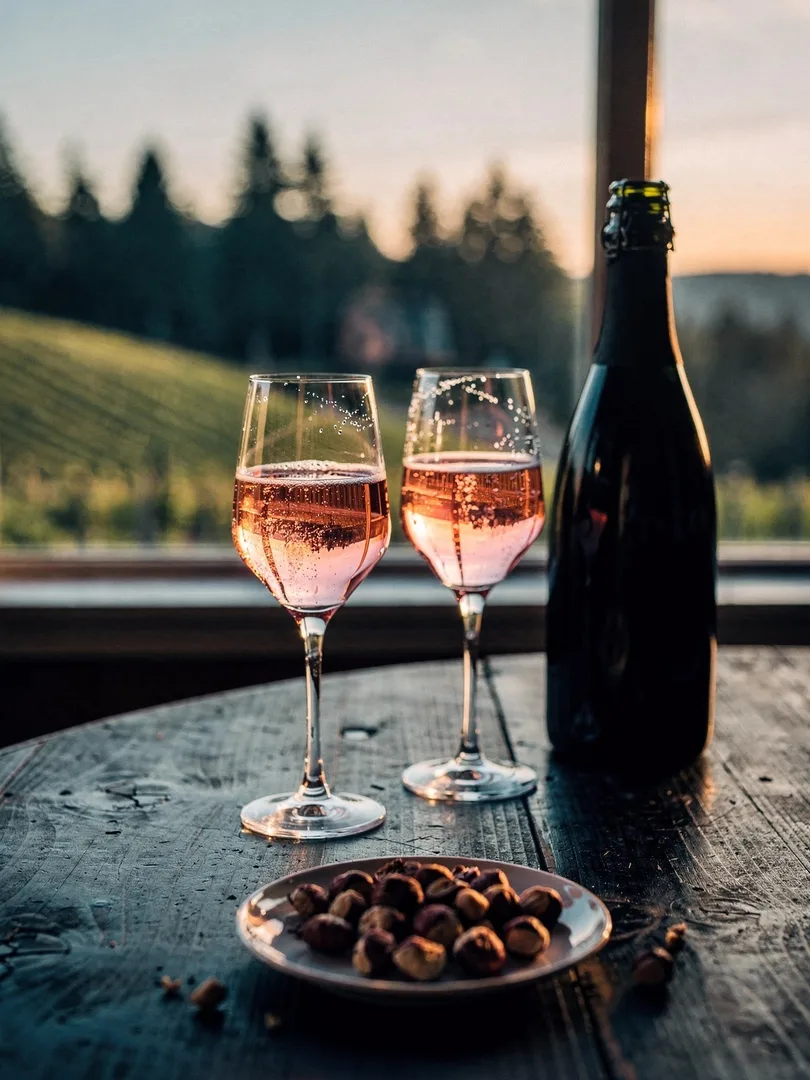
A tulip glass works better than a flat coupe. Its bowl narrows toward the top, holding aroma and carbon dioxide in the glass longer, while the bubbles rise in a fine chain. Filling it only halfway leaves room for the aromas to develop.
The wine is well chilled at around 8°C (46°F). Too cold, and the chill numbs the aroma; too warm, and the wine feels heavy as the gas escapes quickly.
Open the cork slowly: loosen the foil and wire cage, place your thumb on the cork, hold the bottle at an angle, and turn the bottle itself, not the cork. It should hiss softly, not pop. That way nothing foams over, and the bubbles stay in the wine.
When tasting, look first at the bubbles, which should be fine and rise for a long time. Then comes the nose, followed by the sip, asking how long the acidity and aroma linger.